

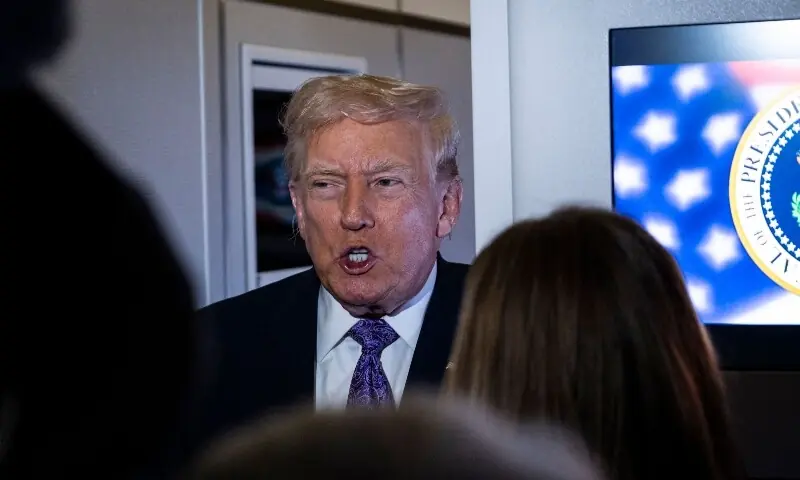
Washington, D.C: The Trump administration announced that it will maintain an indefinite pause on asylum approvals, following a fatal shooting near the White House that left one National Guard member dead and another critically wounded.
The alleged shooter, 29-year-old Afghan national Rahmanullah Lakanwal, was arrested and charged with first-degree murder in connection with the November 26 incident. Lakanwal, who had been granted asylum in April 2025, had previously worked as part of a CIA-backed partner force fighting the Taliban in Afghanistan and entered the United States as part of a resettlement program after the American military withdrawal in 2021.
Details of the Incident
According to authorities, the shooting took place near the White House, targeting two National Guard members. 20-year-old Sarah Beckstrom was killed, while her colleague remains in critical condition. Investigators are still examining Lakanwal’s motives and background, but federal officials have emphasized that his prior resettlement under the Biden administration’s policies may have allowed him to enter the United States with insufficient vetting.
Government Response and Policy Measures
In the aftermath of the shooting, President Donald Trump announced that his administration intends to pause asylum approvals for a long time, without specifying an exact timeline. When asked which nationalities would be affected, officials from the Department of Homeland Security (DHS) pointed to a list of 19 countries already facing travel restrictions, including Afghanistan, Cuba, Haiti, Iran, and Myanmar.
Trump described the measure as a matter of national security. We don’t want those people, he said, adding, many have been no good, and they shouldn’t be in our country.” The president also outlined broader plans to permanently pause migration from all Third World countries to allow the U.S. system to fully recover.
Political and Legal Implications
The move has sparked debate across political lines. Supporters argue that it is necessary to prevent violent individuals from entering the country, while critics say it punishes entire nationalities for the actions of one individual. Legal experts suggest that the indefinite pause could face challenges in federal courts, citing existing U.S. immigration and asylum law.
The incident has also reignited discussions over the vetting process for resettlement programs, particularly those involving nationals from conflict zones like Afghanistan. Lakanwal’s case is complex: he fought alongside U.S. forces but later committed a violent crime on American soil, raising questions about how to balance humanitarian obligations with security concerns.
Since June 2025, nationals from the 19 affected countries have faced varying travel restrictions, part of the Trump administration’s broader efforts to tighten U.S. borders. The recent pause represents an escalation, effectively halting all pending asylum applications from these regions.
Federal authorities continue to investigate Lakanwal’s actions, while policymakers debate potential reforms to asylum procedures. The White House emphasized that security measures would remain in place until the government is confident in the vetting process.