

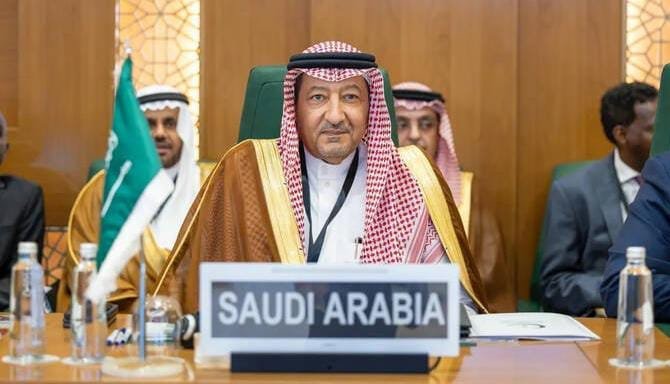
Saudi Arabia has once again reaffirmed its unwavering support for the sovereignty, national unity, and territorial integrity of the Federal Republic of Somalia, emphasizing that any unilateral actions concerning Somalia’s borders or state structures are not only unacceptable but also set a dangerous precedent for the international community. According to Saudi authorities, encouraging separatist tendencies within a member state like Somalia is directly contrary to international law, the United Nations Charter, and the fundamental principles of the Organization of Islamic Cooperation (OIC).
In this context, Riyadh has explicitly rejected the recent announcement of mutual recognition between Israeli occupying authorities and Somaliland. Saudi Arabia’s position is that such actions effectively strengthen separatist agendas and undermine the territorial integrity of sovereign states, creating a concerning precedent not only for Somalia but also for other Muslim and non-Muslim countries. Saudi officials have stressed that recognizing parallel political or administrative structures within a sovereign nation weakens international order and sets a problematic example.
Saudi Arabia has also called for coordinated and unified diplomatic action at international forums to emphasize Somalia’s unity and prevent any steps that could destabilize the region or other OIC member states. According to a statement issued by the Saudi Ministry of Foreign Affairs, any actions or cooperation resulting from the mutual recognition between Israel and Somaliland must be firmly rejected.
This firm stance was articulated by Saudi Deputy Minister of Foreign Affairs, Engineer Waleed Al-Khereiji, during his participation in an extraordinary meeting of OIC foreign ministers in Jeddah. The meeting, held at the OIC headquarters, focused specifically on Somalia’s current political situation and the challenges facing the region, with senior diplomatic representatives from multiple Muslim countries in attendance.
In his address, Al-Khereiji emphasized that Saudi Arabia fully rejects any attempt to establish parallel or separatist structures that undermine Somalia’s unity and territorial integrity. He highlighted that any division or weakening of Somalia’s sovereign authority is unacceptable and reaffirmed Saudi Arabia’s commitment to supporting Somali state institutions and ensuring the stability, peace, and development of the Somali people.
Al-Khereiji further underscored that Somalia is a sovereign state with internationally recognized borders, and any unilateral interpretation or action regarding these borders or state structures poses a threat to regional peace and security. He stressed that Saudi Arabia has historically stood with the Somali people and will continue to support their political stability, national unity, and institutional strength.
In this context, he urged the OIC and its member states to adopt a strong, clear, and collective Islamic position. He called on the OIC to categorically reject any recognition, engagement, or cooperation with separatist entities in Somalia. According to him, failing to address such actions could embolden separatist movements not only in Somalia but in other countries as well.
He also stressed that Israel should be held fully accountable for all political, security, and regional consequences resulting from this behavior. According to Saudi Arabia, such actions risk further destabilizing the region and exacerbating existing conflicts, with ordinary people bearing the brunt of the consequences.
During the meeting, the Palestinian issue was also discussed as a central concern. Saudi Arabia reiterated the critical importance of the Palestinian cause and confirmed its full support for all efforts aimed at establishing a ceasefire in Gaza. The Kingdom emphasized that Palestinian rights, particularly their right to self-determination, cannot be ignored under any circumstances.
Saudi Arabia affirmed that a just and lasting solution to the Palestinian issue is only possible if the Palestinian people are allowed to establish their independent and sovereign state within the 1967 borders, with East Jerusalem as its capital. According to Riyadh, sustainable peace in the region is contingent upon granting the Palestinian people their legitimate rights and ending the Israeli occupation.
Saudi Arabia also stressed that the OIC should not only address the Palestinian issue but also take a strong and unified stance on matters affecting the sovereignty and territorial integrity of other Muslim countries. Riyadh emphasized that collective action within the OIC is the most effective means through which the Muslim world can defend its interests on the international stage.
Saudi Arabia’s statements reflect that the Kingdom maintains a principled position regarding Somalia’s unity and sovereignty and is determined to act proactively at both international and Islamic forums to counter actions that threaten state integrity. Whether concerning Somalia or Palestine, Saudi Arabia’s stance is clear: there can be no compromise on international law, justice, and sovereignty, and the Islamic world must unite to uphold and defend these principles.