

In recent days, tensions between China and India have once again come to the forefront over territorial disputes, specifically concerning the Shaksgam Valley in northern Kashmir. China has firmly rejected claims made by India’s Ministry of External Affairs regarding this region, reiterating that Shaksgam is an integral part of Chinese territory. Beijing emphasized that it has full sovereign rights to carry out infrastructure and development projects within the area.
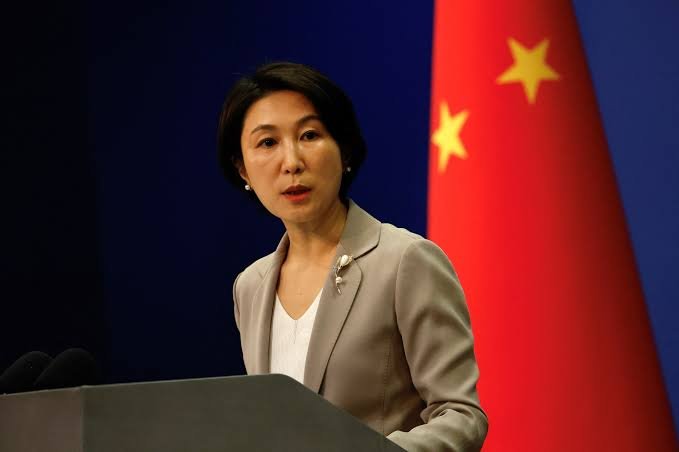
This response came during a routine press briefing held in Beijing, when the Press Trust of India asked about Indian criticism of Chinese infrastructure projects in the Shaksgam Valley. In reply, Chinese Foreign Ministry spokesperson Mao Ning stated categorically that the territory in question is part of China and that no other country has any legal claim over it. She added that China has the sovereign right to develop its own land and that its activities in the region are in accordance with international law.
Mao Ning further clarified that China and Pakistan had signed a formal border agreement in the 1960s, establishing the boundaries between the two countries. She emphasized that such agreements between sovereign nations are a recognized international right, and dismissing them as illegitimate is nothing more than a political statement without any legal basis.
On the other hand, the Indian Ministry of External Affairs had recently held a press conference where it reiterated India’s claim over Shaksgam Valley. India’s spokesperson stated that New Delhi reserves the right to take all necessary measures to protect its territorial interests. According to the Indian perspective, the 1963 China-Pakistan border agreement is never recognized by India and is considered null and void.
India also rejected the so-called China-Pakistan Economic Corridor (CPEC), asserting that projects initiated under it are not valid within disputed areas. The Indian spokesperson reiterated that the entirety of Jammu and Kashmir and Ladakh are integral, inalienable parts of India, a position that New Delhi has repeatedly conveyed to both Chinese and Pakistani officials over the years.
India has also accused China of attempting to alter the facts on the ground in Shaksgam Valley, a claim that has been consistently protested by New Delhi. Indian authorities contend that such actions escalate tensions and undermine bilateral trust, posing challenges to regional stability.
Responding to these Indian assertions, the Chinese Foreign Ministry emphasized that the China-Pakistan Economic Corridor is purely an economic and developmental initiative. Mao Ning described it as a project aimed at enhancing local infrastructure, promoting economic growth, and improving the quality of life for communities along the route. She asserted that the CPEC initiative is unrelated to territorial disputes, including the Kashmir issue, and does not influence China’s longstanding position on the matter.
According to Mao Ning, China’s stance on Kashmir has remained consistent and unwavering over the years. Neither the China-Pakistan border agreement nor the CPEC initiative affects this position. She added that China seeks peace and stability in the region and aims to keep development projects separate from territorial disputes.
This renewed controversy arises against the backdrop of fluctuating relations between China and India in recent years. The two countries have long-standing territorial disagreements, particularly along the Himalayan border. A particularly violent clash occurred in 2020 in the Ladakh region, during which 20 Indian soldiers and four Chinese soldiers lost their lives. The incident significantly strained bilateral relations and heightened regional tensions.
In 2024, however, both nations took steps to reduce border tensions through a significant agreement aimed at preventing further military escalation and fostering confidence-building measures. Following this agreement, several positive measures were introduced to improve relations, including the restoration of direct flights, enhanced trade links, and increased investment opportunities.
Despite these efforts, several territorial disputes between China and India remain unresolved. Arunachal Pradesh, in particular, continues to be a contentious area. China refers to it as “Zangnan” and considers it part of southern Tibet, whereas India firmly rejects these claims, asserting its sovereignty over the state.
Beijing has also faced criticism from New Delhi for renaming various locations within Arunachal Pradesh, which India views as a challenge to its territorial integrity. Such unilateral moves by China have repeatedly provoked strong diplomatic responses from India.
Taken together, the recent statements on Shaksgam Valley highlight that border and territorial disputes between China and India remain deeply sensitive and unresolved. While both nations have made efforts in recent years to reduce tensions and improve relations, disputes over areas like Shaksgam, Ladakh, and Arunachal Pradesh illustrate the complex and volatile nature of geopolitics in South and East Asia.
This latest exchange underlines the enduring complexity of Sino-Indian relations, particularly regarding disputed border regions. Even as both sides pursue economic cooperation and confidence-building measures, territorial claims and strategic interests continue to shape the diplomatic landscape. Analysts note that these disputes are unlikely to be resolved in the near term, and any developmental or infrastructure activities in sensitive areas are likely to attract diplomatic scrutiny and further debate.
China has firmly maintained that Shaksgam Valley is its sovereign territory and has the right to undertake development projects there, dismissing India’s repeated claims. India, on the other hand, continues to assert its historical and legal claim over the area, rejecting agreements between China and Pakistan and rejecting initiatives like CPEC in disputed regions. This enduring disagreement reflects the broader, long-standing challenges in Sino-Indian border relations, a situation shaped by history, strategic calculations, and competing territorial ambitions.