

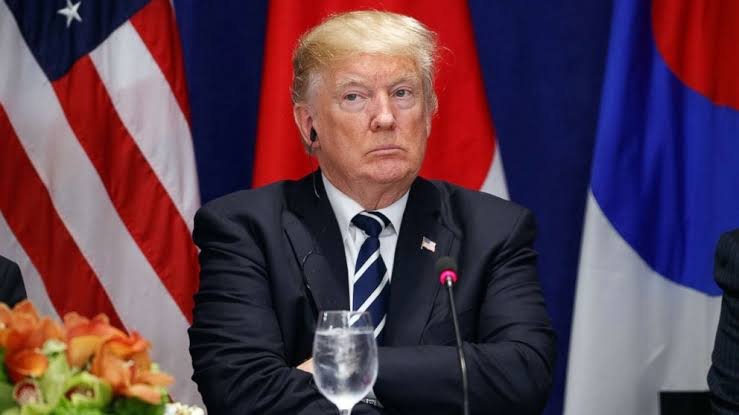
Former US President Donald Trump has once again signaled his readiness to use economic pressure as a primary tool of foreign policy, warning that countries refusing to support the United States’ plans regarding Greenland could face increased American weapons and trade tariffs. Trump made it clear that Washington considers Greenland strategically indispensable for its national security and is prepared to impose economic consequences on those who oppose its stance.
This latest warning has emerged at a time when tensions between the United States and Europe are intensifying over the future of Greenland. The vast, resource-rich territory remains under Danish administration, and in recent days several European countries—most of them NATO allies—have expressed solidarity with Denmark by symbolically deploying military units to Greenland. European officials have described these deployments as gestures of unity and commitment to protecting Greenland’s status and territorial integrity.
However, US officials have dismissed these symbolic military deployments, stating that they would have no impact on American strategic planning. Despite this, Trump escalated his rhetoric on Friday, openly cautioning that all countries refusing to endorse the US approach toward Greenland could be targeted with higher tariffs, particularly in the defense and trade sectors. Although he refrained from naming specific European states, his remarks were widely interpreted as being directed at NATO allies backing Denmark’s position.
Speaking during a roundtable discussion on healthcare at the White House, Trump asserted that Greenland is vital to American national security interests. He emphasized that the island’s strategic location and abundant natural resources make it increasingly significant in the context of global power competition. According to Trump, the growing presence of Russia and China in the Arctic region has heightened Washington’s concerns, making Greenland a strategic necessity rather than a matter of optional diplomacy.
Drawing parallels with past policy actions, Trump reminded audiences that he had previously used tariff threats as leverage against close allies. He referenced his earlier warnings to France and Germany over pharmaceutical pricing disputes, arguing that economic pressure had proven to be an effective means of advancing American interests. Trump suggested that similar tactics could be deployed again, particularly in cases where military intervention is neither desirable nor feasible.
Political analysts note that Trump’s reliance on tariffs reflects a broader diplomatic doctrine in which economic tools replace conventional military force. When direct military action is politically risky or strategically unnecessary, trade restrictions and tariff hikes become alternative instruments to influence allies and adversaries alike.
Across Europe, the Greenland issue has triggered an unusual degree of unity. Several European governments have publicly reiterated their support for Denmark’s refusal to relinquish Greenland to US control. These governments argue that Greenland’s future should be determined through international law and mutual consent rather than unilateral pressure. The symbolic deployment of European troops to Greenland, they say, underscores their commitment to sovereignty and regional stability.
Meanwhile, a bipartisan delegation of US lawmakers arrived in Copenhagen on Friday, signaling internal divisions within American politics over the issue. The delegation, which includes members from both major US political parties, is reportedly supportive of Denmark’s and Greenland’s position, marking a notable departure from Trump’s confrontational approach.
In response to escalating tensions and mounting speculation, Denmark’s foreign minister visited the White House earlier in the week. The visit aimed to address rumors, diplomatic pressure, and Trump’s repeated threats. Following the meeting, the Danish foreign minister acknowledged that fundamental disagreements remain between Copenhagen and Washington regarding Greenland’s status and future.
Despite these differences, US officials later announced a partial diplomatic breakthrough. According to a White House statement released on Thursday, the United States and Denmark agreed to establish a joint working group dedicated to continued dialogue on Greenland. This group is expected to convene every two to three weeks to facilitate discussions, manage disagreements, and explore potential areas of cooperation.
International observers believe the Greenland dispute could become a defining test for US-European relations in the coming months. Trump’s aggressive rhetoric and willingness to weaponize tariffs risk deepening diplomatic rifts and unsettling global trade dynamics. Whether sustained dialogue through the newly formed working group can ease tensions—or whether the dispute will escalate further—remains an open question.