

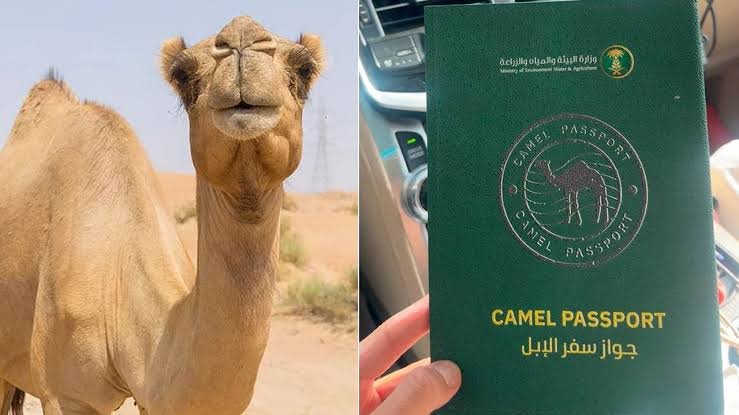
Saudi Arabia has taken a pioneering step in the field of animal identification, heritage preservation, and livestock governance by announcing the launch of a global “Camel Passport” system, a first-of-its-kind initiative designed to formally register and identify camels at an international level. The project represents a major shift toward modernizing the management of one of the Kingdom’s most culturally and historically significant animals.
The initiative was officially inaugurated by Mansour Al-Mushaiti, Saudi Arabia’s Vice Minister for Environment, Water, and Agriculture, who described the program as a strategic move aimed at integrating advanced technology with traditional heritage. Saudi officials emphasized that the camel passport will serve as a comprehensive identification and regulatory document, enabling authorities to maintain accurate records while enhancing oversight of camel ownership, movement, and breeding.
According to government representatives, the camel passport functions much like a human identification document, but is specifically tailored to meet the needs of livestock management. Each passport contains a unique microchip identification number, which is electronically embedded in the animal. This microchip ensures precise tracking and verification, allowing officials to confirm the camel’s identity instantly and reduce the risk of misidentification or fraud.
In addition to the microchip data, the passport includes a dedicated passport number and the date of birth of the camel, forming the core of its identity record. These details help establish accurate age records, which are essential for veterinary care, breeding programs, and commercial transactions. Saudi authorities stated that such standardized documentation will significantly improve the efficiency of livestock monitoring systems across the Kingdom.
The camel passport also provides detailed biological and physical information about each animal. This includes the camel’s *name, breed, gender, color, and place of birth, all of which are recorded to create a complete and verifiable profile. A *photograph of the camel is included as part of the identification process, further strengthening authenticity and ensuring visual confirmation when required.
Officials from the Ministry of Environment, Water, and Agriculture noted that the passport system goes beyond simple identification. It is designed to support a wide range of administrative and regulatory functions, including tracking camel movements within and outside the country, organizing breeding records, regulating sales and ownership transfers, and improving access to veterinary services. Over time, the system is expected to be integrated with digital platforms and national databases, allowing real-time updates and data sharing across relevant authorities.
Camels occupy a unique place in Saudi Arabia’s social, cultural, and economic landscape. For centuries, they have symbolized resilience, tradition, and livelihood across the Arabian Peninsula. Recognizing this legacy, Saudi authorities have positioned the camel passport initiative as part of a broader effort to preserve the Kingdom’s national heritage while adapting it to modern governance standards.
Official statistics highlight the scale of camel ownership in the country. Saudi Arabia has more than 2.2 million camels officially registered as part of its national heritage records, making it one of the largest camel populations in the world. These figures underscore the importance of implementing a structured system capable of managing such a vast and valuable livestock sector.
Regional data reveal notable variations in camel distribution across the Kingdom. The Riyadh region ranks at the top in terms of registered camels, with numbers exceeding 6.5 million, reflecting the area’s strong historical connection to camel breeding, trade, and racing. Other regions also host significant camel populations, contributing to the national economy and cultural identity.
Experts believe the camel passport project will play a key role in addressing long-standing challenges such as illegal trade, unregistered ownership, and unauthorized movement of animals. By establishing a standardized and verifiable identification system, authorities can improve enforcement mechanisms and enhance transparency throughout the camel industry.
The initiative is also expected to benefit Saudi Arabia’s participation in international camel exhibitions, competitions, and trade events. With an official passport serving as a recognized document, camels can be transported and showcased more easily across borders, strengthening Saudi Arabia’s presence in global cultural and commercial forums related to camel heritage.
Saudi officials stressed that the project aligns closely with the objectives of Vision 2030, the Kingdom’s long-term national development strategy. Vision 2030 emphasizes digital transformation, sustainable resource management, and the preservation of cultural heritage, all of which are reflected in the camel passport system. By combining tradition with technology, the initiative demonstrates how heritage assets can be safeguarded while contributing to economic modernization.
Looking ahead, authorities have indicated that the camel passport system could serve as a model for other countries where camels or livestock hold economic and cultural value. The program has the potential to evolve into a regional or even global standard for camel identification and management, encouraging cross-border cooperation and data harmonization.
Saudi Arabia’s introduction of a global camel passport marks a significant milestone in livestock administration and cultural preservation. By adopting a modern, technology-driven approach, the Kingdom has reinforced its commitment to protecting its heritage while enhancing regulatory efficiency. As the system develops further, it is expected to strengthen animal welfare, improve industry transparency, and elevate Saudi Arabia’s leadership role in innovative agricultural and heritage-based initiatives.