

Saudi Arabia’s commitment to environmental protection and biodiversity conservation has received renewed recognition after an extensive wildlife survey revealed the presence of thousands of rare birds of prey wintering within the King Salman bin Abdulaziz Royal Reserve. The findings underscore the reserve’s growing status as a sanctuary for threatened raptor species and highlight the effectiveness of recent conservation measures implemented across the protected area.
The comprehensive survey, carried out over a ten-day period from January 16 to January 26, was designed to produce precise and reliable data. Field teams conducted monitoring operations during the early morning and late afternoon hours—periods known to correspond with peak raptor activity. This timing allowed researchers to maximize visibility and ensure accurate counts. Special care was taken to prevent duplication in recording sightings, thereby enhancing the scientific integrity of the results.
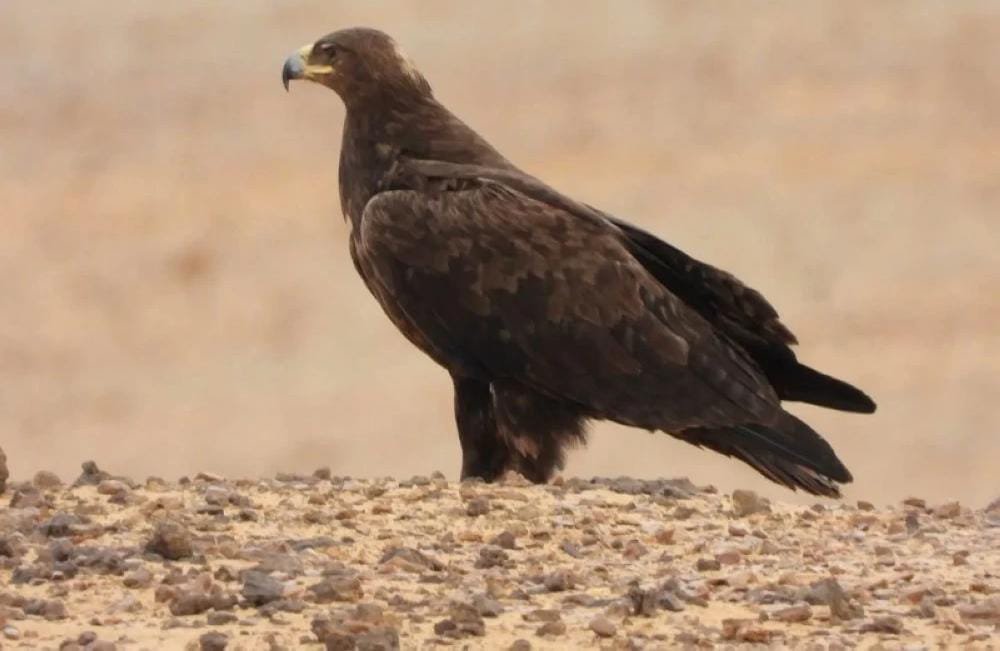
According to the data collected, the reserve hosted more than 2,850 rare birds of prey during the winter season. Among the most notable species documented were over 1,600 Steppe Eagles, a species classified globally as endangered. In addition, survey teams recorded more than 1,200 Black Kites, along with 35 Cinereous Vultures and 25 Eastern Imperial Eagles. The presence of these species in such significant numbers affirms the ecological importance of the reserve as a critical wintering ground and safe haven for migratory raptors.
The Steppe Eagle population, in particular, carries global conservation significance. As one of the world’s endangered raptor species, its survival depends heavily on secure migratory routes and protected winter habitats. The reserve’s role in supporting such a large concentration of Steppe Eagles reinforces its strategic importance within regional and international conservation frameworks. These findings contribute valuable insights into migration patterns and habitat use, helping shape future protection strategies.
Beyond species counts, the survey also reflected the success of infrastructure-related conservation initiatives. In collaboration with the National Center for Wildlife Development, the reserve authority undertook a major project in 2024 to insulate medium-voltage power lines and electrical towers within the protected area. Electrocution poses one of the most serious threats to large birds of prey worldwide, often leading to significant mortality rates. By addressing this hazard proactively, the authority aimed to reduce preventable deaths and improve overall habitat safety.
Encouragingly, the survey team reported no bird fatalities beneath the insulated power lines. This outcome confirms the effectiveness of the mitigation measures and demonstrates how targeted interventions can significantly lower risks to vulnerable species. The success of this initiative may serve as a model for similar conservation efforts in other wildlife-rich regions.
The reserve authority has also played an active role in broader national conservation programs. It contributes to the National Program for Monitoring the globally endangered Steppe Eagle—an initiative conducted in partnership with the Saudi Ornithological Society, the National Center for Wildlife Development, Telad Company, and BirdLife International. This collaborative effort seeks to document raptor populations, track migratory behavior, and identify critical wintering sites throughout the Kingdom.
Through systematic documentation and field research, the program provides essential data on species distribution and seasonal patterns. Such information is vital for developing evidence-based policies aimed at protecting birds of prey and preserving biodiversity. By participating in this national initiative, the reserve authority strengthens its integration within Saudi Arabia’s wider environmental strategy.
The ecological value of the King Salman bin Abdulaziz Royal Reserve extends beyond raptors alone. The protected area encompasses five globally recognized Important Bird Areas, as well as one internationally designated Key Biodiversity Area. These classifications reflect the reserve’s outstanding environmental significance and its contribution to global conservation priorities.
Data indicates that migratory birds constitute approximately 88 percent of all recorded species within the reserve, while resident birds account for the remaining 12 percent. This high proportion of migratory species highlights the reserve’s role as a critical stopover and wintering habitat along major migratory flyways. The diversity of avian life found within its boundaries illustrates the success of habitat management practices aimed at maintaining ecological balance.
The presence of thousands of rare raptors within the reserve also signals improvements in habitat quality. Healthy ecosystems with sufficient prey availability, minimal disturbance, and safe roosting areas are essential for attracting and sustaining large bird populations. The survey results suggest that conservation planning, habitat restoration, and regulatory protections are yielding measurable outcomes.
Environmental stewardship within the reserve aligns with Saudi Arabia’s broader sustainability and biodiversity goals. By integrating scientific research, infrastructure safety measures, and cross-institutional cooperation, the reserve authority demonstrates a holistic approach to wildlife conservation. These efforts not only protect endangered species but also enhance ecological resilience and environmental awareness at both national and international levels.
Furthermore, the documentation of such significant raptor populations reinforces the Kingdom’s position as an important geographical corridor for migratory birds between Asia, Europe, and Africa. The reserve serves as a natural refuge where birds can rest, feed, and regain strength during long migratory journeys. Protecting these habitats is essential for maintaining global migratory networks.
The findings from the recent winter survey reflect years of strategic planning and environmental investment. They also emphasize the importance of continued monitoring to track changes in species numbers and habitat conditions. Ongoing research will remain critical in identifying emerging threats and adapting conservation strategies accordingly.
In summary, the discovery of more than 2,850 rare raptors wintering in the King Salman bin Abdulaziz Royal Reserve marks a significant milestone in wildlife conservation. The large populations of Steppe Eagles, Black Kites, Cinereous Vultures, and Eastern Imperial Eagles highlight the reserve’s ecological prominence. Successful mitigation of electrocution risks through insulated power infrastructure further demonstrates the effectiveness of proactive environmental management.
As conservation programs expand and partnerships strengthen, the reserve stands as a model for biodiversity protection in the region. Its globally recognized bird areas, commitment to scientific monitoring, and dedication to safeguarding endangered species collectively reinforce its role as a sanctuary for wildlife and a cornerstone of national environmental preservation efforts.