

A fresh wave of diplomatic tension has emerged in the Middle East following controversial remarks made by the United States Ambassador to Israel, who reportedly stated that the land was given by God to the Jewish people and that Israel has the right to claim the entire region. The statement quickly triggered widespread criticism and concern, particularly across the Islamic world, where political leaders and organizations described the remarks as provocative and incompatible with international law.
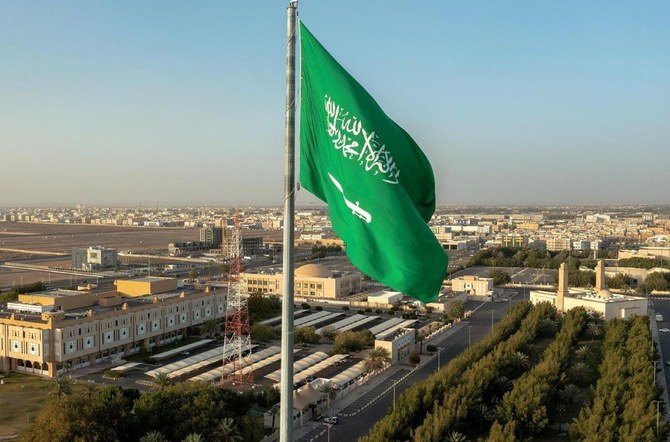
One of the strongest reactions came from Saudi Arabia. In an official statement issued by its Ministry of Foreign Affairs, the Kingdom categorically rejected the ambassador’s comments, labeling them irresponsible and inflammatory. Saudi officials emphasized that such assertions undermine the principles of international legitimacy and pose a serious threat to regional peace and stability. The statement stressed that claims based on religious narratives cannot override established international laws governing sovereignty and territorial integrity.
Riyadh further warned that rhetoric of this nature risks intensifying tensions in an already volatile region. According to the Saudi Foreign Ministry, respect for international law and diplomatic norms is essential to maintaining stability in the Middle East. The Kingdom reaffirmed its longstanding position that disputes over land and sovereignty must be addressed through recognized legal frameworks and peaceful negotiations, rather than unilateral or ideologically driven declarations.
In addition to issuing a public condemnation, Saudi Arabia formally requested clarification from the United States Department of State. Officials called on Washington to explain the context and intent behind the ambassador’s remarks, seeking to determine whether they reflect official U.S. policy or represent a personal opinion. Saudi authorities underscored the importance of transparency in diplomatic communications, particularly on matters that carry significant geopolitical implications.
The controversy also prompted a strong response from the Organisation of Islamic Cooperation (OIC). In a separate statement, the organization denounced the ambassador’s comments as a clear violation of international law and the principles enshrined in the charter of the United Nations. The OIC argued that any assertion granting exclusive rights over an entire region based on religious justification contradicts the foundations of the modern international system, which is built upon sovereign equality and mutual respect among nations.
The OIC further warned that such rhetoric could inflame tensions and destabilize the broader Middle East. It called upon the international community to take serious notice of the situation and to reaffirm its commitment to upholding international law and preventing actions or statements that could escalate conflict. The organization emphasized that safeguarding global peace requires adherence to established legal norms and rejection of narratives that legitimize territorial expansion at the expense of other peoples’ rights.
Political analysts note that the Middle East remains one of the most sensitive and conflict-prone regions in the world, shaped by decades of territorial disputes, historical grievances, and competing national aspirations. In such a fragile environment, statements from high-ranking diplomats carry considerable weight and can have far-reaching consequences. Observers argue that even rhetorical positions can influence diplomatic relations, public sentiment, and regional alignments.
Saudi Arabia and the OIC both reiterated that sustainable peace in the Middle East depends on dialogue, respect for sovereignty, and compliance with international agreements. They cautioned that introducing religious or ideological claims into geopolitical disputes risks further polarizing communities and complicating efforts toward conflict resolution. Both entities stressed that no state can claim overarching rights to an entire region in disregard of international legal standards.
The situation has also raised broader questions about the responsibilities of diplomatic representatives. Diplomats are generally expected to exercise caution in their public remarks, especially in regions marked by long-standing tensions. Analysts suggest that clarification from Washington may play a crucial role in determining whether the controversy subsides or escalates into a deeper diplomatic rift.
For now, the episode underscores the delicate balance that defines Middle Eastern politics. Words spoken by influential officials can resonate far beyond their immediate context, shaping perceptions and potentially affecting policy debates. As the international community watches closely, attention remains focused on how the United States will respond to calls for clarification and whether efforts will be made to ease concerns raised by Saudi Arabia and the OIC.
Ultimately, the controversy highlights the enduring importance of international law, diplomatic prudence, and respect for sovereignty in maintaining regional and global stability. In a region already burdened by conflict and uncertainty, responsible rhetoric and constructive engagement remain essential to preventing further escalation.