

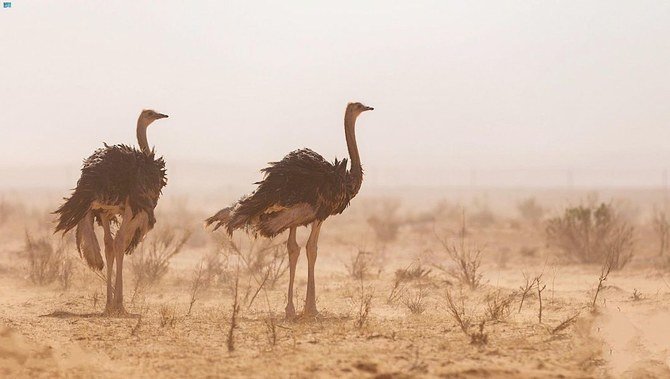
The Imam Turki bin Abdullah Royal Reserve stands out as Saudi Arabia’s second-largest royal protected area and has become a unique model for balancing natural resources, wildlife preservation, and human economic activities.
Established by a royal decree in 2018, the reserve officially commenced its operations in 2021. Following the King Salman bin Abdulaziz Royal Reserve, it ranks as the kingdom’s second-largest royal protected area and serves as a platform that links environmental conservation with sustainable development and community empowerment.
According to the official spokesperson, Ahmed Al-Qarni, the reserve is not merely designated for wildlife protection. It is envisioned as a comprehensive initiative that seeks to redefine the relationship between humans and the environment.
Its primary goal is to harness natural resources as tools for education, research, tourism, and economic benefit, ensuring development without compromising ecological and cultural integrity. Al-Qarni emphasized that the reserve operates under an integrated vision that aligns conservation, development, cultural heritage, and local community engagement.
Covering an extensive area of approximately 91,500 square kilometers, the reserve boasts extraordinary ecological and geographical diversity. It encompasses the vast Al-Nafud Al-Kabir desert, valleys, and plains, providing visitors with a multifaceted natural experience enriched with abundant wildlife and plant species. Tourists and researchers alike can explore this diverse terrain, experiencing the interplay between ecosystems, biodiversity, and natural landscapes.
Al-Qarni noted that the reserve reflects Saudi Arabia’s evolving approach to natural resource management and sustainability. It is regarded not just as a protected area, but as an economic and developmental asset, contributing to national economic diversification while preserving fragile ecosystems. Tourist programs within the reserve are carefully structured to maintain ecological balance, ensuring that human activities do not harm the environment.
The royal reserve hosts more than seventy designated areas for eco-tourism, including luxury camping, astronomical tourism, wildlife observation, and select commercial activities. Administratively, the reserve spans five regions: Al-Qassim, Northern Borders, Hail, Al-Jouf, and parts of the Eastern Province. This division allows for effective governance, resource management, and the organization of eco-tourism activities in a balanced manner.
A significant objective of the reserve is to provide both Saudi citizens and international visitors with immersive eco-tourism experiences while simultaneously offering local communities employment opportunities and educational programs. Al-Qarni emphasized that harmonizing human activity with ecological preservation is a core priority. Within this framework, natural resources are used as sustainable tools for economic development, promoting both the nation’s economy and environmental conservation.
The reserve also includes programs that encourage environmental education and cultural awareness. Visitors are informed not only about wildlife but also about conservation practices, sustainable living, and the importance of protecting ecosystems. The initiative aims to instill environmental awareness in younger generations while simultaneously strengthening local economies.
Modern administrative and technical measures have been implemented to harmonize tourism development with environmental protection. Facilities for residential projects, scientific research, and environmental monitoring have been established to ensure that all activities are conducted without disturbing ecological balance. Local communities are actively engaged in the management of the reserve, preserving cultural traditions while benefiting from economic opportunities.
The Imam Turki bin Abdullah Royal Reserve is setting a national benchmark for eco-tourism in Saudi Arabia. As Al-Qarni noted, the reserve is more than a protected area; it represents a platform that reshapes the relationship between the environment, economy, culture, and human activity. Its establishment demonstrates how government and local stakeholders can adopt integrated strategies to promote sustainable development while safeguarding natural resources.
The reserve’s impact extends to Saudi Arabia’s international standing, showcasing the kingdom’s commitment to eco-tourism, education, and research on a global platform. The initiative not only contributes to national economic growth but also highlights Saudi Arabia’s progress in environmental conservation and sustainable development worldwide.
Policies within the reserve provide guidance on maintaining a balance between human activity and ecological preservation. Al-Qarni explained that the reserve operates under a long-term vision that strengthens the connection between nature, economic development, education, and community well-being.
The reserve establishes an integrated system for eco-tourism, combining protection, research, education, recreation, and local development. Visitors, including tourists and researchers, can experience the benefits of natural resources while adhering to environmental conservation principles.
The Imam Turki bin Abdullah Royal Reserve is emerging as a unique model for sustainable development in Saudi Arabia, playing a pivotal role in creating harmony between the environment, humans, economy, and culture. It serves as a comprehensive example, demonstrating not only effective wildlife protection but also the enhancement of local economies, educational opportunities, and international standards of conservation and sustainable tourism.