

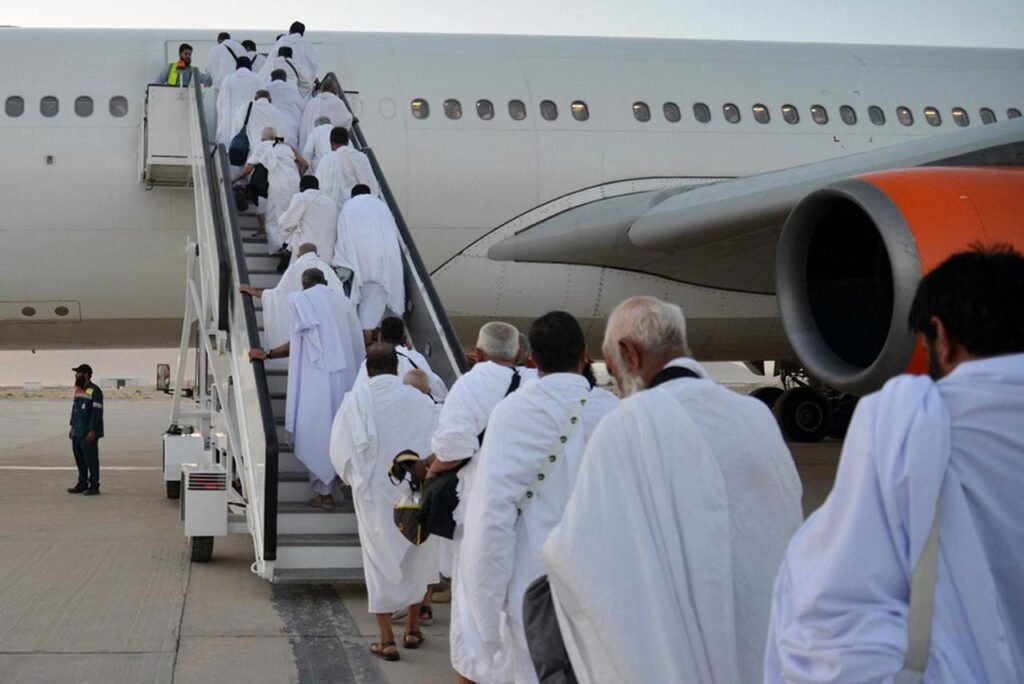
The official schedule for Pakistan’s Hajj flights for 2026 has finally been announced, offering clarity to pilgrims who have been eagerly awaiting travel dates for this year’s sacred journey to Saudi Arabia. According to sources within the Ministry of Religious Affairs, the first Hajj flight from Pakistan is set to depart on April 18, marking the official commencement of a meticulously planned operation to transport pilgrims to the holy sites of Mecca and Medina.
This year, the government has arranged an extensive operation to ensure the safe and organized transport of a significant number of Pakistani citizens undertaking the pilgrimage.
Under the federal government’s official Hajj scheme, a total of 468 flights have been scheduled to carry approximately 119,000 pilgrims from across Pakistan to the Kingdom of Saudi Arabia. The flights will originate from eight major cities, including Karachi, Lahore, Islamabad, Quetta, Multan, Sialkot, Faisalabad, and Sukkur. The first batch of flights, slated for April 18, will depart from Karachi, Lahore, Sialkot, and Multan, allowing thousands of pilgrims to commence their journey to Medina, the city that holds immense spiritual significance for Muslims worldwide.
Officials from the Ministry of Religious Affairs have stated that all registered pilgrims will be formally informed of their specific flight details and schedules in the upcoming week.
This proactive step aims to ensure that every participant in the government Hajj scheme is fully aware of their travel arrangements and can make necessary preparations in advance. By providing timely information, the authorities intend to minimize confusion and streamline the boarding process, reflecting Pakistan’s commitment to a smooth Hajj operation.
The Hajj flights operation is designed to continue over a 34-day period, allowing for the orderly and systematic transportation of all pilgrims. For the first 15 days, flights will focus exclusively on ferrying pilgrims to Medina, ensuring that the holy city receives the initial batches of Pakistani travelers.
During this initial phase, a total of 186 flights are planned to Medina, each meticulously scheduled to maintain balance and prevent overcrowding. Following the successful completion of the Medina flights, operations for Jeddah, the gateway to Mecca, will begin on May 4, facilitating the onward journey of pilgrims who will perform Hajj rituals in the sacred precincts of the Kaaba.
The last Hajj flight from Pakistan is scheduled for May 21, thereby concluding the federal Hajj operation for this year. This comprehensive timeline ensures that all pilgrims have sufficient time to reach the holy sites, perform their religious obligations, and commence the journey back home without undue pressure or logistical bottlenecks. The authorities have emphasized that every measure has been taken to maintain safety, punctuality, and comfort for the pilgrims during their air travel.
A closer look at the city-wise flight distribution reveals the meticulous planning that has gone into this operation. Islamabad, the capital, will host a total of 129 flights, reflecting the city’s significant number of registered pilgrims. Karachi, being the largest metropolitan city, will account for 124 flights, while Lahore, the cultural hub, will see 104 departures.
Other cities, including Quetta, Multan, Sialkot, Faisalabad, and Sukkur, will also contribute to the operation with varying numbers of flights: Quetta with 18, Multan with 34, Sialkot with 26, Faisalabad with 23, and Sukkur with 5 flights. This spread ensures that pilgrims from all regions have accessible and convenient travel options, reducing travel fatigue and logistical challenges before embarking on the sacred journey.
The Ministry of Religious Affairs has also clarified that the phased scheduling of flights is intended to manage the high volume of travelers effectively. By initially prioritizing Medina, the operation allows pilgrims to acclimatize to the region, settle into their accommodations, and perform preliminary religious rites before proceeding to Mecca for the central rituals of Hajj. This approach not only enhances the overall experience of the pilgrims but also aligns with Saudi regulations regarding crowd management and health safety, reflecting careful coordination between the two countries.
Officials have stressed that the Hajj flights operation is among the largest organized air travel initiatives in Pakistan each year. The government’s focus has been on combining efficiency with comfort, ensuring that pilgrims do not face unnecessary delays, long queues, or administrative challenges.
The allocation of flights based on regional demand also highlights the effort to distribute resources equitably, accommodating pilgrims from remote areas such as Quetta and Sukkur alongside those from major urban centers like Karachi and Lahore. Each flight, according to sources, will be equipped to handle luggage requirements, in-flight needs, and other logistical considerations, reflecting a comprehensive planning model.
The announcement of the schedule comes at a time when pilgrims have already begun finalizing preparations for their journey, including visa documentation, vaccinations, and travel insurance, all of which are coordinated in collaboration with the Ministry.
Authorities have reiterated the importance of adherence to flight schedules and timely arrival at departure airports to ensure the smooth execution of the operation. Pilgrims are encouraged to monitor official updates and notifications, as the government aims to maintain transparency and effective communication throughout the Hajj season.
This year’s Hajj operation underscores the federal government’s continued commitment to facilitating religious travel while prioritizing safety, coordination, and efficiency. The multi-city flight network, encompassing eight departure hubs and nearly 500 flights over more than a month, represents a significant logistical achievement, reflecting Pakistan’s longstanding cooperation with Saudi authorities and the importance placed on ensuring a spiritually fulfilling experience for all participants.
Pakistan’s Hajj flights for 2026 are set to begin on April 18, with an organized schedule spanning 34 days and covering eight cities nationwide. A total of 468 flights will transport approximately 119,000 pilgrims, with the initial 15 days dedicated to Medina arrivals, followed by departures to Jeddah starting May 4. The final flight will leave on May 21, marking the conclusion of this year’s Hajj operation.
The careful planning, regional flight distribution, and phased approach are all aimed at ensuring a smooth, safe, and spiritually rewarding pilgrimage for Pakistani citizens, reflecting a meticulous and well-coordinated effort by the Ministry of Religious Affairs in collaboration with international partners.