

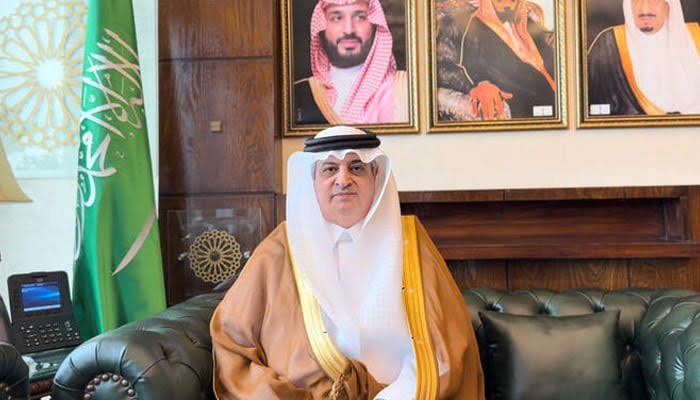
Amid the escalating tensions in the Middle East, global attention has increasingly turned toward countries that are demonstrating restraint, balance, and responsible diplomacy. In this context, Pakistan’s role has been recognized as a constructive and stabilizing force. Saudi Arabia’s Ambassador to Pakistan, Nawaf bin Saeed Al-Malki, has openly praised Islamabad’s measured stance, describing it as both responsible and strategically wise during a highly volatile period.
In his statement, the Saudi envoy emphasized that moments of crisis demand composure rather than impulsive reactions. He noted that Pakistan has approached the situation with maturity, prioritizing dialogue and de-escalation over confrontation. According to him, this reflects a broader foreign policy framework rooted in moderation, peace, and adherence to international norms—qualities that are particularly valuable when regional tensions risk spiraling into wider conflict.
The ambassador also expressed deep concern over recent attacks targeting Gulf states, calling them alarming developments with far-reaching consequences. He underscored that such acts represent unjustified aggression against sovereign nations and cannot be condoned under any circumstances. These incidents, he said, not only undermine regional stability but also threaten the broader framework of international peace and security.
Highlighting the humanitarian dimension, he pointed out that these attacks have resulted in significant loss of life and damage to civilian infrastructure. Residential areas, public facilities, and even airports have reportedly been targeted, raising serious concerns about the protection of non-combatants. Such actions, he stressed, constitute clear violations of international law and the fundamental principles upheld by the United Nations.
Nawaf bin Saeed Al-Malki further noted that respecting international law is not optional but essential for maintaining global order. Without adherence to these rules, he warned, the risk of chaos and prolonged conflict increases significantly. He called on the international community to take collective responsibility in ensuring that such violations are addressed and prevented in the future.
Turning again to Pakistan’s role, he commended the country for maintaining a principled and balanced position. He observed that Islamabad has not only voiced concern over the situation but has also consistently advocated for peaceful solutions rooted in diplomacy. In his view, Pakistan’s approach demonstrates that even in times of crisis, it is possible to remain committed to ethical and legal standards while pursuing national and regional stability.
The ambassador also stressed the importance of unity and cooperation at the global level. He argued that crises of this magnitude cannot be resolved through unilateral actions or military means alone. Instead, they require coordinated efforts, mutual understanding, and a willingness to engage in meaningful dialogue. Wisdom, he suggested, lies in choosing negotiation over escalation and collaboration over division.
He further highlighted that safeguarding the future depends on upholding humanitarian values. By placing human dignity and the rule of law at the center of decision-making, nations can create conditions for lasting peace. He emphasized that true security is not achieved through القوة alone but through justice, accountability, and respect for shared international principles.
Reaffirming Saudi Arabia’s own stance, the ambassador stated that the Kingdom remains committed to promoting stability and peace in the region. It supports all initiatives aimed at reducing tensions and encouraging diplomatic engagement among conflicting parties. He reiterated that the recent attacks on Gulf countries are a matter of serious concern and require a unified and measured response from the global community.
Overall, his remarks convey a clear message: in an increasingly uncertain and interconnected world, responsible diplomacy and adherence to international norms are indispensable. Pakistan’s example, as highlighted by the Saudi envoy, illustrates how a balanced and principled approach can contribute positively to regional stability. If more nations adopt similar strategies, the chances of preventing further escalation and achieving sustainable peace would be significantly improved.