

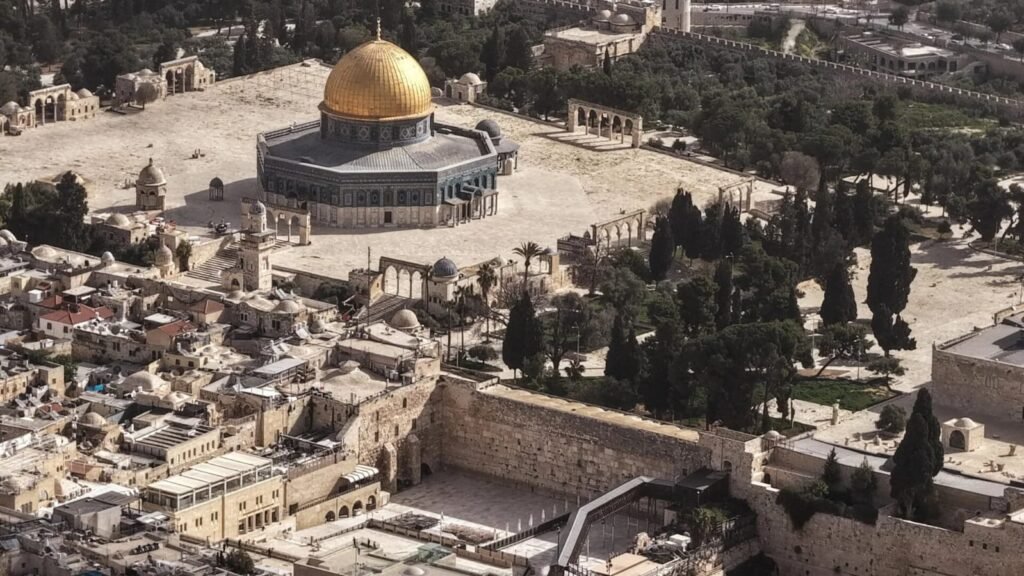
A fresh wave of tension has emerged in the Middle East following a controversial visit to one of Islam’s most revered holy sites, prompting a strong diplomatic response from Saudi Arabia. The incident, which took place at the compound of Al-Aqsa Mosque in Jerusalem, has reignited concerns over religious sensitivities, international law, and the fragile situation in the occupied Palestinian territories.
According to reports, Itamar Ben-Gvir, who is widely known for his far-right political stance, entered the compound on Monday accompanied by Israeli security forces. His presence at the site, which holds immense religious significance for Muslims worldwide, quickly drew criticism and condemnation from multiple quarters, particularly from the Saudi leadership.
In an official statement released by its foreign ministry, Saudi Arabia strongly denounced the incident, describing it as an unacceptable act carried out under the protection of occupying forces. The statement emphasized that such actions not only violate established international norms but also represent a direct affront to the sanctity of Islamic holy places. It further stressed that these developments provoke the sentiments of millions of Muslims across the globe, intensifying already heightened tensions.
The Saudi foreign ministry made it clear that the Kingdom categorically rejects any continued encroachment upon sacred sites in what it referred to as occupied Palestinian land. The language used in the statement reflected deep concern over what Riyadh sees as repeated violations that undermine both religious respect and legal frameworks governing such sensitive areas.
Beyond condemnation, the Kingdom also called upon the global community to take meaningful steps to prevent further escalation. It urged international actors to intervene in order to halt any actions that could be interpreted as aggression against the Palestinian people or their religious and historical landmarks. The statement underscored the importance of ensuring that the status and sanctity of Al-Aqsa Mosque are preserved and respected at all times.
The incident has once again brought the spotlight onto the broader issue of access and control over holy sites in Jerusalem, a city that holds deep religious importance for Muslims, Christians, and Jews alike. For Muslims in particular, the Al-Aqsa Mosque is regarded as the third holiest site in Islam, making any perceived violation of its sanctity an issue of profound emotional and spiritual concern.
Observers note that actions such as the one carried out by Itamar Ben-Gvir often have repercussions that extend far beyond the immediate location. They can inflame tensions across the region and complicate already delicate diplomatic efforts aimed at maintaining stability. In this context, Saudi Arabia’s reaction is seen not only as a defense of religious values but also as part of a broader call for adherence to international law and the protection of cultural and historical heritage.
The Kingdom’s position also reflects its long-standing stance on the Palestinian issue, where it has consistently advocated for the rights of the Palestinian people and the preservation of Islamic holy sites. By raising its voice on this matter, Saudi Arabia has once again highlighted the urgency of addressing actions that could further destabilize the region.
As global attention turns toward this latest development, questions are being raised about the role of international organizations and whether they will respond effectively to calls for accountability and restraint. The situation underscores the ongoing challenges in balancing political authority, religious sensitivities, and international obligations in one of the world’s most contested regions.
In the aftermath of the incident, the focus remains on whether steps will be taken to prevent similar occurrences in the future. For millions around the world, the protection of Al-Aqsa Mosque is not merely a political issue but a deeply personal and spiritual matter, making any violation of its sanctity a source of widespread concern and outrage.