

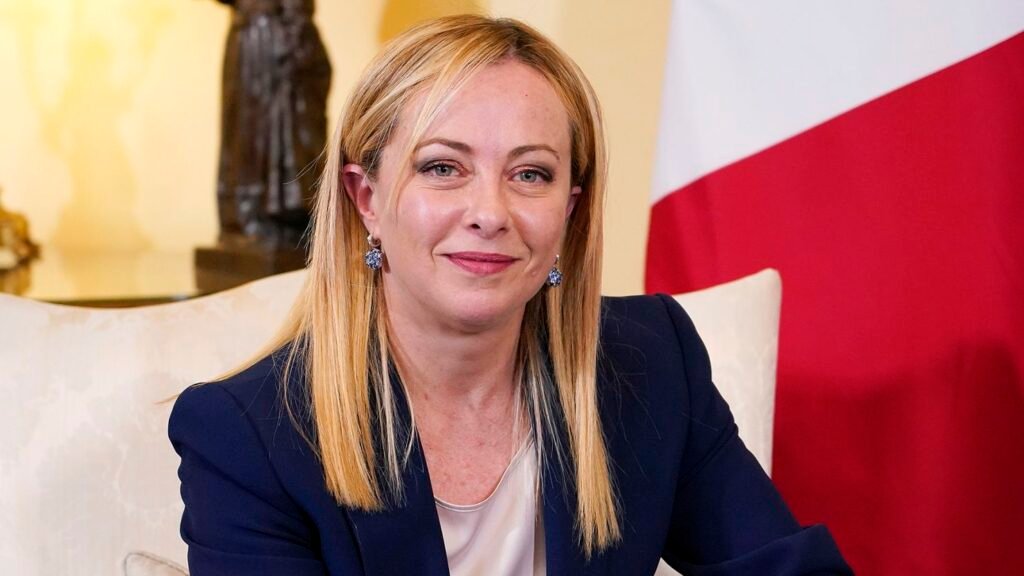
A diplomatic disagreement emerged between Italy and Russia on Wednesday after the Russian ambassador in Rome was formally summoned by Italian authorities. The move followed controversial remarks aired on Russian state television, where a pro-Kremlin presenter delivered harsh and offensive comments targeting Italy’s prime minister, sparking outrage within Italian political circles.
During the meeting, Italy’s Foreign Minister Antonio Tajani conveyed strong to Russian ambassador Alexey Paramonov, emphasizing that such language was unacceptable—particularly when broadcast on a state-affiliated media platform. He stressed that while democratic societies encourage open political debate and criticism, there is a clear boundary that should not be crossed, especially when discourse turns into personal attacks or gender-based insults.
The controversy originated from a segment aired on the Russian channel “Rossiya 1,” in which television host Vladimir Solovyov used derogatory and inflammatory language while referring to the Italian prime minister. His remarks went beyond political critique, extending into disparaging comments about her appearance which many in Italy viewed as deeply inappropriate and offensive.
According to reports from the Italian news agency ANSA, Tajani made it clear that Italy values freedom of expression but does not tolerate its misuse for defamation or humiliation. He highlighted that targeting a democratically elected leader with such undermines not only diplomatic respect but also basic standards of decency in international discourse.
In response, Ambassador Paramonov rejected the Italian government’s reaction, describing the decision to summon him as a serious misjudgment. He argued that the statements made by a television presenter should not be interpreted as an official stance of the Russian government. From his perspective, equating individual media commentary with state policy reflects a misunderstanding of how media operates.
Paramonov further insisted that it is unreasonable to elevate personal opinions expressed in media programs to the level of diplomatic concern. He suggested that Italy was exaggerating the situation and using the incident as a pretext for criticism, rather than addressing it within the appropriate context of independent media expression.
The incident highlights how remarks made in media spaces can quickly escalate into formal diplomatic tensions, particularly when they involve personal attacks against national leaders and are broadcast through platforms associated with the state.