

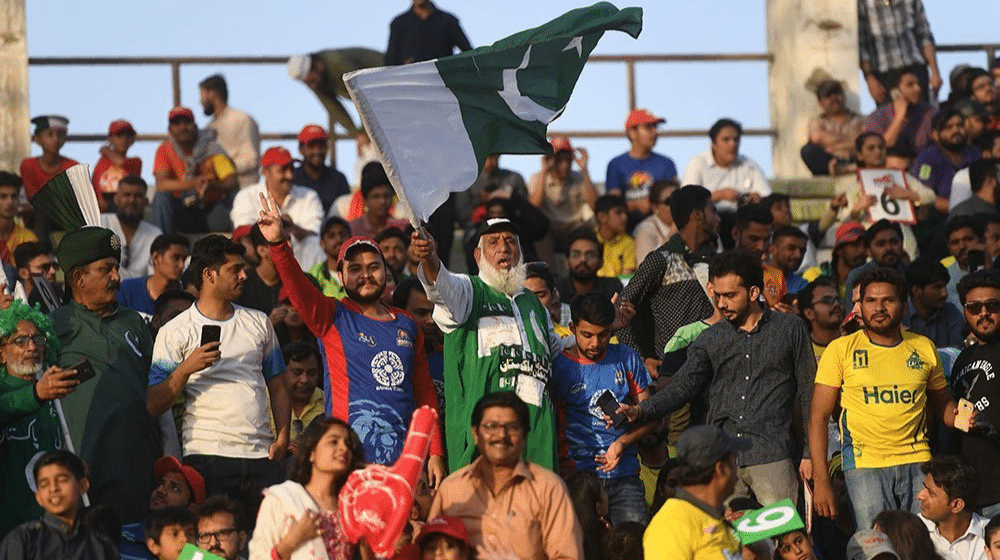
A notable shift has taken place regarding the spectator policy for the Pakistan Super League’s eleventh edition, as the country’s top leadership has agreed to allow fans to attend the tournament’s final match. This development comes after days of deliberation, requests from stakeholders, and ongoing concerns about resource conservation amid a broader regional situation affecting fuel availability.
The Chairman of the Pakistan Cricket Board, Mohsin Naqvi, shared the update publicly, explaining that the decision followed his direct engagement with Prime Minister Shehbaz Sharif. According to him, the request to permit spectators was made in light of repeated appeals from franchise owners who emphasized the importance of crowd presence for the league’s overall spirit and commercial vitality. While the prime minister had initially shown caution due to prevailing austerity measures, he ultimately granted approval for fan attendance specifically for the final match.
This move represents a limited easing of earlier restrictions that had been strictly implemented at the start of the tournament. Before PSL 11 began, authorities had decided that all matches would take place behind closed doors, meaning no spectators would be allowed inside stadiums. This policy was introduced as part of a broader national effort to conserve resources, particularly fuel, which had become a growing concern due to heightened geopolitical tensions in the region.
At the time, officials highlighted that limiting public gatherings and reducing travel would help manage fuel consumption more effectively. In line with this strategy, the PCB also opted to host the entire tournament in just two major cities—Karachi and Lahore—rather than spreading matches across multiple venues as seen in previous editions. This centralization was intended to minimize logistical demands and reduce unnecessary movement by teams, staff, and fans.
Despite these measures, the absence of spectators quickly became a point of contention. Franchise owners, who play a key role in the league’s financial ecosystem, began voicing concerns about the impact of empty stadiums. They argued that the presence of fans is not merely a cosmetic feature but a fundamental component of the PSL experience. The energy, excitement, and engagement generated by live audiences contribute significantly to the tournament’s identity, both for players on the field and viewers watching from home.
As the tournament progressed, calls for a policy revision grew louder. Several franchise representatives publicly urged authorities to reconsider the no-spectator rule, stressing that the league felt incomplete without its passionate fan base. Beyond the emotional and cultural aspects, there were also commercial considerations, including ticket sales, sponsorship visibility, and overall brand value, all of which are closely tied to crowd participation.
Some team officials went a step further by directly reaching out to senior political leadership. Appeals were made not only to the prime minister but also to provincial chief ministers, requesting a reassessment of the restrictions. These efforts reflected a coordinated push from multiple stakeholders who believed that at least a partial relaxation could be managed without undermining the broader goals of austerity.
In response, the government appears to have adopted a balanced approach. While maintaining the overall framework of resource conservation, it has made an exception for the most significant match of the tournament—the final. This decision allows fans to return to the stadium for the climax of the league, restoring an element that many consider essential to the spectacle of cricket in Pakistan.
Mohsin Naqvi, in his statement, expressed appreciation for the prime minister’s decision, describing it as a supportive gesture toward both the fans and the cricketing community. He acknowledged that while austerity measures remain important, the approval demonstrates a willingness to accommodate public sentiment and the interests of the sport.
The context in which these decisions have been made is also important. The ongoing regional situation, particularly involving tensions linked to the United States, Israel, and Iran, has had ripple effects on global energy markets. For countries like Pakistan, which rely heavily on imported fuel, such developments can quickly translate into domestic challenges, necessitating careful management of consumption.
Against this backdrop, the initial decision to hold matches without spectators was seen as a precautionary step aimed at mitigating pressure on national resources. However, the eventual allowance for fans in the final indicates that policymakers are attempting to strike a compromise—one that acknowledges both economic realities and the social significance of major sporting events.
The return of spectators, even if limited to a single match, is likely to have a noticeable impact. For players, performing in front of a live audience often enhances motivation and intensity. For fans, it provides an opportunity to reconnect with the sport in a communal setting, something that has been restricted for much of the tournament.
It also sends a broader message about adaptability. The situation demonstrates how policies can evolve in response to feedback and changing circumstances, even within the constraints of larger national priorities. By allowing attendance at the final, authorities have signaled that while discipline and conservation remain necessary, there is still room for flexibility when it comes to events of national importance.
As the tournament approaches its conclusion, attention will now shift to how this decision is implemented and managed. Ensuring that crowd attendance does not lead to excessive strain on resources will likely remain a key consideration. At the same time, the presence of fans is expected to restore some of the vibrancy that defines the PSL, making the final a more memorable and engaging experience for all involved.