

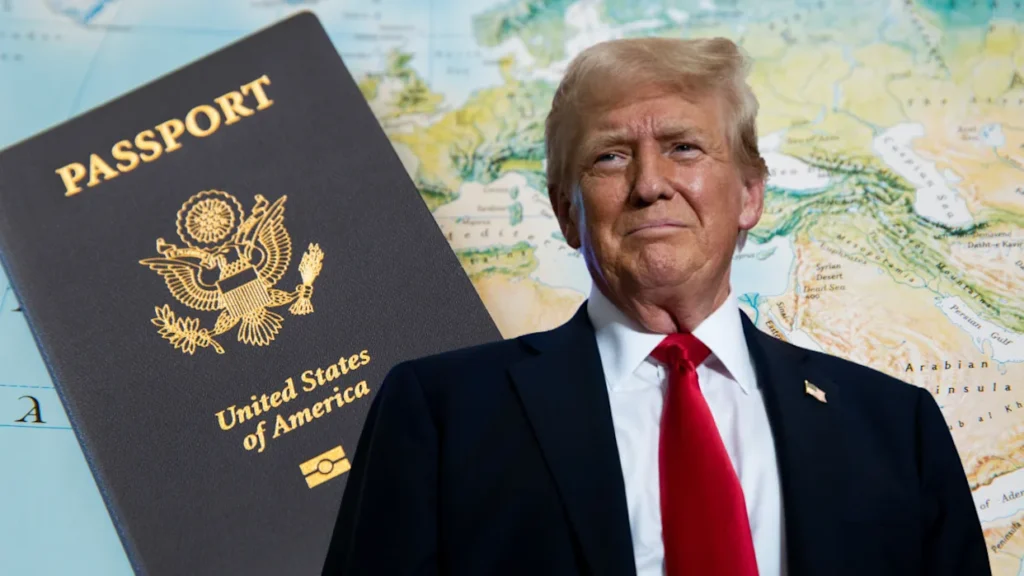
A significant and highly unusual move linked to the United States’ upcoming 250th Independence anniversary has sparked widespread debate across political and public circles. The U.S. State Department has revealed plans to issue a special, limited-edition series of passports to commemorate the historic milestone, introducing a design feature that has never been seen before in the country’s history.
According to official statements, these commemorative passports will include the image of sitting President Donald Trump on their internal pages, marking the first time a serving U.S. president will be featured in such a manner on an official travel document. The initiative is intended to celebrate the 250th anniversary of American independence in July, a landmark occasion being prepared with a range of symbolic and public-facing events.
A preview of the new passport design shared by the department shows that the pages will incorporate not only Trump’s portrait but also his stylized gold signature, adding a personalized and ceremonial element to the document. Alongside this, imagery representing the founding era of the United States has also been included, particularly scenes linked to July 4, 1776, when independence was formally declared. This blend of historical references and contemporary leadership aims to connect the country’s origins with its present identity.
Officials have indicated that the passports will be issued in very limited quantities and will only be available in Washington, D.C. This reinforces the idea that the initiative is largely symbolic and collectible in nature, rather than a widespread change to standard passport issuance.
In parallel with the passport release, there are also plans to mint a commemorative gold coin bearing Trump’s image as part of the anniversary celebrations. The coin is expected to serve as another keepsake tied to the 250-year milestone, further emphasizing the central role of the current administration in the planned commemorations.
The broader celebration strategy appears to extend beyond documents and collectibles. Reports suggest that several prominent institutions and buildings in the capital have already been renamed in honor of Trump following his return to power, reflecting a broader effort to highlight his leadership during this period. Additionally, a major motorsport event is reportedly being planned in Washington between August 21 and 23, which will form part of the anniversary festivities and aim to attract both national and international attention.
Despite the ceremonial intentions behind the initiative, the announcement has drawn sharp criticism from political opponents. Members of the Democratic Party have openly questioned the decision, arguing that government resources should be directed toward more pressing domestic and international concerns rather than symbolic projects centered on a single political figure. Some critics have also expressed concern about the precedent such a move might set, suggesting it could blur the line between national institutions and individual leadership.
There has also been criticism directed at the Secretary of State, with opponents urging a greater focus on foreign policy challenges rather than what they describe as unnecessary expenditures. The debate has extended into broader discussions about governance, accountability, and the appropriate use of public funds.
Observers have noted that, traditionally, passports around the world tend to feature neutral imagery such as historical landmarks, cultural symbols, or natural landscapes. Even in countries where political leaders maintain a strong public presence, it is uncommon for their portraits to appear on official travel documents. This makes the U.S. proposal particularly distinctive and, for some, controversial.
Overall, the initiative has become a focal point of discussion, with supporters viewing it as a unique and memorable way to mark a historic anniversary, while critics see it as an unconventional and potentially problematic departure from established norms.