

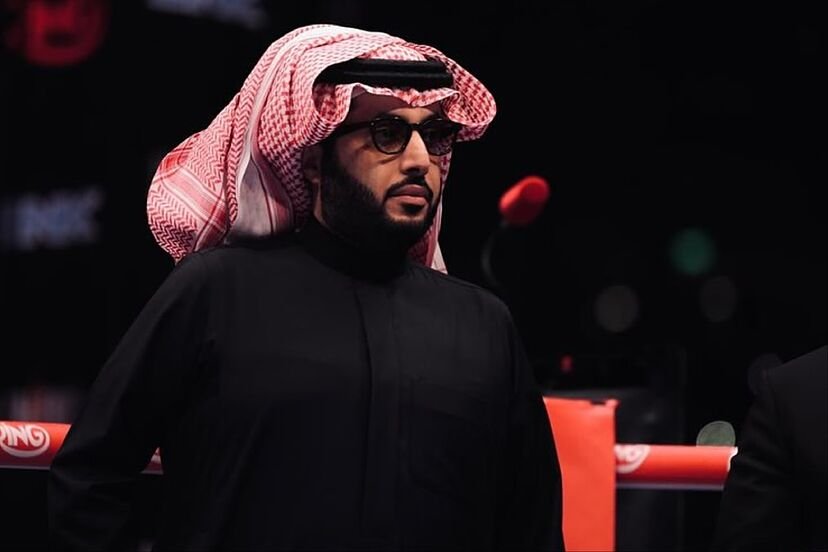
A conversation around urban leadership and global influence has recently gained attention in London after Steve McNamara, Director of London Taxis, expressed an unconventional view about the kind of leadership the city should aspire to in the future. In an interview, he suggested that London would benefit from a mayor with strong international stature and the ability to attract large-scale entertainment and sporting events—qualities he associated with Saudi figure Turki Alalshikh.
McNamara’s remarks stood out because they moved beyond traditional political expectations and instead highlighted the growing importance of global influence and event-driven economic activity in shaping modern cities. According to him, the idea was not about politics alone but about leadership that can elevate a city’s profile on the world stage through major initiatives and high-impact events.
He revealed that in recent days, he had received a significant number of messages and calls from taxi drivers across London. Many of them had expressed a desire to extend their appreciation to Turki Alalshikh, reflecting a broader recognition of his role in organizing large-scale entertainment and boxing events that attract global audiences. McNamara interpreted this response as evidence of how such events positively impact everyday workers, including those in the transport sector.
He explained that when a city hosts major international events, the benefits extend far beyond the venues themselves. Increased tourism, higher demand for transportation, and a boost to local businesses all contribute to economic growth. Taxi drivers, in particular, experience a direct increase in activity during such events, as visitors rely heavily on local transport services.
Adding to the discussion, Turki Alalshikh himself addressed London’s taxi drivers through a message shared on social media. In his post, he announced plans for a major event expected to take place in the final quarter of 2026. As part of this initiative, he invited London taxi drivers to attend as special guests, acknowledging their role in supporting large-scale city events.
In a lighter tone, he also encouraged them to plan their time off for that day and suggested that people could walk instead, noting the health benefits of walking. This remark quickly gained attention online and added a human and relatable element to the broader announcement.
These developments come at a time when Riyadh Season has established itself as a globally recognized platform for entertainment and sports. Through high-profile boxing matches and other large events, it has drawn international attention and demonstrated how strategic planning in entertainment can significantly enhance a city’s global image and economic activity.
Meanwhile, London has also hosted several major boxing events in recent times, attracting thousands of spectators and generating renewed interest in sports and entertainment within the city. These events have contributed to economic momentum, benefiting sectors such as hospitality, tourism, and transportation.
McNamara’s perspective reflects a broader shift in how urban success is being defined. Beyond governance and infrastructure, cities are increasingly evaluated based on their ability to host global events, attract international audiences, and create vibrant cultural experiences. In this context, leadership that combines administrative capability with global vision is seen as a valuable asset.
The discussion highlights an evolving understanding of city management, where economic growth, global recognition, and cultural engagement are interconnected. For a city like London, maintaining its status as a leading global hub may depend not only on policy decisions but also on its ability to continuously attract and host world-class events that resonate on an international scale.