

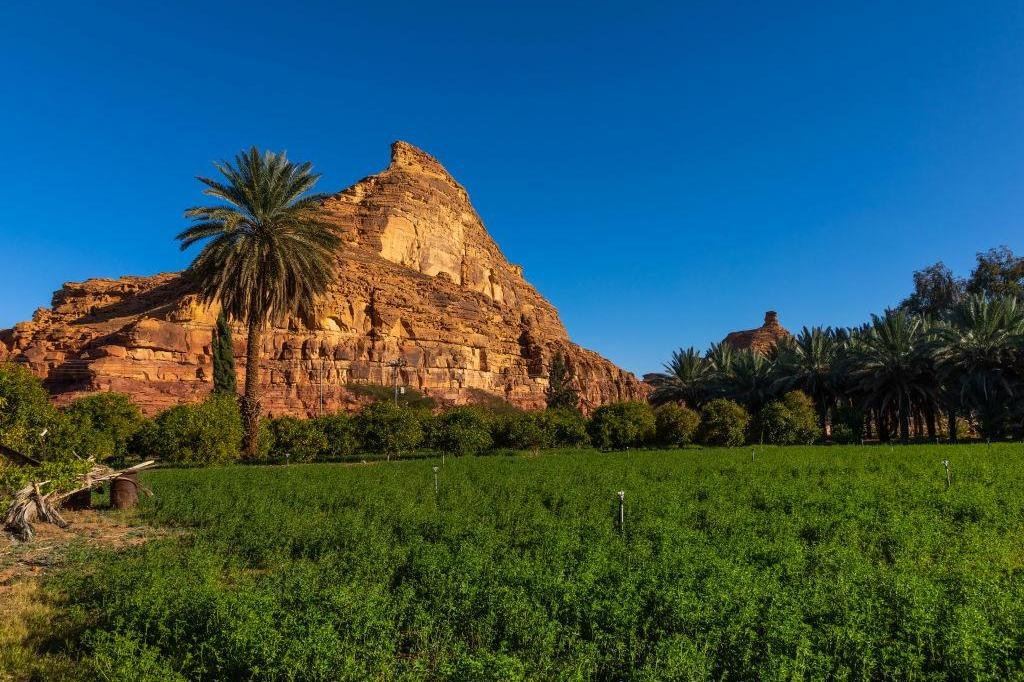
The King Salman bin Abdulaziz Royal Reserve is deepening its ecological restoration efforts, with a scope and pace that underscore Saudi Arabia’s increasingly ambitious environmental goals.
Spanning large and degraded tracts of land in northern Saudi provinces—including Tabuk, Al-Jouf, Northern Borders, and Hail—this reserve is now not just a protected area, but a dynamic site of rewilding, species reintroduction, and habitat restoration, reshaping landscapes long affected by desertification and overuse.
Over the past few years, the reserve authority has succeeded in bringing back to health hundreds of thousands of hectares of land once degraded by overgrazing, erosion, and the harsh effects of climate. Trees, shrubs, grasses and native seed stocks are being reintroduced systematically into soils that had been stripped of vegetation or exhausted.
Part of the strategy involves sowing seeds of indigenous plants—such as yarrow, artemisia, haloxylon and a range of local herbs and grasses—so that natural regeneration can take hold once the soil is stabilized. Millions of seedlings are also being planted, selected for their adaptability to the arid environment and their capacity to help retain moisture, reduce dust storms, and shelter wildlife.
Biodiversity conservation forms a central pillar of the reserve’s work. Wildlife species that were once pushed to the margins or disappeared locally are being relocated back into restored ecosystems. These reintroductions include large mammals like the Arabian oryx, Arabian gazelles, sand gazelles, and even the elusive Arabian leopard, among others.
The work often occurs in partnership with national wildlife authorities, conservation biologists, and local communities, emphasizing genetic diversity, animal welfare, and long-term habitat suitability.
In addition to mammals, the reserve is an important waystation for migratory birds, many of which journey from Asia and Europe in the autumn and return from Africa in the spring. More than two hundred species of birds have been documented there, a significant proportion of them migratory. Some are rare or globally threatened, such as large eagles and vultures, which use the reserve’s wetlands, forests and scrublands as stopovers or wintering grounds.
Restoration isn’t only about flora and fauna: it involves rebuilding ecological function. That means restoring soils, controlling invasive species, protecting watersheds, and managing grazing so that plant cover can recover. Fence-lines, grazing restrictions, and managed access are increasingly used to prevent damage from livestock and unregulated human movement.
Alongside that, efforts include planting clusters of vegetation to create corridors—green belts that link fragmented habitats, allowing animals to move, plants to spread, and ecosystems to become more resilient in the face of climate stress.
A strong institutional framework underpins this work. The reserve authority operates under royal mandate, and its mission is aligned with national policies on climate change, sustainable development, and Saudi Vision 2030.
The Saudi Green Initiative is the driving umbrella: it sets overall goals for reducing carbon emissions, expanding forest cover, protecting marine and terrestrial ecosystems, and restoring degraded land. The reserve serves as one of the flagship projects under that initiative, a testing ground for techniques in restoration, community engagement, environmental education, and conservation science.
On the community side, restoration programs are also seeking to involve local residents in monitoring and maintenance.
Seed-collection from native species is often done by community teams; similarly, volunteer planting drives, awareness campaigns, and educational outreach help build local ownership over the restored landscapes. This helps ensure that as ecosystems recover, they are respected and protected by people who live nearby.
Job creation is also woven in, as monitoring, planting, seed-collection, and wildlife tracking require labour, technical skills, and coordination.
The reserve is also stepping up its role in tracking wildlife movement. For example, vultures released or rehabilitated within the reserve have been fitted with GPS trackers, enabling scientists to follow their migratory paths across several countries.
These data help in understanding migration corridors, seasonal habitat use, and threats along flyways—information that informs protection strategies not just locally but regionally.
Moreover, the reserve is now recognized by international conservation bodies through various lists and evaluations, in part thanks to its achievements in habitat restoration, species reintroduction, and community engagement. Such recognition helps draw attention, funding, and technical partnerships, reinforcing the reserve’s capacity to scale up its restoration and to maintain restored lands over the long haul.
Among the key challenges are climate change—long dry seasons, variable rainfall, heat stress, and occasional droughts—soil degradation, and balancing human use such as grazing, tourism, and cultural heritage with ecological needs. To respond, management is using adaptive strategies: experimenting with drought-tolerant plant varieties, employing water harvesting techniques, building stone terraces or micro-catchment systems, and setting aside core zones of strict protection where human access is limited or regulated.
The ecological gains are already visible: areas once barren are becoming home to vegetation cover; soil erosion is falling; wildlife sightings are increasing; bird migrations are more visible and robust; native plant populations are re-emerging.
Over time, these gains also feed into social and economic benefits—reduced dust storms, improved air quality, increased eco-tourism, cultural heritage preservation, and enhanced livelihoods for people engaged in restoration, monitoring, guiding visitors, or participating in seed and nursery work.
Looking ahead, authorities plan to continue accelerating restoration efforts, expanding rehabilitated zones, enhancing wildlife corridors and connectivity, scaling reintroductions of endangered species, improving data-monitoring systems, and making sure that restoration contributes tangibly to carbon capture and climate mitigation.
The goal is not only to heal damaged landscapes, but to create eco-resilient territories that support both nature and human well-being, now and for future generations.