

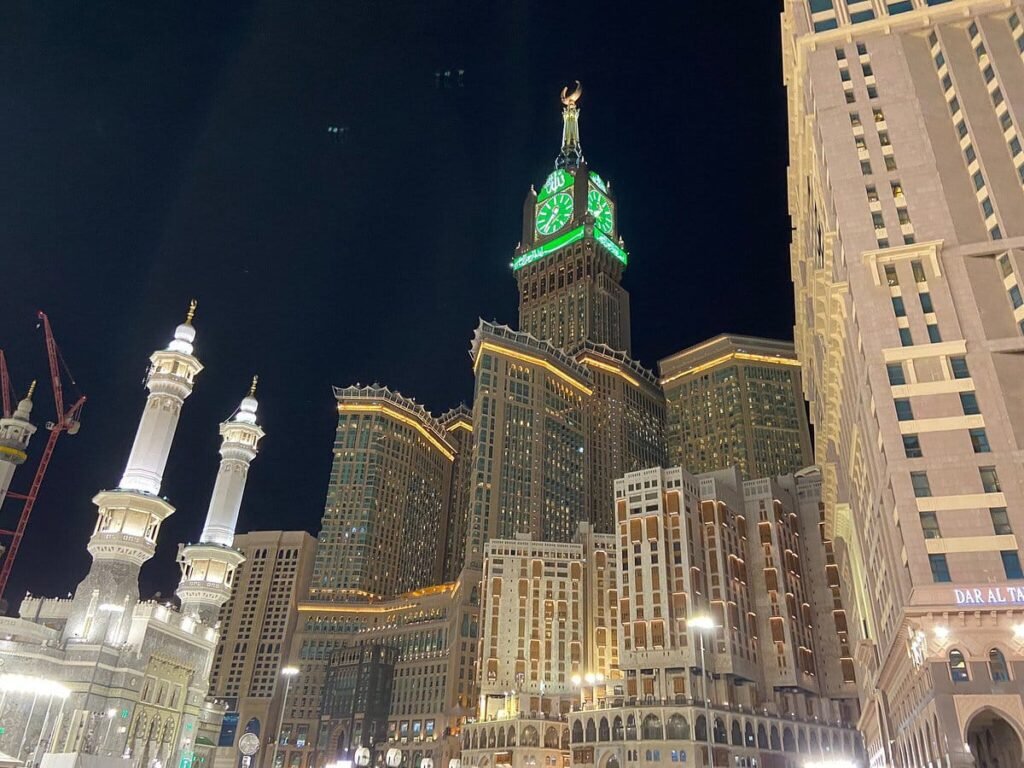
Under the chairmanship of Prince Faisal bin Salman, who serves as the special advisor to the Custodian of the Two Holy Mosques and also heads the board of King Abdulaziz Foundation for Research and Archives (Darah), the High Supervisory Committee overseeing the “History of Hajj and the Two Holy Mosques” project held an extensive meeting to review its future direction.
Central to the discussion was the ambitious plan to establish a permanent museum dedicated to the legacy of the Two Holy Mosques and the history of Hajj, an initiative expected to serve as a global knowledge hub and cultural reference for generations to come.
This project, which began as a scholarly concept under the title “Encyclopedia of Hajj and the Two Holy Mosques,” has now evolved into a wide-ranging national initiative.
It seeks to document centuries of transformation in the services provided to pilgrims while also capturing the rituals of Hajj and Umrah in their historical, spiritual, and cultural dimensions. With strong support and patronage from King Salman bin Abdulaziz Al Saud and continuous backing from Crown Prince and Prime Minister Mohammed bin Salman, the initiative has become one of the most significant undertakings of Darah in partnership with the Ministry of Hajj and Umrah through the Guests of God Service Program.
The committee’s deliberations also touched upon a number of related academic and cultural programs. Among them was the announcement of the forum “Historical Events in the Prophet’s Biography: Perspectives on Research and Documentation,” which is scheduled to take place in Madinah alongside the Umrah Forum.
This gathering aims to bring together leading scholars and researchers to explore methods of preserving, studying, and interpreting historical accounts tied to the Prophet’s life, ensuring that knowledge is preserved with accuracy and authenticity. Updates were also shared on the progress of the Hajj and Two Holy Mosques History Forum, preparations for a specialized exhibition focused on the same subject, and the broader stages of the national project itself.
The High Supervisory Committee includes several influential scholars, officials, and thought leaders in the Islamic world. Participants in the meeting included Sheikh Dr. Saleh bin Humaid, Imam and preacher of the Grand Mosque; Dr. Mohammed Al-Issa, Secretary General of the Muslim World League; Dr. Tawfiq Al-Rabiah, Minister of Hajj and Umrah and head of the Guests of God Service Program; Dr. Fahd Al-Sammari, board member of Darah and head of the Studies and Publishing Committee; Dr. Khalid Al-Bakr, professor of Islamic history at King Saud University; Eng. Anas Sairafi, committee member; Eng. Mohammed Ismail, CEO of the Guests of God Service Program; and Dr. Fahd Al-Wahbi, general supervisor of the entire initiative.
Their presence reflected the broad scope of expertise being applied to ensure the success of the project, with perspectives ranging from religious scholarship to administrative planning, cultural documentation, and academic research.
The museum envisioned under this project is not intended to be a mere exhibition space but rather a living institution where visitors will encounter curated collections, manuscripts, artifacts, and interactive digital displays that narrate the story of the Two Holy Mosques across history. The idea is to merge traditional historical sources with modern technology, creating an immersive experience that not only educates pilgrims and researchers but also provides future generations with a deeper appreciation of the monumental journey of Hajj and the sacred role of Makkah and Madinah.
In addition, the museum aims to highlight the architectural evolution of the Two Holy Mosques, the logistical systems developed over centuries to facilitate the pilgrimage, and the ongoing transformations under the Kingdom’s Vision 2030 framework, which places special emphasis on serving pilgrims as an integral part of national development.
Particular importance has been placed on recording the challenges faced and the solutions introduced throughout different Islamic eras. From the earliest efforts at organizing pilgrim caravans to the establishment of water systems, healthcare facilities, and security arrangements, the project seeks to provide a complete historical narrative.
It will also shed light on the contributions of various Muslim rulers and communities who invested in the maintenance and service of the Two Holy Mosques. The Guests of God Service Program, as part of this initiative, underlines Saudi Arabia’s commitment to making pilgrimage an experience of ease, comfort, and spiritual depth, while simultaneously preserving the sanctity and heritage associated with these rituals.
The decision to anchor this initiative in Darah reflects the Kingdom’s strategic vision of combining archival research with cultural documentation. Darah has long been recognized for its extensive collections, scholarly publications, and leadership in preserving the Kingdom’s historical records.
Its involvement ensures that the project will benefit from robust academic oversight while maintaining accessibility for a wide audience, from pilgrims and researchers to policy planners and international visitors.
Furthermore, by situating key forums and exhibitions in Makkah and Madinah, the project strengthens the global standing of the Two Holy Mosques as not only spiritual centers but also intellectual and cultural landmarks.
The upcoming exhibitions will present newly curated narratives that move beyond traditional religious texts to include social, economic, and political dimensions of pilgrimage. These exhibitions are designed to showcase how Hajj and Umrah have historically influenced urban development, intercultural exchange, and global connectivity within the Muslim world.
The supervisory committee’s emphasis on academic rigor was evident in the way it integrated scholars of Islamic history, leaders of major religious organizations, and government officials into a single platform of cooperation.
This combination of perspectives guarantees that the documentation is not only authentic and historically accurate but also sensitive to contemporary needs for cultural diplomacy and soft power. As the Kingdom continues to host millions of pilgrims each year, the preservation and presentation of this heritage has become an essential component of its international identity.
By weaving together documentation, exhibitions, forums, and an eventual permanent museum, the “History of Hajj and the Two Holy Mosques” project positions itself as a cornerstone of Saudi Arabia’s cultural and historical initiatives in the 21st century.
The strong patronage of the Saudi leadership underscores its importance, ensuring that the legacy of the Two Holy Mosques is preserved in both memory and material form, ready to be passed on to future generations and shared with the world.