

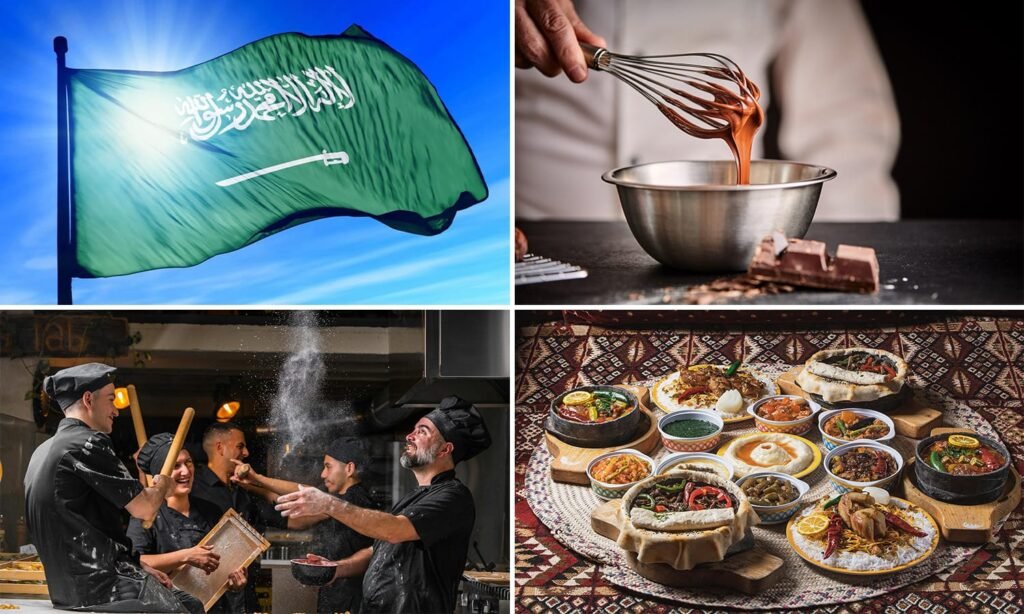
In a move that spotlights the rising importance of food culture in Saudi Arabia, the Culinary Arts Commission — operating under the auspices of the Ministry of Culture — has just published a suite of six comprehensive reports that together deliver the most in-depth portrayal yet of the Kingdom’s culinary ecosystem. These studies illustrate how the cooking arts are evolving beyond kitchens, becoming not only an economic engine but also a tool of cultural influence both within and beyond Saudi borders.
At the heart of these reports is the story of transformation: kitchens are becoming smarter, heritage recipes are gaining global attention, and the profession of the chef is steadily being reframed in the imagination of young Saudis as a viable, dynamic career path. The reports also sound a warning about the scale of food waste, positioning it as one of the most urgent environmental and fiscal challenges facing the Kingdom — while charting the early steps already being taken to mitigate it.
Economic growth, tourism, culture, diplomacy, technology, sustainability — all of these threads converge in the narrative these six documents weave. Food is no longer merely sustenance or tradition; it is becoming a vehicle for branding, investment, and international exchange.
One of the reports focuses explicitly on cultural diplomacy through gastronomy. It proposes chef exchange programs and the hosting of food festivals around the world, with the goal of exporting Saudi culinary identity as soft power.
In effect, Saudi cuisine is gradually being recast as a cultural export — a way of introducing global audiences to the Kingdom’s heritage, flavors, and evolving creativity in the kitchen.
Another of the reports examines sustainability, acknowledging that rapid expansion must be balanced with environmental responsibility. Among the stark revelations is the estimate that restaurants and food outlets in Saudi Arabia lose around 40 million Saudi riyals per year due to unsold or wasted food, and that over 1.3 tons of fresh food per day go to waste as part of the food-supply chain.
The commission outlines a framework of practices and policies meant to reduce this loss, including more precise demand forecasting, redistribution of surplus food, and smarter logistics. (This emphasis reflects growing awareness of sustainability as integral to any growth model.)
A third study dives into the professional future of cooking – what it means to be a chef in a digitized Saudi Arabia.
It highlights that 72 percent of survey respondents now view culinary arts as a promising career path. Young chefs in the Kingdom are increasingly ambitious: they want formal education, structured certification, exposure to global techniques, and access to institutional pathways that turn their passion into stable livelihoods. But gaps remain — for example, in curriculum development, mentorship, and scalable training programs.
Then there is the technology and disruption report, which maps how artificial intelligence, automation, and digital platforms are reshaping how food is produced, marketed, ordered, and experienced.
From kitchen robotics to AI-driven recipe development, from smart supply-chain tools to food delivery platforms with dynamic pricing, the report illustrates how digital tools are already altering every stage of the culinary value chain. The emergence of these tools is not just a novelty — it is accelerating efficiency, new menu experimentation, and consumer personalization.
A complementary report frames the culinary sector as a strategic industry, directly aligned with Saudi Arabia’s broader development goals, including Vision 2030. It portrays food and gastronomy as core pillars of the Kingdom’s plans to diversify its economy, boost tourism, enhance quality of life, and attract foreign investment.
Culinary tourism, in particular, emerges as a promising frontier: travelers increasingly seek not just landmarks and natural scenery, but also immersive food experiences — cooking classes, food trails, local community meals, and regional flavor tours.
Altogether, the six reports span more than 500 pages of data, case studies, charts, and distilled insights. They are intended not only for scholarly readers but for investors, cultural institutions, media professionals, tourism planners, and anyone interested in the intersection of food, culture, and economic progress.
What is striking is how the reports dovetail with initiatives already underway in Saudi Arabia. The Culinary Arts Commission has recently formed partnerships aimed at global reach: for instance, it is collaborating with the international event Sirha Food, to host regional selections of events such as the prestigious Bocuse d’Or and World Pastry Cup in the Middle East. These efforts reflect the ambition to place Saudi chefs on the global competitive stage.
Another notable development is the recent Memorandum of Understanding (MoU)between the Food Security Authority and the Culinary Arts Commission, aimed at bolstering their joint efforts to reduce food waste. This signals that the issue of sustainability in food is being addressed not only in theory but through interagency cooperation and planning.
The reports also underscore how food services are becoming key to tourism, with culinary tours, themed festivals, and immersive dining experiences poised to add richer layers to Saudi Arabia’s attraction for global travelers.
By weaving culture and cuisine into destination planning, the Kingdom hopes to appeal to food enthusiasts who travel precisely for tastes and techniques.
What emerges from the commission’s work is a panorama of a culinary sector in rapid flux — energized by investment, guided by digital advances, informed by sustainability imperatives, and underlaid with cultural ambition. But it is not without challenges.
One is preserving authenticity. As Saudi dishes become more globalized, as menus mix local and international influences, and as food-tech platforms standardize offerings for scalability, there is tension between innovation and preserving the unique essence of traditional recipes and regional flavors.
Another challenge lies in infrastructure: supply chains, cold-storage logistics, waste management, quality control, and compliance systems must evolve quickly to support growth without waste, spoilage, or inconsistency.
The training pipeline is a third critical area. Though interest in culinary careers is rising, turning that interest into professional competence requires robust institutions, curricula, mentorship, and career pathways that lead to sustained incomes and job security.
Finally, coordination across sectors — agriculture, hospitality, transport, culture, environment — must be seamless. Food in its full expression is cross-sectoral, depending on farms, logistics, restaurants, tourism, and regulation working in harmony.
Despite these hurdles, the picture painted by the commission is an optimistic one. The culinary field is emerging as a multiheaded engine of economic growth, cultural projection, and social opportunity. In a relatively short period, Saudi Arabia is positioning itself not just as a consumer of global food culture but as a creator and curator of it.
Whereas in earlier eras Saudi cuisine may have been confined to private households or local restaurants, today the commission’s studies envision a future in which Saudi food is a global conversation starter. The restaurants, recipes, and chefs are not just eateries or service providers — they are ambassadors, cultural storytellers, innovators, and strategic assets.
For media, business, culture, and policy audiences, these reports provide narrative strands ready to be stretched: the rise of youthful Saudi chefs, the fusion of heritage and tech in kitchens, the environmental urgency of reducing waste, and the drive to attract inward food investment. Each segment of the reports can anchor deeper stories: how AI is changing kitchen work, how Saudi food is being exported to new markets, how sustainability may become a competitive advantage in hospitality.
In the end, the commission’s six-report series serves both as a diagnostic instrument and as a strategic call to action. By capturing where Saudi Arabia stands today — and where it can go — the reports invite all stakeholders to lean into this culinary revolution. With sustained investment, smart regulation, cross-sector collaboration, and bold vision, the food of the Kingdom could come to define not just regional trends but global ones — turning what once was a matter of nourishment and tradition into a potent driver of cultural influence, economic diversification, and national pride.