

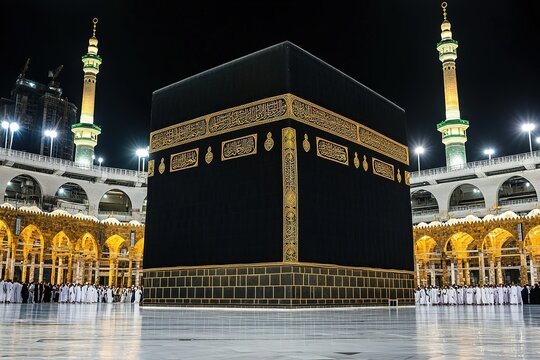
During the month of Rabi Al-Awwal 1447 AH, new data regarding the performance of Umrah revealed that the average duration for completing the entire set of rituals stood at nearly one hundred and fifteen minutes. This figure reflects the total time spent by pilgrims from the moment they began their entry into the Grand Mosque until the completion of Tawaf, Sa’i, and the transition between different areas inside the sacred sanctuary.
What this essentially means is that most worshippers needed almost two hours in order to complete Umrah during this period, a time frame that illustrates both the smooth organization of the pilgrimage process and the immense number of visitors that the Holy Mosque receives on a daily basis.
The breakdown of this time frame shows a more detailed picture of the pilgrim’s journey. On average, it took about forty-six minutes to perform Tawaf around the Holy Kaaba, which is regarded as the spiritual heart of Umrah. Tawaf itself requires seven complete circuits around the Kaaba, and the recorded duration suggests that even during crowded times, the flow of pilgrims was managed in such a way that they were able to complete this part of the ritual with relative ease and within a consistent time span.
Following Tawaf, pilgrims moved towards the Mas’a area to perform Sa’i, the ritual of walking back and forth between the hills of Safa and Marwah. This portion of the Umrah, according to the report, consumed an average of forty-seven minutes. Considering the distance of the Mas’a and the high number of participants, the timing reflects carefully regulated movement supported by crowd management systems and guidance services that operate within the Grand Mosque.
Equally important to the pilgrim experience are the transitional movements between different sections of the mosque. On average, it took about twelve minutes for visitors to move from the outer courtyards of the Haram into the Mataf area, the space around the Kaaba reserved for Tawaf.
This movement time illustrates the massive scale of the mosque’s courtyards and the number of pilgrims flowing inward at once. Similarly, after completing Tawaf, moving towards the Mas’a area required approximately ten minutes, a figure that again highlights both the distances involved and the organized flow of human traffic within the sacred site.
These figures were not presented simply as raw numbers but as part of a broader effort by the authorities to demonstrate their continuous monitoring and commitment to making the Umrah journey easier for every visitor. The institution responsible for overseeing the Grand Mosque and the Prophet’s Mosque emphasized that its mission is not just to maintain the sanctity of the holy sites but also to provide an environment where pilgrims can perform their religious duties in comfort, security, and peace of mind.
By calculating average times, identifying potential bottlenecks, and analyzing the flow of visitors, the authorities are able to anticipate challenges and implement solutions before problems arise.
This approach is part of an ongoing strategy that integrates technology, human resources, and infrastructure to ensure the best possible experience for worshippers. Advanced monitoring tools, including electronic sensors, cameras, and real-time data systems, are increasingly being used to track the number of pilgrims in each section of the mosque. These systems help identify congestion points and allow staff to redirect movement or open alternative pathways when necessary.
Furthermore, improvements in signage, communication with pilgrims in multiple languages, and the presence of trained guides have contributed to reducing confusion and ensuring that visitors, many of whom are arriving in Makkah for the first time, can easily find their way through the vast complex of the Grand Mosque.
Another important factor contributing to these timings is the expansion and maintenance work that has been carried out over the past several years. Continuous efforts to expand the Mataf area, widen the pathways of the Mas’a, and enhance the courtyards have significantly increased capacity, allowing a larger number of pilgrims to perform their rituals without overcrowding.
This expansion directly impacts the time it takes to complete each stage of Umrah. Without these structural improvements, the average durations would likely be much higher, especially during peak periods when millions of pilgrims arrive for seasonal rituals.
Equally critical is the role of human resources. Thousands of staff members, ranging from security personnel and crowd managers to cleaners and health service providers, are deployed across the Grand Mosque during every hour of the day. Their work ensures that pathways remain clear, that assistance is provided to elderly or disabled pilgrims, and that medical help is readily available in case of emergencies. This invisible workforce plays a central role in ensuring that the average time for completing Umrah remains within a reasonable and manageable range.
By releasing such detailed figures, the administration is not only offering transparency but also creating benchmarks for future improvements. If the average time for Tawaf or Sa’i increases significantly in the future, it will signal the need for additional measures to control crowds or expand facilities.
If, on the other hand, the duration decreases, it will reflect the success of newly implemented strategies, such as better scheduling, improved entry and exit points, or advanced guidance systems. In either case, the data provides a valuable foundation for ongoing improvements in the management of the Two Holy Mosques.
It is also important to note the wider religious and spiritual significance behind these logistical details. For millions of Muslims, performing Umrah is not simply a ritual but a deeply personal act of devotion. Ensuring that pilgrims can focus on their worship without being distracted by disorganization or excessive delays is a core responsibility of those managing the holy sites.
By making the process smoother and more comfortable, authorities are helping pilgrims experience the spiritual depth of the journey in its purest form.
The month of Rabi Al-Awwal, in which these figures were recorded, holds additional significance for Muslims as it is associated with the birth of the Prophet Muhammad (peace be upon him). Many believers choose to perform Umrah during this month, adding to the number of visitors and the importance of efficient organization.
The fact that the average completion time for Umrah rituals remained within just under two hours despite the high turnout is a testament to the level of planning and execution carried out within the Grand Mosque.
In the future, such reports are expected to become a regular feature, allowing pilgrims and officials alike to understand trends over time. As more pilgrims from different countries continue to arrive in the Kingdom, especially in the lead-up to major events such as Ramadan and Hajj, these insights will play a vital role in ensuring the readiness of facilities and the satisfaction of worshippers. With continued investment in infrastructure, technology, and human services, the authorities aim to reduce unnecessary waiting, further streamline the experience, and create an atmosphere where every pilgrim can complete their Umrah with dignity, comfort, and spiritual tranquility.