

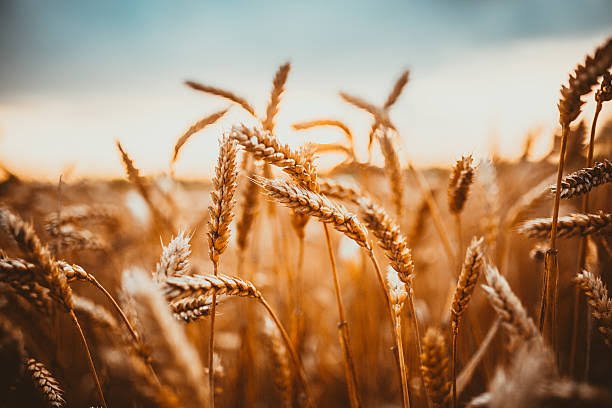
A group of scientists from the University of Maryland in the United States has made a groundbreaking discovery that could revolutionize global wheat production. The researchers have identified a rare genetic trait that enables wheat plants to produce not one but three ovaries in a single flower — a change that could potentially double or even triple the number of grains per spike. This scientific breakthrough opens new possibilities for achieving unprecedented increases in wheat yield, which is a crucial step toward ensuring global food security.
According to the study, which was officially published on *October 14, 2025, in the prestigious scientific journal *PNAS and later reported by Al Arabiya Business, the newly identified gene has been named WUS-D1. This gene usually remains inactive in most commercial wheat varieties; however, in a rare wild strain of wheat, it was found to be naturally activated due to a spontaneous genetic mutation. The activation of this gene during the early stages of flower development accelerates the growth of tissues responsible for forming the female reproductive organs of the plant. As a result, instead of developing a single ovary, the flower produces multiple ones, dramatically increasing its potential grain output.
Interestingly, this unusual feature was first observed many years ago in a naturally mutated strain of wheat that caught the attention of botanists because of its unexpectedly high seed count. At that time, however, scientists were unable to determine the reason behind this phenomenon. It was only through later comparative DNA analysis between the wild strain and standard cultivated wheat that researchers were able to pinpoint the exact cause — the activation of the WUS-D1 gene. This discovery finally solved a long-standing mystery in plant genetics and opened a new chapter in agricultural biotechnology.
Dr. Vijay Tiwari, Associate Professor at the Department of Plant Science at the University of Maryland and one of the co-authors of the research, explained that this finding has the potential to completely reshape the future of wheat breeding. According to him, “Identifying the genetic foundation of this unique characteristic gives scientists and farmers the ability to create new, high-yielding wheat varieties. By using modern gene-editing tools, we can further enhance this natural trait and produce hybrid wheat that yields more grain at a lower production cost.”
He further stated that the team’s next goal is to study how this gene behaves under different climatic conditions, particularly in areas prone to drought or high temperatures. If the gene maintains its productivity across variable environments, it could play a vital role in combating global food shortages caused by climate change and limited arable land.
This remarkable discovery is not limited to wheat alone. Scientists believe that similar genetic techniques could be applied to other cereal crops such as rice, maize, and barley — all of which form the backbone of the global food supply. The ability to increase grain output without expanding farmland or consuming additional water resources could prove to be one of the most sustainable agricultural advancements in recent years.
Agricultural experts are calling this discovery a “game-changer” for food security. As global population growth continues to accelerate and arable land shrinks, achieving higher yields from the same acreage has become an urgent challenge. This genetic breakthrough offers a realistic solution — a natural mechanism for boosting production without relying on excessive fertilizers, costly technologies, or expanding farmland into environmentally fragile areas.
The researchers highlighted that even a modest increase in the number of grains per plant could have a massive global impact. For example, if every wheat plant were to produce only 10% more grains, the total global yield could increase by millions of tons annually. This would not only strengthen the stability of food supply chains but also reduce dependency on expensive agricultural imports and external inputs.
Moreover, the discovery of the WUS-D1 gene has immense potential for developing new hybrid varieties that can thrive under diverse environmental pressures. Modern gene-editing technologies such as CRISPR could be used to regulate the expression of this gene more precisely, ensuring optimal grain development without compromising plant health. Such innovations could help countries with limited agricultural resources — particularly those facing drought, salinity, or nutrient-poor soil — to significantly enhance their crop productivity.
The University of Maryland team also emphasized the environmental benefits of this approach. Since the method involves enhancing the plant’s natural reproductive capacity rather than introducing foreign DNA, it aligns well with sustainable and eco-friendly agricultural practices. It reduces the need for chemical inputs and promotes efficient use of available resources such as soil nutrients and water.
Furthermore, international agricultural agencies and seed developers have shown keen interest in collaborating with the Maryland researchers to explore commercial-scale applications of this discovery. Experimental trials are expected to begin in various regions, including parts of Africa, South Asia, and the Middle East, where wheat remains a dietary staple and yields are often constrained by harsh environmental conditions.
The findings have sparked optimism across the scientific and farming communities alike. If successfully implemented, this genetic trait could transform how food crops are cultivated, helping humanity tackle some of its most pressing challenges — from food scarcity and climate adaptation to resource sustainability.
While the WUS-D1 gene discovery still requires extensive field testing before being incorporated into commercial wheat varieties, the implications are far-reaching. Experts agree that this innovation could help achieve a new balance between agricultural productivity and environmental preservation. It could allow farmers to harvest significantly more from the same piece of land, providing a sustainable path forward in the face of mounting population pressures.
the activation of the WUS-D1 gene represents more than just a scientific milestone — it marks a potential turning point for global agriculture. By unlocking nature’s own hidden mechanisms for yield improvement, researchers have provided a foundation upon which the next generation of food security solutions can be built. Even a small genetic change, as this discovery demonstrates, can bring about a transformation large enough to reshape the future of farming and feed billions more people worldwide.