

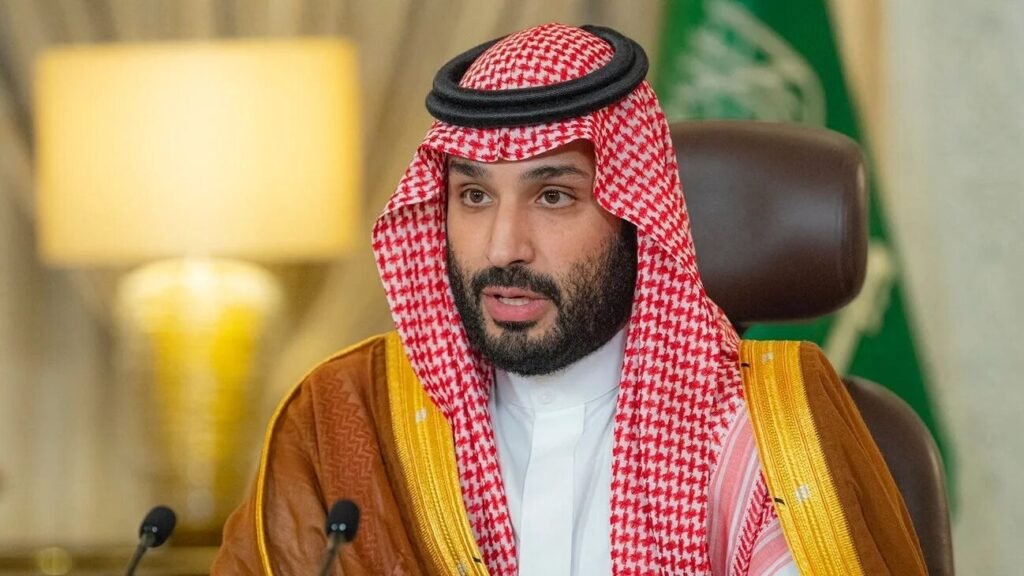
In Riyadh, the Saudi Council of Ministers, led by Crown Prince and Prime Minister Mohammed bin Salman, held its latest weekly session on Tuesday, focusing on the progress of the Kingdom’s economic transformation and expanding non-oil sectors. The meeting, which followed the high-profile Future Investment Initiative (FII) conference, emphasized the private sector’s critical role in advancing Vision 2030’s long-term objectives.
At the beginning of the session, the Crown Prince briefed cabinet members on the outcomes of his recent meetings with international leaders and top officials who visited the Kingdom to attend the FII summit. The ministers acknowledged that the global turnout at the conference underscored international recognition of Saudi Arabia’s growing influence as an emerging global investment destination. The Cabinet noted that this success reflects the confidence the world has in the Kingdom’s economic reforms and its ability to create new global partnerships built on innovation and sustainable development.
In an official statement released to the Saudi Press Agency, Minister of Media Salman Al-Dossary explained that the Cabinet commended the private sector’s expanding contribution to national economic growth. The Council observed that since the launch of Vision 2030, the non-oil sector has seen sustained momentum, driven by wide-ranging reforms aimed at empowering entrepreneurs, easing investment regulations, and diversifying income streams. These developments, according to the ministers, demonstrate the strength of the Kingdom’s policy direction and its determination to build a competitive and business-friendly environment.
The Cabinet also discussed how Saudi Arabia has maintained economic stability amid shifting global conditions. The ministers highlighted the Kingdom’s resilience and flexibility in aligning national capabilities and resources to adapt to international market trends. They cited the growing presence of Saudi industries in sectors such as advanced manufacturing, technology, renewable energy, tourism, and entrepreneurship as evidence of the effectiveness of the government’s reform strategy.
Reflecting on the global reach of Saudi policies, the Cabinet celebrated the Kingdom’s recent election to lead the International Organization of Supreme Audit Institutions (INTOSAI) for a three-year term beginning in 2031. The achievement was described as a significant milestone in reinforcing the country’s commitment to transparency, institutional excellence, and strong governance. It was further noted that such global recognition reinforces Saudi Arabia’s standing as a responsible international actor focused on accountability and modernization.
Turning to the cultural and tourism sectors, the ministers praised AlUla for earning three major World Travel Awards for 2025. This accomplishment, they said, symbolizes Saudi Arabia’s rapid progress in the global tourism landscape and highlights its rich cultural and archaeological heritage. The Cabinet emphasized that AlUla’s growing international reputation reflects the broader success of Saudi initiatives to promote tourism as a vital pillar of economic diversification.
The meeting also covered a series of bilateral and multilateral agreements designed to strengthen Saudi Arabia’s partnerships across key areas. Among the decisions, the Cabinet approved a headquarters agreement between the Saudi government and the Arab Urban Development Institute, alongside a memorandum of understanding on financial cooperation with Kuwait. Additionally, the Council authorized the minister of tourism—or a designated deputy—to finalize a draft MoU on tourism cooperation with San Marino’s Ministry of Tourism, Post, Cooperation, Expo, and Information.
The session further endorsed a range of new international collaborations. These included a memorandum of understanding on trade and economic cooperation between Saudi Arabia’s Ministry of Economy and Planning and Vietnam’s Ministry of Industry and Trade, and an air transport services agreement with Panama. The Cabinet also approved a MoU between the Saudi Food and Drug Authority and France’s Agency for Food, Environmental, and Occupational Health and Safety to enhance coordination on the regulation of veterinary medical products. Another agreement, focused on measurement, evaluation, and accreditation, was signed between Saudi Arabia’s Education and Training Evaluation Commission and Kuwait University.
Domestically, the Cabinet agreed to transfer the authority to issue licenses for the chemical consulting profession from the Ministry of Commerce to the Ministry of Energy. This move, the ministers noted, would streamline administrative processes and align the profession’s oversight with Saudi Arabia’s broader energy strategy. The Council also approved granting financial incentives to individuals who contribute to uncovering violations under the Municipal Violations Penalties Regulations, a policy aimed at promoting community accountability and improving compliance with public standards.
In the health and industrial sectors, the Cabinet directed the Ministry of Industry and Mineral Resources, in coordination with the Ministry of Finance, to create a new budget line specifically supporting the localization of pharmaceutical manufacturing. This initiative aligns with the government’s ongoing efforts to strengthen domestic production capabilities, reduce import dependence, and boost the national industrial base as part of Vision 2030’s industrial development targets.
In discussing future economic prospects, ministers highlighted that Saudi Arabia’s non-oil economy continues to demonstrate consistent expansion despite global uncertainties. Independent economic reports project that the Kingdom’s non-oil sectors could maintain an annual growth rate of around 5 percent through the remainder of the decade. This optimism is rooted in increased private investment, expanding tourism revenues, digital transformation projects, and a steady rise in entrepreneurial activity across the Kingdom.
Analysts have also observed that Saudi Arabia’s reforms—spanning labor laws, tax incentives, foreign ownership regulations, and industrial strategy—have helped elevate its position in international competitiveness rankings. The Council noted that such progress illustrates not only economic diversification but also the creation of an environment conducive to innovation and job creation for Saudi citizens.
Overall, Tuesday’s Cabinet session reinforced the government’s message that the Saudi economy is entering a new phase of sustainable expansion. By emphasizing innovation, regulatory modernization, and international partnerships, the ministers reaffirmed that Vision 2030 remains the central blueprint guiding the Kingdom’s transformation into a globally integrated and resilient economy.
As the meeting concluded, the Council stressed that Saudi Arabia’s ongoing progress—both domestically and internationally—will continue to depend on collaboration between the public and private sectors. The session ended with a renewed commitment to maintaining reform momentum, ensuring that every policy initiative contributes directly to long-term prosperity, national resilience, and the realization of Vision 2030’s ambitious goals.