

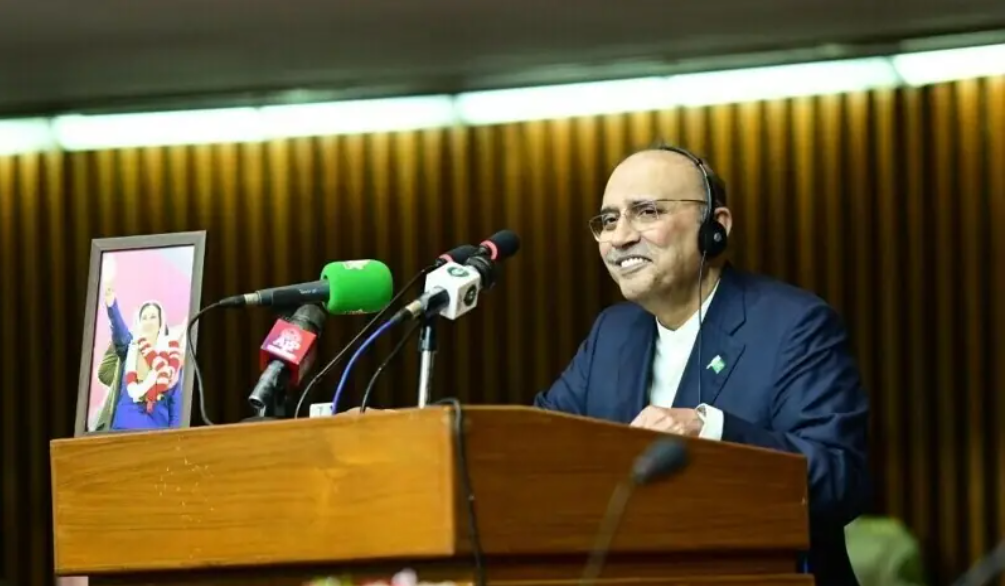
ISLAMABAD: President Asif Ali Zardari and Prime Minister Shehbaz Sharif have reaffirmed Pakistan’s readiness to work with all South Asian nations willing to move towards deeper regional integration, enhanced trade, and strengthened energy and connectivity corridors marking the 40th anniversary of the Saarc Charter with a renewed call for collective progress.
In their separate messages, both leaders underscored that Pakistan remains firmly committed to the principles and objectives enshrined in the Saarc Charter, insisting that only a cooperative, forward-looking regional order can unlock South Asia’s untapped economic and human potential.
President Zardari stated that Challenges are shared and so must be the solutions
President Zardari stressed that Pakistan’s geography, situated at the crossroads of South Asia, Central Asia and the Middle East, uniquely positions it to serve as a bridge for regional commerce and energy flows.
Pakistan is ready to work with all willing states to promote trade, transit, energy linkages and people-to-people ties that benefit the entire region, he said, noting that cooperation rooted in sincerity and practicality was essential for a peaceful and prosperous future.
He emphasized that South Asian nations must approach the coming decades with clarity, sincerity and mutual respect, highlighting that regional challenges from poverty to climate-driven disasters demand shared solutions.
Prime Minister Shehbaz: Regional connectivity is no longer optional
Prime Minister Shehbaz Sharif, in his message, reaffirmed Pakistan’s “firm commitment” to sovereign equality, mutual respect and constructive engagement the foundational pillars of Saarc.
In an era defined by regional connectivity, the importance of economic, digital and people-to-people linkages in South Asia cannot be overstated, he said, urging member nations to strengthen cooperation in trade, investment, innovation, cultural exchanges and technological integration.
He noted that South Asia faces a common set of crises including climate-induced natural disasters, food and energy insecurity, public health challenges and persistent poverty all of which transcend borders and require trust-based, collective responses.
It is only by acting together that we can build a resilient and inclusive future for our peoples, the prime minister added.