

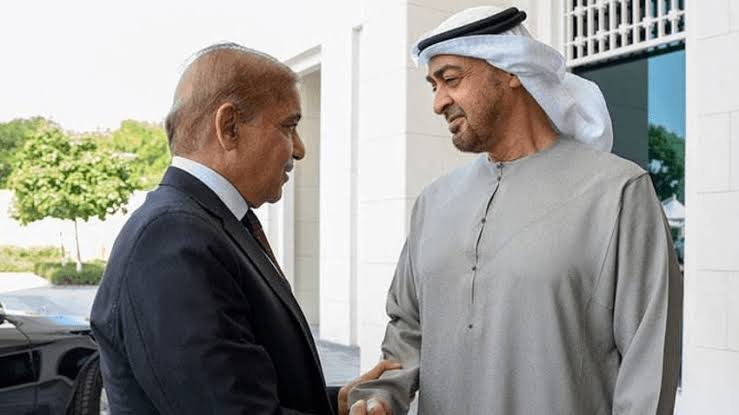
The President of the United Arab Emirates (UAE), Sheikh Mohamed bin Zayed Al Nahyan, is scheduled to arrive in Pakistan on December 26 for an official visit, marking a significant moment in the ongoing diplomatic and economic engagement between the two nations. This visit, confirmed by the Foreign Office of Pakistan, will be the second instance of the Emirati leader visiting Pakistan this year, though it will be his first visit in the official capacity as the President of the UAE. Earlier in January, President Al Nahyan had met with Prime Minister Shehbaz Sharif in Rahim Yar Khan, during a visit that laid the groundwork for bilateral discussions, but the upcoming visit is expected to deepen strategic cooperation on a wide range of issues.
The forthcoming trip is anticipated to be an important diplomatic occasion that underscores the longstanding fraternal ties between Pakistan and the UAE, which have historically shared a relationship rooted in mutual respect, economic collaboration, and regional solidarity.
Over the years, the bilateral relations between the two countries have expanded to include trade, energy, investment, cultural exchanges, and political cooperation, making the UAE one of Pakistan’s most important partners in the Middle East. The visit by President Al Nahyan is expected to provide an opportunity to review the entire spectrum of these relations and identify new areas of cooperation that can further strengthen the partnership.
One of the key objectives of the visit will be to facilitate high-level discussions between President Al Nahyan and Prime Minister Shehbaz Sharif on regional and international issues of mutual interest. Given the geopolitical significance of both Pakistan and the UAE in South Asia and the Gulf, topics such as regional security, energy cooperation, trade facilitation, investment opportunities, and counterterrorism are expected to feature prominently in their talks.
Both countries have repeatedly emphasized their commitment to regional stability and have collaborated on diplomatic initiatives to foster peace and security in their respective regions. This visit is likely to further solidify Pakistan-UAE coordination in addressing regional challenges, including political developments in Afghanistan, the stability of the Gulf, and broader issues impacting the Muslim world.
The economic dimension of the visit is expected to be particularly significant. Pakistan and the UAE share a robust trade and investment relationship, with the UAE being one of Pakistan’s largest trading partners. The discussions are anticipated to focus on expanding trade volumes, facilitating joint ventures, encouraging investment in key sectors such as energy, infrastructure, real estate, and technology, and exploring avenues for industrial cooperation. In April of this year, the two countries had already signed and exchanged multiple memoranda of understanding (MoUs) to reinforce ties between their peoples and institutions.
These MoUs included agreements for cultural cooperation, the establishment of a joint committee for consular affairs, and the creation of the UAE-Pakistan Joint Business Council, which brings together the Federation of UAE Chambers of Commerce and Industry and the Federation of Pakistan Chambers of Commerce and Industry. The upcoming visit provides an opportunity to review the implementation of these agreements and potentially expand them into additional sectors of cooperation.
Cultural exchange and people-to-people connectivity are also likely to be emphasized during the visit. Both Pakistan and the UAE have historically maintained strong interpersonal ties through the presence of a large Pakistani diaspora in the UAE, contributing to economic growth and social cohesion.
This visit will serve as a platform to recognize the contributions of the Pakistani community residing in the UAE and explore policies that can further facilitate their welfare, employment opportunities, and social engagement. Cultural initiatives, educational exchanges, and joint efforts in promoting arts, literature, and heritage are expected to be part of the discussions, enhancing mutual understanding and appreciation between the two nations.
Energy cooperation is another critical area that is expected to receive significant attention during the President’s visit. The UAE has emerged as a reliable partner in Pakistan’s energy sector, supporting infrastructure development, investment in renewable and conventional energy projects, and joint initiatives to ensure sustainable energy supply. With Pakistan facing increasing energy demands due to population growth and industrial expansion, collaboration with the UAE in areas such as solar, wind, and hydroelectric power, as well as conventional oil and gas projects, could be a focal point of discussion. Both countries are likely to explore avenues for technology transfer, joint investment, and capacity-building in the energy sector, which would contribute to Pakistan’s long-term economic stability.
The visit is also expected to reinforce defense and security collaboration between Pakistan and the UAE. Both nations have shared interests in combating terrorism, maintaining maritime security in the Arabian Sea, and addressing transnational criminal threats.
Past interactions have included intelligence-sharing, military cooperation, and joint exercises aimed at enhancing preparedness and operational capabilities. During this official visit, discussions are anticipated to include mechanisms to further strengthen security coordination, exchange best practices, and collaborate on regional security initiatives to safeguard shared strategic interests.
Diplomatic relations between Pakistan and the UAE have historically been characterized by a high degree of mutual trust and alignment on key international issues. The UAE has consistently supported Pakistan in global forums, including multilateral institutions, and has participated in initiatives that promote economic development, humanitarian assistance, and regional peace. The upcoming visit by President Al Nahyan is expected to further cement these diplomatic ties, reinforcing Pakistan-UAE collaboration on international platforms and enabling coordinated responses to global challenges such as climate change, sustainable development, and economic resilience.
Moreover, infrastructure and development projects are anticipated to feature prominently in discussions. The UAE has been involved in various development projects across Pakistan, including industrial zones, housing schemes, transportation networks, and investment in urban development. Strengthening these initiatives and exploring new opportunities for collaboration could be part of the agenda during the visit. Such projects not only enhance economic growth but also create employment opportunities and foster long-term sustainable development.
The official visit also carries symbolic significance, demonstrating the depth of bilateral relations and the personal rapport between the leadership of the two nations. High-level exchanges such as this serve to highlight the commitment of both countries to maintain a close partnership and navigate challenges together. The visit is expected to include meetings with senior government officials, business leaders, and representatives of civil society, further broadening the scope of dialogue and cooperation.
The official visit of UAE President Sheikh Mohamed bin Zayed Al Nahyan to Pakistan on December 26 is poised to be a landmark event in the bilateral relationship. It provides a comprehensive platform to discuss political, economic, cultural, energy, and security cooperation, while also reinforcing the deep-rooted friendship and mutual respect between the two nations.
This visit underscores the strategic importance of Pakistan-UAE relations and is expected to result in strengthened collaboration across multiple sectors, benefiting not only governments but also the people of both countries. With the ongoing implementation of previously signed MoUs and potential new agreements, the visit is likely to pave the way for enhanced trade, investment, regional stability, and diplomatic coordination, reflecting a shared vision for progress, prosperity, and enduring partnership between Pakistan and the United Arab Emirates.