

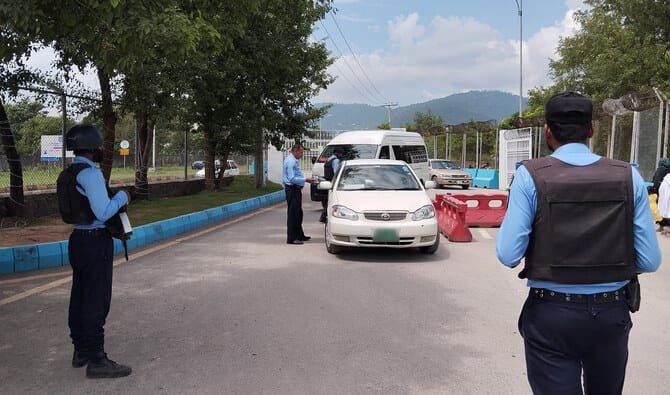
In a significant move aimed at enhancing road security and streamlining traffic management in the federal capital, Interior Minister Mohsin Naqvi announced that from January 1 onwards, no vehicle will be permitted to enter Islamabad without an e-tag. The announcement, made on Sunday, marks a critical step in the Islamabad administration’s ongoing efforts to implement a modernized and technologically integrated urban monitoring system. Vehicles that already possess an m-tag will not be required to acquire the new e-tag, ensuring a smooth transition for motorists while emphasizing the broader goal of safeguarding public safety.
The policy of mandatory e-tags was initially introduced on November 17, signaling the administration’s intent to fully digitize vehicular access to the city. The move reflects a broader strategic plan to enhance the security framework of Islamabad, making it a safer city for residents and visitors alike. According to the interior minister, the new requirement is universal, applying to all vehicles registered both within Islamabad and in other provinces. This uniformity is expected to streamline traffic control and reinforce law enforcement efforts across the capital’s thoroughfares.
During his visit to the Safe City headquarters, Mohsin Naqvi, accompanied by Minister of State Talal Chaudhry, conducted a thorough review of the city’s monitoring systems. The interior minister observed the operations through the digital wall, which consolidates real-time data from surveillance cameras and other security devices.
He paid particular attention to the effectiveness of measures in maintaining public order and ensuring the protection of citizens, emphasizing the need for modern technology to play a central role in urban management. The inspection also included the specialized Chinese desk within the control room, where he evaluated the efficiency of security surveillance and rapid response mechanisms.
An important meeting convened at the Safe City headquarters, chaired by Minister Naqvi, reviewed comprehensive measures aimed at safeguarding lives and property in Islamabad. During this session, directives were issued to accelerate work on the Capital Smart City project, a long-term initiative designed to integrate multiple civic services under a centralized system.
These services include traffic management, emergency response through Rescue 1122, security monitoring, and coordination with the Capital Development Authority. By consolidating these functions, the interior minister stressed, the city will be able to respond more efficiently to emergencies, manage traffic flows, and enhance overall public safety.
The Capital Smart City project, as explained by the interior minister, is envisioned to extend beyond Islamabad and serve as a model for cities across Pakistan. With Islamabad acting as a benchmark for safety and technological integration, the initiative is expected to promote smarter urban management nationwide. Naqvi highlighted that reforms within the Safe City project, including effective use of surveillance technology, are not just necessary but urgent. The strategic goal is to establish Islamabad as the safest city in the country while creating a replicable model for other urban centers.
A detailed briefing was also presented by the Islamabad Inspector General of Police, focusing on the transition from Safe City to Capital Smart City. The IG detailed how the extensive network of Safe City cameras had been effectively utilized during Muharram, contributing to better resource management and rapid response times. This data-driven approach underlines the growing importance of technology in law enforcement and urban administration. The meeting was attended by senior officials, including the federal interior secretary, the Chief Commissioner of Islamabad, the Additional Deputy Commissioner General, and other key figures involved in civic management and law enforcement.
Minister Naqvi emphasized that mandatory e-tags are not merely a regulatory measure but a fundamental component of the Capital Smart City framework. By ensuring that every vehicle in Islamabad is registered and tracked through the e-tag system, authorities aim to significantly reduce security risks, prevent unauthorized access, and streamline traffic control. This initiative is part of a broader vision to integrate digital monitoring with traditional policing, creating a safer and more responsive urban environment.
The e-tag system is expected to facilitate several practical benefits for city management. Firstly, it allows real-time tracking of vehicles entering and exiting Islamabad, enabling law enforcement to respond quickly to emergencies or security threats. Secondly, it reduces administrative burdens by digitally recording vehicular data, eliminating the need for manual checks at entry points. Lastly, it strengthens accountability for vehicle owners, ensuring that only authorized vehicles gain access to sensitive areas of the capital. Mohsin Naqvi reiterated that the success of this initiative depends on public cooperation, and he urged citizens to ensure their vehicles comply with the new e-tag requirement.
During the Safe City visit, the interior minister closely examined how technology is being deployed to enhance public order. The digital wall, serving as a central hub for surveillance and traffic data, was a particular point of focus. It integrates feeds from hundreds of cameras distributed across the city, allowing authorities to monitor real-time situations and coordinate responses efficiently. Minister Naqvi praised the system’s capability to handle large-scale events and emergencies, such as religious gatherings and public celebrations, and emphasized the importance of further upgrading the technology to meet evolving security needs.
The meeting also addressed coordination between various civic agencies under the Capital Smart City framework. Naqvi directed that all relevant departments, including traffic police, Rescue 1122, security units, and the Capital Development Authority, be fully integrated into a unified control system. This holistic approach aims to enhance situational awareness, improve response times, and ensure that citizens’ safety is managed in a seamless and coordinated manner. By doing so, Islamabad can achieve a high level of operational efficiency while setting a benchmark for smart city initiatives elsewhere in Pakistan.
In addition to security and traffic management, the interior minister highlighted the role of public communication and awareness in ensuring the success of the e-tag initiative. Informing citizens about the requirement, explaining its benefits, and facilitating smooth compliance are all integral components of the broader Smart City strategy. Naqvi stressed that public engagement and transparency are crucial for fostering trust and cooperation between the authorities and residents.
The comprehensive plan for Islamabad’s transformation into a Capital Smart City reflects the government’s commitment to leveraging technology for urban development. From mandatory e-tags to centralized monitoring, the initiative combines security, traffic management, and civic services into a cohesive framework. By creating a model city in Islamabad, authorities aim to demonstrate how digital innovation can improve safety, streamline governance, and enhance the overall quality of urban life.
The mandatory e-tag policy, inspection of Safe City facilities, acceleration of the Capital Smart City project, and integration of multiple civic services under a centralized system represent a multi-faceted approach to modern urban management. With the interior minister’s direct oversight and the cooperation of senior officials, Islamabad is poised to become a safer, smarter, and more technologically advanced city, setting an example for future urban development projects across Pakistan.