

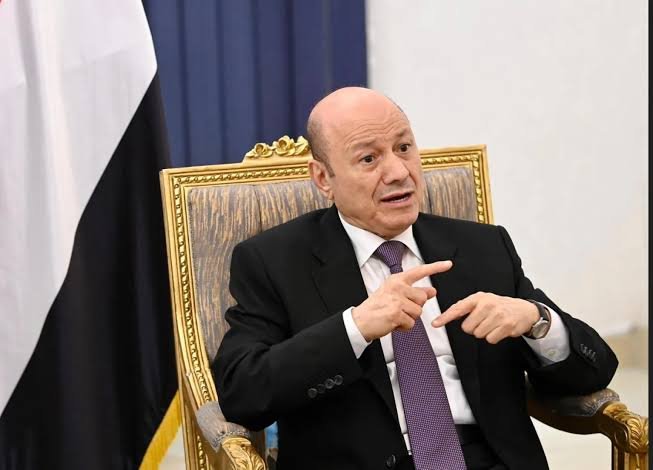
Yemen’s current political landscape has once again come into focus following detailed remarks by the head of the Presidential Leadership Council, Rashad Al-Alimi, who sought to clarify the background, intent, and broader implications of a series of recent decisions. He explained that steps related to the Emirati presence in Yemen should not be interpreted as a rupture in relations, a rejection of cooperation, or a sign of hostility between the two sides. According to him, these measures are part of a broader effort to recalibrate the course of the coalition in a way that better serves shared objectives and responds realistically to the evolving circumstances on the ground.
Al-Alimi stressed that the Yemeni leadership is fully aware of the importance of its regional partnerships and approaches them with a sense of responsibility rather than emotion. In particular, he highlighted the relationship with Saudi Arabia, describing it as far more than a conventional political or diplomatic link.
In his view, this partnership represents a strategic pillar that directly supports Yemen’s struggle to restore its state institutions and re-establish national authority. He underlined that safeguarding this relationship is a national duty, one that the Yemeni leadership treats with seriousness because it understands both the benefits it provides and the serious risks that could emerge if it were undermined or neglected.
Addressing speculation around recent policy choices, Al-Alimi made it clear that these decisions were not driven by a desire to escalate tensions, nor were they motivated by retaliation or pressure tactics. Instead, he described them as calculated steps taken in response to the demands of a critical phase in Yemen’s long and complex crisis.
He emphasized that Yemen is navigating an exceptionally sensitive period, one in which impulsive actions could deepen divisions or derail efforts aimed at restoring stability. For this reason, every move, he said, is assessed through the lens of how it contributes to the ultimate national objective: rebuilding the Yemeni state and ending the conditions that have allowed rebellion and institutional collapse to persist.
He further explained that the leadership’s vision for Yemen remains consistent and clear. The goal is the re-establishment of a functioning state based on constitutional legitimacy, the rule of law, and broad national consensus. Al-Alimi noted that peaceful avenues are always preferable and will be pursued whenever they offer a realistic path forward.
However, he also acknowledged that the realities of conflict sometimes leave limited options, and that defending the state and its institutions may require confronting challenges through less conciliatory means if peaceful solutions are blocked. In his assessment, this is not a contradiction but rather a reflection of the harsh realities facing a country emerging from prolonged conflict.
When discussing the issue of southern Yemen, Al-Alimi adopted a cautious yet firm tone. He described the southern question as a deeply sensitive national matter that cannot be resolved through unilateral actions, short-term calculations, or the use of force. According to him, the only viable path toward addressing southern grievances lies within a comprehensive national framework that brings all stakeholders to the table.
He emphasized that all parties are obligated to operate within political and constitutional boundaries and to refrain from armed confrontation, as renewed violence would only complicate the issue further and threaten the fragile prospects for stability across the country.
Al-Alimi warned that Yemen, already burdened by years of war, economic strain, and humanitarian suffering, cannot afford additional layers of conflict. Any move that fuels internal clashes or deepens fragmentation, he said, would come at the expense of the broader national interest. He therefore called for restraint, dialogue, and a commitment to unity, stressing that preserving cohesion among national forces is essential for overcoming the current crisis. Fragmentation and infighting, in his view, are among the most serious obstacles to rebuilding state institutions and restoring normal life for citizens.
He reaffirmed that future decisions taken by the Yemeni leadership will be guided by a single overarching principle: strengthening the national path rather than serving narrow or factional interests. Al-Alimi said that maintaining unity within the national ranks is not a symbolic slogan but a practical necessity, especially at a time when the country faces both internal and external challenges. He argued that only through collective effort and shared responsibility can Yemen hope to bring an end to rebellion, reassert state authority, and rebuild institutions capable of serving the public effectively.
In elaborating on the broader strategy, Al-Alimi acknowledged that ending the rebellion and restoring state structures is neither quick nor easy. It is a prolonged process that demands patience, coordination, and sustained commitment. He noted that internal cohesion must be complemented by constructive regional and international support, as Yemen’s recovery is closely tied to its relationships with neighboring states and global partners. However, he emphasized that cooperation should always be aligned with Yemen’s sovereignty and long-term national interests.
He also made it clear that no future steps will be aimed at isolating or marginalizing any group willing to work toward a unified, stable Yemen. Instead, the leadership seeks to shape a shared national course that includes all forces genuinely committed to the country’s recovery. From his perspective, inclusivity, when grounded in national responsibility rather than narrow agendas, is a key factor in preventing renewed conflict and fostering sustainable stability.
Al-Alimi reiterated that recent decisions should be understood within a wider strategic vision rather than viewed in isolation. That vision, he explained, centers on national reconciliation, state sovereignty, and the welfare of the Yemeni people. Leadership, he said, is not only about addressing immediate crises but also about laying the foundations for a future in which coming generations inherit a country capable of peace, development, and self-governance. Within this context, policy adjustments and strategic recalibrations are tools meant to serve long-term goals, not signals of confrontation or disengagement.
Concluding his remarks, Al-Alimi expressed confidence that Yemen’s future can still be secured through unity, responsible partnerships, and carefully considered decisions. He acknowledged the scale of the challenges ahead but affirmed that the leadership remains committed to navigating them with prudence and resolve. According to him, there is no priority higher than restoring the state, protecting the population, and steering Yemen toward a stable and sovereign future, even if the path toward that goal remains complex and demanding.