

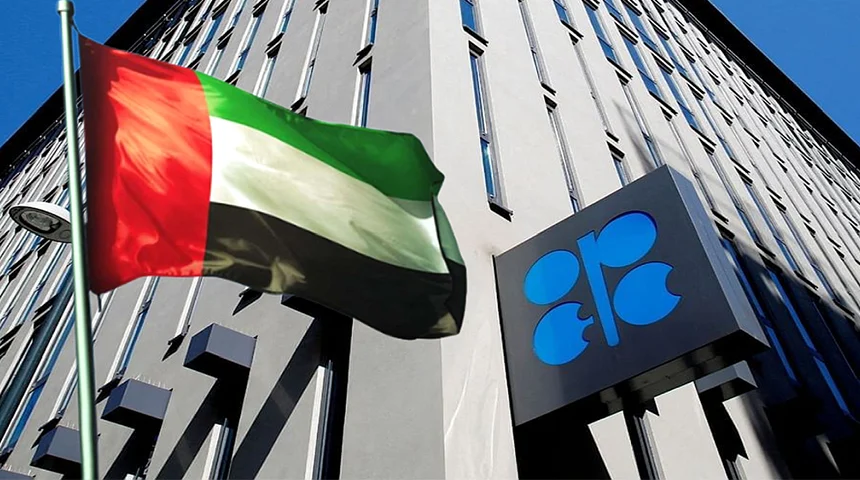
The global energy landscape is witnessing a significant shift after the United Arab Emirates formally announced its decision to withdraw from OPEC and OPEC+. This move, set to take effect on May 1, 2026, brings an end to nearly 59 years of UAE membership in the oil alliance and marks a major turning point in international energy politics.
According to analysts, the decision effectively transitions the UAE from being a key member of a coordinated oil cartel into an independent and strategically flexible oil producer. This change is expected to reshape how global oil markets operate, particularly at a time when energy prices remain highly volatile and geopolitical tensions continue to influence supply chains.
The announcement comes amid already unstable global oil conditions, with Brent crude trading above 110 dollars per barrel. Rising demand fluctuations, supply uncertainties, and ongoing geopolitical pressures have created a complex environment for oil-producing nations and market regulators alike.
At the core of the UAE’s decision lies a long-standing dispute over production quotas within OPEC+. Over the past decade, the UAE has invested heavily—over 150 billion dollars—into upstream oil infrastructure through its national company ADNOC. These investments significantly increased its production capacity to nearly 5 million barrels per day.
However, under OPEC+ quota arrangements, the country has typically been restricted to around 3.2 million barrels per day. This has left approximately 1.8 million barrels per day of capacity unused, representing nearly 40 percent of its total potential output. In a changing global energy environment—where long-term oil demand growth is uncertain—maintaining such unused capacity has become increasingly difficult to justify.
Geopolitical instability in the Gulf region has also played a key role in shaping this decision. Disruptions in and around the Strait of Hormuz have repeatedly raised concerns about energy security, with estimates suggesting that at certain points, up to 10 million barrels per day of exports were at risk of disruption. Attacks on regional infrastructure and broader tensions have further strained confidence within OPEC+ mechanisms.
Despite these challenges, the UAE possesses strong alternative export infrastructure that supports its independent strategy. The Habshan–Fujairah pipeline, with a capacity of around 1.5 million barrels per day, allows the country to bypass the Strait of Hormuz and directly transport oil to the Gulf of Oman. This strategic asset significantly reduces vulnerability to maritime disruptions and strengthens the UAE’s position as a flexible exporter outside cartel constraints.
Economically, the UAE has undergone a major transformation over the past decade. Non-oil sectors now account for approximately 77 to 78 percent of its GDP, reflecting a deliberate shift toward diversification. Key growth areas include artificial intelligence, logistics, finance, tourism, and advanced manufacturing. The economy is projected to grow at around 5.6 percent in 2026, supported by this broad-based expansion.
Despite diversification efforts, oil remains a highly profitable sector for the UAE due to its extremely low production costs, estimated at around 10 to 15 dollars per barrel. This allows the country to remain highly competitive even at moderate global price levels of 60 to 75 dollars per barrel.
Experts suggest that the UAE’s exit is particularly significant because it removes one of OPEC’s largest and most efficient producers. Historically, the UAE’s spare capacity played an important role in stabilizing global oil prices during periods of supply disruption. Its departure therefore reduces the cartel’s ability to manage excess supply strategically.
The decision is being widely interpreted as a structural shift in global energy governance rather than a simple policy disagreement. It reflects broader changes in how oil-producing nations are reassessing long-term strategies in response to energy transition trends, geopolitical risks, and evolving market dynamics.