

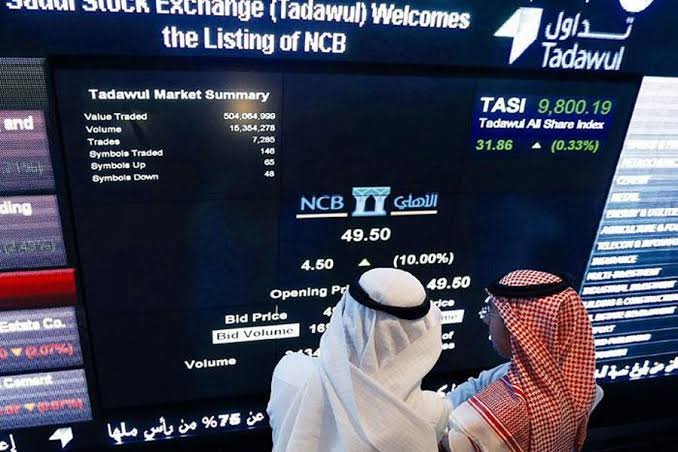
Saudi Arabia is opening its stock market to direct foreign investment starting February 1, marking a significant step in the Kingdom’s ongoing efforts to attract international capital and diversify its economy. The announcement came from the Capital Market Authority (CMA), which stated that a regulatory amendment approved by its board will allow investors from around the globe to participate directly across all segments of the Saudi capital market.
This change represents a major shift from previous rules that restricted foreign investment to select qualified investors and specific arrangements, providing a more inclusive framework for global participants.
Under the new regulatory structure, international investors no longer need to meet the previous qualification requirements to access the Main Market. The CMA has eliminated the concept of the Qualified Foreign Investor (QFI), a category that had previously defined which non-resident investors could participate. This revision means that all foreign investors, regardless of their background or prior experience with the Saudi market, can now directly buy shares listed on the Main Market without intermediary arrangements.
The regulatory framework that once governed swap agreements—mechanisms that allowed non-resident investors to benefit economically from listed securities without direct ownership—has also been removed, further simplifying access and broadening opportunities for international capital.
The CMA’s reforms are part of a broader strategy to expand and diversify the investor base in the Kingdom, aiming to strengthen liquidity and increase investment inflows into the market. By making it easier for foreigners to participate directly, the authority expects more sustained and stable engagement from international investors.
These changes come against the backdrop of an already growing presence of global capital in the Saudi market. By the end of the third quarter of 2025, international ownership in the capital market had reached over SR590 billion ($157.32 billion), while investments in the Main Market alone totaled approximately SR519 billion, reflecting a four percent increase compared to the previous year. These figures demonstrate the growing interest of foreign investors in Saudi Arabia’s capital markets and the potential for further growth as regulatory barriers are lowered.
Earlier in July, the CMA had introduced preliminary measures aimed at simplifying procedures for certain categories of investors. This included foreign investors who are natural residents of Gulf Cooperation Council (GCC) countries, as well as those who had previously resided in Saudi Arabia or elsewhere in the GCC. The July measures represented an interim step toward opening the market more broadly and were designed to build confidence among both foreign and domestic investors in the Main Market.
By streamlining account-opening processes and operational requirements, the CMA made it easier for these select investors to engage in trading activities, paving the way for the more comprehensive reforms announced for February 1.
The decision to open Saudi Arabia’s stock market to direct foreign participation aligns with the Kingdom’s wider economic vision, which is focused on reducing reliance on oil revenues and expanding non-oil sectors. As part of this plan, Saudi Arabia has been actively seeking foreign capital not only through direct market participation but also by establishing financial instruments such as exchange-traded funds (ETFs) in partnership with international markets.
These include collaborations with partners in Japan and Hong Kong, enabling the Kingdom to tap into regional capital pools and diversify investment inflows. The CMA’s latest amendments provide a regulatory framework that complements these international initiatives, offering foreign investors a more transparent and accessible path to Saudi equities.
The reforms are expected to have multiple positive effects on the Kingdom’s economy. By attracting more international investors, the Main Market is likely to see increased liquidity, which can reduce volatility and create a more stable trading environment. Greater foreign participation also enhances price discovery and market efficiency, making the Saudi capital market more competitive on a global scale.
Furthermore, direct investment by foreigners can support local companies by providing additional capital for expansion and operational growth, which contributes to overall economic diversification and job creation within the Kingdom.
In addition to regulatory simplification, the CMA’s approach reflects a long-term strategic vision of integrating Saudi Arabia more fully into global financial markets. By enabling direct investment for all categories of foreign investors, the Kingdom signals a commitment to international transparency and inclusivity, factors that are increasingly important for attracting institutional capital and large-scale portfolio investment. This approach not only strengthens investor confidence but also positions Saudi Arabia as a regional hub for financial activity, capable of drawing capital from Asia, Europe, and the Americas.
The removal of barriers such as the QFI requirements and swap agreement restrictions is expected to stimulate a wave of new participation from investors who may have previously been hesitant due to regulatory complexities. International asset managers, pension funds, and sovereign wealth funds now have the option to acquire equity directly in Saudi companies, enabling them to align their portfolios with one of the fastest-growing markets in the Middle East.
This direct access also provides investors with greater control over their holdings, including rights to dividends, voting, and participation in corporate governance, which were previously limited under indirect investment structures.
By broadening access to foreign capital, Saudi Arabia’s stock market reforms support the Kingdom’s goal of becoming more attractive for long-term strategic investment. The increase in investor base diversity is anticipated to strengthen market resilience, especially during periods of volatility. As foreign investment flows grow, they can help mitigate risks associated with concentrated domestic participation and enhance the overall stability of the financial ecosystem.
Moreover, a larger and more diverse investor community can drive innovation in financial products and services, encouraging the adoption of modern trading technologies and risk management practices.
Overall, the CMA’s announcement represents a landmark moment in Saudi Arabia’s financial sector. It reflects a comprehensive approach to regulatory reform aimed at attracting global capital, increasing transparency, and modernizing market practices. These reforms not only facilitate foreign participation but also create a foundation for sustainable economic growth and diversification. With the removal of qualification restrictions, elimination of indirect investment mechanisms, and enhanced accessibility for all foreign investors, the Kingdom is poised to see a significant increase in international engagement and long-term capital inflows.
As Saudi Arabia continues its broader economic transformation, these measures are expected to contribute to the success of Vision 2030 objectives, including diversification of revenue sources, strengthening non-oil sectors, and enhancing the Kingdom’s integration into the global economy. By opening the Main Market to direct foreign investment, the CMA has created an environment that encourages transparency, confidence, and robust participation from investors worldwide, further positioning Saudi Arabia as a key destination for global financial activity and investment opportunities.
In essence, from February 1 onward, foreign investors will have a direct pathway to participate in Saudi Arabia’s stock market across all its segments, ushering in a new era of financial openness, international engagement, and long-term market development. This strategic move is expected to drive liquidity, stimulate economic growth, and solidify the Kingdom’s role as a leading hub for investment in the Middle East.