

Pakistan has formally initiated diplomatic engagement with the United States following Washington’s decision to halt immigrant visa processing for citizens of dozens of countries, including Pakistan. Officials in Islamabad have expressed cautious optimism that the suspension is temporary and that normal visa procedures may be restored after an internal review by U.S. authorities.
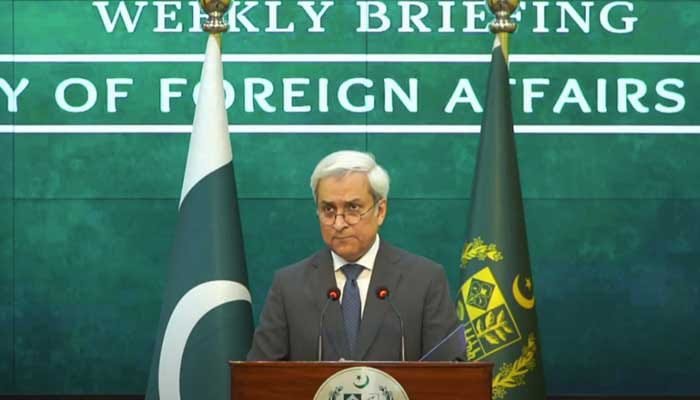
Addressing journalists during a routine press briefing in Islamabad on Thursday, Foreign Office Spokesperson Tahir Andrabi confirmed that Pakistan’s diplomatic channels are actively engaged with American officials to better understand the scope, reasoning, and expected duration of the visa suspension. He emphasized that the matter is still unfolding and that Pakistan is closely monitoring developments as they emerge.
The spokesperson’s remarks came in response to a policy announcement by the U.S. State Department, which ordered an indefinite pause on immigrant visa processing for applicants from 75 countries. The suspension is scheduled to take effect on January 21, 2026, and has already raised concerns among thousands of families awaiting immigration decisions.
According to a statement posted by the U.S. State Department on the social media platform X, the decision was based on assessments indicating that migrants from certain countries rely on American welfare systems at what Washington considers “unacceptable rates.” The department stated that visa processing would remain suspended until assurances can be established that incoming immigrants will not place a financial burden on U.S. taxpayers or exploit public assistance programs.
In Islamabad, Andrabi said the Foreign Office had taken note of a brief official communication from the U.S. side, which referred to an ongoing internal review of immigration procedures. He clarified that Pakistan has sought further clarification from American authorities and described the situation as dynamic rather than final.
“We are actively engaging with U.S. officials to determine additional details,” Andrabi said, adding that Pakistan understands the move to be part of a broader internal assessment of U.S. immigration policies. He expressed hope that once the review process is completed, routine immigrant visa processing would resume in due course.
The spokesperson stressed that Pakistan views the suspension as a temporary administrative measure rather than a permanent policy shift. He reiterated Islamabad’s expectation that legitimate and lawful immigration pathways for Pakistani citizens would be restored once the review concludes.
Beyond visa-related concerns, the Foreign Office briefing also addressed regional security developments, particularly escalating tensions involving Iran. Andrabi stated that Pakistan is carefully observing the evolving situation in Tehran, given Iran’s significance as both a neighboring country and a key regional actor.
He underlined that Iran holds an important place in Pakistan’s foreign policy framework, not only due to geographic proximity but also because of longstanding cultural, historical, and diplomatic ties. Expressing Islamabad’s position clearly, Andrabi said Pakistan hopes that stability, peace, and calm will prevail in Iran amid ongoing regional pressures.
“Pakistan considers Iran a brotherly and friendly nation,” he said, adding that Islamabad supports all international and regional efforts aimed at resolving tensions through dialogue and diplomacy. He emphasized that Pakistan wishes to see Iran emerge from current challenges as a peaceful, secure, and prosperous country.
During the same briefing, the Foreign Office spokesperson also addressed recent remarks made by Indian Army Chief General Upendra Dwivedi, firmly rejecting allegations leveled against Pakistan. Andrabi described the accusations as unfounded, politically driven, and reflective of a long-standing pattern in New Delhi’s rhetoric.
General Dwivedi had claimed earlier this week that multiple drones had crossed into Indian territory, alleging that at least eight such incidents had occurred since Saturday. Speaking at an annual press conference on January 13, the Indian Army chief suggested that the drones were being used for surveillance to detect potential military activity.
Responding to these claims, Andrabi dismissed them as misleading and repetitive, stating that India continues to recycle narratives that lack credible evidence. He argued that such statements do more harm to India’s international standing than to Pakistan.
“These are old and conventional allegations that have been made time and again without proof,” the spokesperson said. “Such claims undermine India’s own credibility on the global stage.”
Turning the focus back on New Delhi, Andrabi asserted that there is substantial and documented evidence of India’s involvement in destabilizing activities within Pakistan. He claimed that Indian state-backed networks have been implicated in financing and facilitating terrorism, not only inside Pakistan but also across the broader region.
According to the spokesperson, intelligence and investigative findings have linked India-supported militant groups to activities in neighboring Afghanistan as well. He said Pakistan has consistently raised these concerns at international forums and will continue to do so.
The Foreign Office maintained that Pakistan remains committed to regional peace and stability despite what it views as persistent attempts by India to divert attention from its own actions. Andrabi reiterated that Islamabad seeks constructive engagement and peaceful coexistence but will firmly counter what it considers baseless accusations.
The briefing reflected Pakistan’s multifaceted diplomatic posture: actively engaging the United States over immigration concerns, advocating for peace and stability in the region, and pushing back against what it sees as politically motivated allegations from India. As developments continue to unfold—particularly regarding U.S. immigration policy—Islamabad has made clear that it will remain vigilant, proactive, and hopeful that diplomatic dialogue will lead to favorable outcomes for its citizens.