

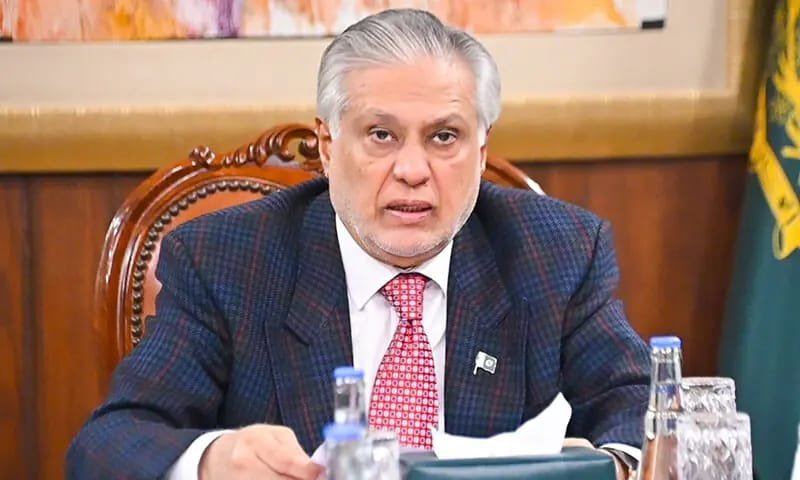
Minister of Foreign Affairs, Ishaq Dar, has provided a detailed account of Pakistan’s stance on the recent military escalation involving Iran, the United States, and Israel, emphasizing Islamabad’s proactive and principled diplomatic approach. Speaking in a Senate session, he elaborated on Pakistan’s efforts to mediate tensions in the region, its condemnation of aggressive actions, and its consistent support for Iran’s right to peaceful nuclear energy.
According to Minister Dar, Pakistan has repeatedly sought to ensure that Iran does not use its territory for attacks on Saudi Arabia. Islamabad has conveyed this assurance to Riyadh, underscoring its commitment to regional stability. He highlighted that Pakistan’s sincere diplomatic initiatives regarding Iran are sometimes misrepresented domestically, but Iranian leadership remains fully aware of Islamabad’s intentions and contributions toward conflict prevention. The minister made it clear that Pakistan’s efforts are rooted in responsibility and regional peace, rather than political signaling.
During his remarks, Dar outlined the broader context of the conflict, noting that despite significant progress in nuclear negotiations between the United States and Iran, attacks were nonetheless carried out. Pakistan reacted immediately and unequivocally condemned the military strikes against Iran. He stressed that Pakistan is unique in openly taking a principled stance against aggression, and this position was acknowledged and appreciated in Iran, even within its parliamentary sessions, where slogans of gratitude toward Pakistan were reportedly raised.
Minister Dar described Pakistan’s active role in multilateral forums, including the United Nations Security Council (UNSC), where Islamabad exercised its position effectively. He noted that while Pakistan held the Security Council presidency, it facilitated extensive discussions between the United States and Iran, promoting dialogue and attempting to prevent escalation. In addition, Pakistan organized an emergency UNSC session on February 28, during which it reaffirmed the importance of restraint, condemned attacks on Iran, and emphasized the need for a diplomatic resolution.
He provided insights into the nuclear negotiations, stating that Iran had agreed not to develop nuclear weapons, and progress was being made with Oman acting as a neutral intermediary. Minister Dar mentioned his personal engagement with U.S. Secretary of State Marco Rubio, explaining that Pakistan had successfully advocated for Iran’s right to continue a peaceful nuclear program. He contrasted Pakistan’s approach with the U.S. position, which sought the complete dismantling of Iran’s nuclear capabilities. Islamabad’s emphasis was on balancing global security concerns with Iran’s sovereign rights to peaceful energy development.
Dar explained that Pakistan was prepared to host direct mediation talks in Islamabad between the U.S. and Iran, highlighting the country’s readiness to facilitate dialogue without delay. He emphasized that Islamabad’s condemnation of attacks was not symbolic; it was immediate and firm. Within minutes of the attacks, Pakistan issued a public statement condemning aggression. According to him, this decisive action strengthened Pakistan’s credibility internationally and reassured Iran of Islamabad’s reliability as a neutral partner.
The Foreign Minister also addressed Iran’s retaliatory strikes on Gulf countries in response to the initial attacks, explaining that the Iranian military targeted U.S. bases and airports rather than civilian centers. He clarified that Pakistan remained committed to not being drawn into the conflict, demonstrating strategic restraint while advocating for peace. Minister Dar stressed that Pakistan would have joined voices with the United States and Israel if the conflict had spread to other nations, but the country chose to act with prudence and maintain its independent stance.
Highlighting the significance of Pakistan’s Security Council membership, Minister Dar described it as an instrument for amplifying the country’s influence and mediating in international crises. He said that through coordinated diplomatic engagement, Pakistan ensured that all parties, including Arab nations, expressed restraint and that escalation was minimized. The minister underscored the importance of leveraging international platforms to prevent conflicts that threaten regional and global stability, emphasizing that recent events could have been avoided with proactive diplomacy.
Dar provided a timeline of Pakistan’s continuous diplomatic engagement. He recalled that over the course of U.S.-Iran negotiations, Pakistan maintained regular communication with Iranian Foreign Minister Abbas Araghchi, bypassing bureaucratic delays and ensuring real-time dialogue. This direct contact allowed Pakistan to act swiftly, promoting constructive solutions and providing reassurance to all stakeholders about Islamabad’s neutrality and commitment to peace.
He elaborated that Pakistan’s support for Iran’s nuclear program has always been consistent with international norms, reaffirming that Iran’s right to peaceful nuclear energy must be respected. Pakistan’s position, according to Dar, reflects a balance between supporting sovereign rights and maintaining global non-proliferation standards. Unlike other nations that demanded complete dismantling of Iran’s nuclear infrastructure, Pakistan’s approach aimed to preserve both security and diplomatic trust.
Minister Dar also detailed Pakistan’s active role during regional escalations. As Iran responded to attacks with counter-strikes on U.S. bases and certain Gulf nations, Pakistan carefully monitored the situation and maintained continuous diplomatic communication with all affected parties. The Foreign Minister underscored that Islamabad’s interventions were measured, designed to prevent further conflict while sending a clear message that Pakistan would not condone attacks on sovereign states.
He pointed out that Pakistan’s immediate condemnation of aggression and its diplomatic outreach were recognized internationally. In the Iranian Parliament, Pakistan’s principled stance prompted expressions of gratitude, symbolizing the effectiveness of Islamabad’s diplomacy. Dar emphasized that this acknowledgment reinforces Pakistan’s reputation as a responsible and neutral actor in a highly volatile region.
The Foreign Minister stressed that proactive diplomacy is crucial in moments of crisis. Pakistan’s engagement with the UNSC, including facilitating debates and issuing statements, ensured that international attention focused on de-escalation rather than unilateral retaliation. By leveraging its position in the Security Council, Pakistan reinforced the principle that military action alone cannot resolve complex geopolitical disputes.