

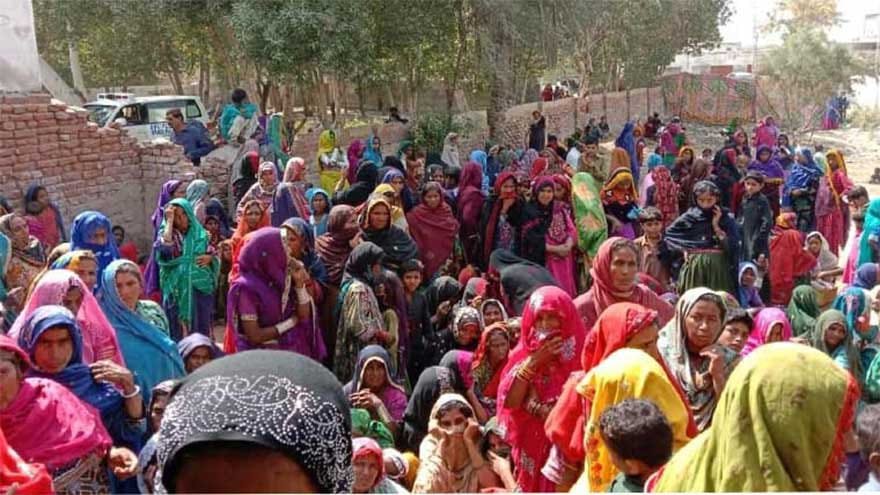
A tragic incident in the southern Punjab district of Rahim Yar Khan has sent shockwaves across the country, highlighting serious concerns about safety arrangements and administrative oversight during public service operations. What began as a routine distribution of financial aid under a government support program turned into a devastating disaster, claiming multiple lives and leaving dozens injured.
The incident occurred in a rural area near Chak No. 125, where a large number of women had gathered to receive their payments under the Benazir Income Support Programme (BISP). According to initial reports, more than 200 women were present at a private bank’s payment center set up in a local market. Due to overcrowding and limited space, many of the women had climbed onto the roof of the structure while waiting for their turn.
Eyewitnesses described a chaotic scene as the roof—reportedly weak and unable to bear the excessive weight—suddenly collapsed without warning. Within moments, several women were trapped under the debris, triggering panic and distress among those present. Cries for help echoed through the area as people rushed to assist the victims.
Rescue teams were immediately dispatched to the site and began emergency operations to উদ্ধার those trapped beneath the rubble. The injured were quickly transported to Sheikh Zayed Hospital, where an emergency was declared to handle the influx of patients. Medical staff worked under pressure to provide urgent care, while authorities attempted to manage the evolving situation.
Initial casualty figures indicated a smaller number of fatalities, but as time passed, the death toll rose. Several women who had been critically injured succumbed to their wounds during treatment, bringing the total number of deaths to seven. Meanwhile, more than 70 women sustained injuries, some of them serious, raising fears that the toll could increase further.
District authorities took immediate notice of the incident and ordered a thorough investigation. Officials stated that the inquiry would focus on identifying any negligence or lapses that may have contributed to the tragedy. Questions are being raised about how such a large crowd was allowed to gather in a structurally unsafe location and whether proper safety protocols were ignored.
Reacting to the incident, BISP Chairperson Senator Rubina Khalid expressed deep sorrow and concern. In her statement, she confirmed that the accident occurred at a payment point operated in collaboration with a private banking partner. She emphasized that the organization is taking the matter seriously and is committed to uncovering the facts.
Following directives from President Asif Ali Zardari, Rubina Khalid traveled to Rahim Yar Khan to meet the affected families and offer condolences. She also announced that a high-level investigative committee had been dispatched from the BISP headquarters, with instructions to submit a detailed report within 24 hours.
The BISP administration has issued a notice to the partner bank involved, citing possible negligence. Authorities indicated that strict action would be taken if any wrongdoing or failure in responsibility is proven. In addition, financial penalties are being considered against those found accountable.
To support the victims, the program has announced compensation packages. Families of the deceased will receive Rs1 million each, while injured individuals will be given Rs300,000. Officials have assured that these payments will be processed promptly to provide immediate relief to those affected.
Punjab Chief Minister Maryam Nawaz also expressed her grief over the incident and directed local officials, including the commissioner and district administration, to reach the site without delay. She instructed them to accelerate rescue efforts and ensure that all injured individuals receive the best possible medical treatment.
This heartbreaking event has once again exposed vulnerabilities in the management of public welfare initiatives, particularly in crowded and under-resourced settings. Experts argue that stricter enforcement of safety measures, better crowd management, and improved infrastructure are essential to prevent such tragedies in the future.
The Rahim Yar Khan disaster stands as a painful reminder of how administrative lapses and inadequate planning can lead to devastating consequences. As investigations continue, the public now looks toward authorities for accountability and meaningful reforms to ensure that such incidents do not occur again.