

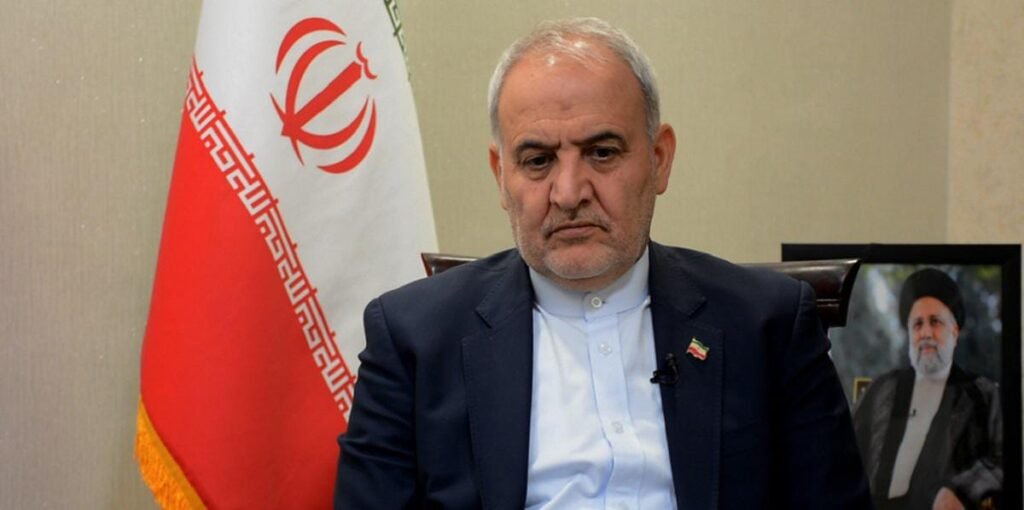
Despite claims from Washington suggesting progress in diplomatic efforts, Iran has firmly denied any direct or indirect negotiations with the United States. Iran’s ambassador to Pakistan, Reza Amiri Moghadam, clarified on Wednesday that reports of talks were inaccurate.
“We have heard these claims circulating in media, but according to my knowledge, no discussions have taken place so far,” he said. The ambassador added that it was natural for friendly nations to engage in efforts to prevent further escalation, describing the conflict as stemming from what Tehran considers an “illegitimate aggression.”
The Iranian military echoed this sentiment, rejecting the idea that any meaningful diplomacy is occurring. Ebrahim Zolfaqari, spokesperson for the Khatam al-Anbiya Central Headquarters, criticized the United States, suggesting that Washington was essentially “negotiating with itself.”
He emphasized that the region’s stability remains directly tied to Iran’s military posture and warned that the pre-conflict economic situation would not be restored unless US policy changed substantially.
Meanwhile, the conflict has continued to intensify across multiple fronts. Early Wednesday, Iran launched a new wave of missiles and drone strikes targeting Israeli territories as well as locations hosting US forces in Kuwait, Jordan, and Bahrain.
The Revolutionary Guards confirmed these operations, underscoring the expanding scale of hostilities. In central Israel, air raid sirens blared across multiple cities, with footage showing missile trails over coastal areas such as Netanya. Kuwait experienced a drone strike on a fuel tank at its international airport, sparking a fire, while debris from regional attacks was reported near Amman, Jordan. Bahrain also activated air defense alerts, reflecting rising regional tension.
The conflict began on February 28, following coordinated strikes by US and Israeli forces on Iranian targets. Since then, it has spread widely across the Middle East, creating significant disruption for global energy markets and aviation routes. Gulf nations, previously considered relatively stable, now face growing security risks. This escalation has impacted tourism, regional travel, and overall economic activity, creating a climate of uncertainty across major hubs.
The violence has also extended to Lebanon, where Israel has intensified operations against Iran-backed Hezbollah forces. Bombardments in southern Beirut and surrounding areas have caused substantial destruction, with authorities reporting over 1,000 fatalities and more than a million people displaced. The humanitarian crisis continues to grow, placing additional strain on regional resources and international aid organizations.
Amid this surge in hostilities, US President Donald Trump indicated renewed interest in diplomatic engagement. He asserted that the United States was “in negotiations right now” with Iran, and suggested that Tehran had offered a “very big present” involving the Strait of Hormuz.
Trump claimed this demonstrated that Washington was communicating with “the right people,” though he did not provide further details. Nevertheless, Tehran has not officially confirmed any such negotiations, leaving the international community uncertain about the credibility and progress of backchannel diplomacy.
The Strait of Hormuz, a strategically vital waterway through which roughly one-fifth of global oil supplies pass, remains a focal point of international concern. Iran has communicated through the International Maritime Organization that “non-hostile vessels” would be allowed to transit safely. However, it warned that ships associated with what it terms “aggressor parties,” namely the United States and Israel, could face restrictions. The ongoing conflict has already disrupted energy shipments, pushing oil prices higher and prompting governments worldwide to adjust energy policies. Airlines have rerouted or canceled flights in response to heightened risks, and shipping companies are taking precautionary measures.
Despite the uncertainties, there are limited signs that diplomacy could influence market behavior. Iran’s assurances for safe passage of certain vessels have helped stabilize trading to some extent, leading to a modest easing of oil prices in Asian markets. Financial analysts note that even incremental gestures toward negotiation can temporarily reduce panic in global commodity markets, though the broader geopolitical risks remain elevated.
Economic experts have also warned of long-term consequences beyond energy markets. Jean-Marie Paugam of the World Trade Organization highlighted the potential impact of supply disruptions, particularly in fertilizers, on global food production.
“If fertilizer availability is constrained, this will directly affect crop yields and prices, with effects carrying forward into future harvests,” he said. Analysts emphasize that agricultural supply chains are especially vulnerable in times of regional conflict, meaning the ramifications could extend far beyond the Middle East.
As the situation continues, the United States appears to be preparing for the possibility of escalation even while exploring potential diplomatic channels. Media reports, including from The Wall Street Journal, indicate plans to deploy additional US troops to the region, signaling that military readiness remains a priority alongside any tentative negotiations.
The dual approach of maintaining pressure while testing backchannel communication underscores the uncertainty shaping US foreign policy and global investor sentiment.
Observers note that the persistent clash between military engagement and diplomacy is creating a volatile environment for markets, regional economies, and international stakeholders.
The unfolding events highlight how geopolitical instability can quickly ripple through global energy supply chains, disrupt transportation networks, and provoke shifts in commodity and financial markets. Investors are closely monitoring every statement, strike, or movement from both sides, while analysts attempt to assess whether diplomatic overtures will materialize or remain largely symbolic.
The broader human and economic toll of the conflict cannot be understated. Beyond the immediate destruction in targeted areas, regional displacement and casualties are straining local governance structures, humanitarian aid networks, and international relief efforts. The situation has generated both short-term shocks, such as spikes in fuel prices and rerouted logistics, and longer-term risks to stability and growth.
The ongoing dispute between Washington and Tehran, coupled with the lack of confirmed dialogue, has created an environment in which headlines alone can trigger market reactions. Traders, governments, and multinational companies are all responding to perceived threats to energy security, regional stability, and the continuity of international trade. Even incremental indications of negotiation or restraint have potential to ease uncertainty, but the overall trajectory remains unpredictable.
The complexity of the crisis is compounded by regional military postures and Iran’s insistence on linking the return to normal economic conditions with a substantive shift in US policy. While Trump’s statements suggested possible engagement, Iranian officials’ categorical denial of talks demonstrates the gap between public signaling and verified diplomatic activity. As a result, global actors continue to navigate a delicate balance between preparation for escalation and hope for negotiation.
The strategic importance of the Strait of Hormuz, the volatility in global energy markets, the humanitarian impact in Lebanon and other affected regions, and the potential ripple effects on agriculture and trade underscore the far-reaching consequences of the conflict. Market participants, policy makers, and international organizations remain on high alert, recognizing that shifts in military or diplomatic dynamics could significantly alter economic conditions and geopolitical alignments.
While US statements have suggested possible diplomatic engagement, Iran has consistently denied any formal talks, creating an environment of uncertainty and cautious monitoring. The conflict has expanded across multiple fronts, impacting energy markets, international shipping, regional security, and global trade networks.
Diplomatic overtures, backchannel discussions, and limited assurances on shipping have provided temporary relief to markets, yet the underlying volatility and strategic tensions remain high. Analysts, governments, and investors continue to weigh the potential outcomes, balancing between preparation for escalation and hope for meaningful negotiation, fully aware that the human, economic, and geopolitical stakes remain exceptionally high.