

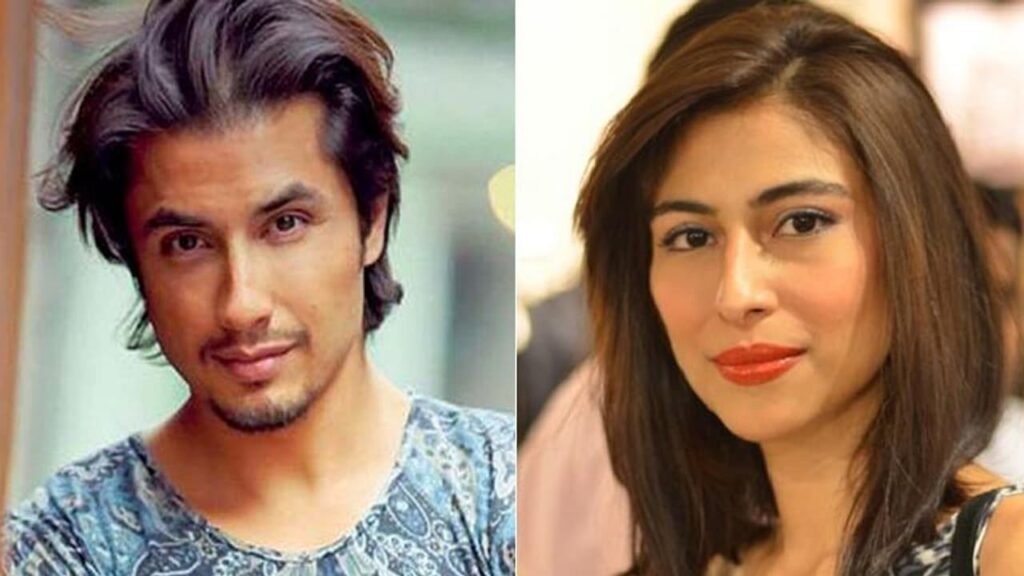
The Lahore High Court has temporarily paused the enforcement of a trial court decision in the long-running defamation dispute between singer Meesha Shafi and musician Ali Zafar, while imposing strict financial conditions on the appellant.
A two-member bench led by Justice Ahmed Nadeem Arshad heard Meesha Shafi’s appeal challenging a recent verdict issued by a sessions court. The lower court had directed her to pay Rs5 million in damages to Ali Zafar in connection with a defamation case that has remained in litigation for several years. The high court, while considering her request for suspension of the order, allowed only a partial relief rather than a complete stay.
Under the court’s interim arrangement, the execution of the damages order has been suspended, but only on the condition that Meesha Shafi deposits Rs2.5 million in cash with the court. In addition to this, she has been instructed to submit a surety bond for the remaining Rs2.5 million, ensuring that the financial liability remains secured during the ongoing appeal process.
The dispute originates from a defamation suit filed by Ali Zafar in 2018, in which he sought damages amounting to Rs1 billion. The case was initiated after Meesha Shafi publicly accused him of sexual harassment. Zafar’s legal team argued that these allegations were false, damaging to his reputation, and caused serious harm to his professional and personal standing.
His counsel, Rana Intizar, maintained during earlier proceedings that the statements made by Shafi were defamatory and baseless. He had also requested the court not only to award damages but also to direct her to issue an unconditional apology for the allegations made against his client.
On March 31, the sessions court ruled in favour of Ali Zafar, concluding the trial proceedings at that stage and awarding him Rs5 million as compensation. Following this judgment, Meesha Shafi challenged the decision in the Lahore High Court on April 29, arguing that the lower court had reached an incorrect conclusion and had failed to properly evaluate the evidence and legal arguments presented.
During the latest hearing, Shafi’s legal representative contended that the sessions court had unjustifiably upheld Zafar’s claim and granted damages without adequately considering key aspects of the case. He further argued that Meesha Shafi had already filed a harassment complaint before the provincial ombudsperson, and that matter is still under judicial consideration, including an appeal pending before the Supreme Court.
On this basis, the counsel requested that the entire verdict of the trial court be suspended until a final decision is reached at the highest judicial level. However, the bench declined to grant a complete stay on the judgment. Instead, it opted for a conditional suspension, balancing interim relief with financial safeguards.
During the hearing, Justice Ahmed Nadeem Arshad also addressed the restrictions imposed by the trial court regarding public statements. The earlier ruling had restrained Meesha Shafi from repeating allegations of sexual harassment against Ali Zafar. The judge observed that such directions remained in force and could not be suspended at this stage, emphasizing that the court system could not permit the repetition of serious allegations while the matter was still under judicial review.
When the petitioner’s counsel clarified that his client was not issuing any public remarks on the issue, the bench responded that if this was the case, compliance with the restriction should not present any difficulty.
Following the arguments, the Lahore High Court formally issued notice to Ali Zafar, asking him to submit his response to the appeal. The case proceedings were then adjourned for a later date.
The legal battle between the two artists has been ongoing for more than eight years, involving multiple stages of litigation across different courts. The initial defamation suit was filed in 2018, after Meesha Shafi’s public allegations on social media in April of that year, which Ali Zafar described as damaging to his reputation and livelihood.
In response to those allegations, Zafar’s legal team issued a formal legal notice, terming the statements “false, defamatory, and damaging,” and claimed that they had caused significant harm to his career and public image. The case subsequently moved through various judicial forums, including the issuance of a gag order by the trial court in January 2019, which restricted further public commentary on the matter.
Meesha Shafi later challenged several of these decisions, but her earlier appeals were not successful at the Lahore High Court level. The matter eventually reached the Supreme Court in 2021, where her petition was accepted for preliminary hearing. The apex court observed that the legal questions raised required detailed examination and later linked the case with broader proceedings concerning the definition and scope of sexual harassment, which were already under consideration.
As the case continues to progress through the judicial system, the latest Lahore High Court order represents a partial relief for Meesha Shafi, while maintaining financial and legal safeguards in favour of the respondent. The matter remains pending, with further hearings expected after the submission of responses from both parties.