

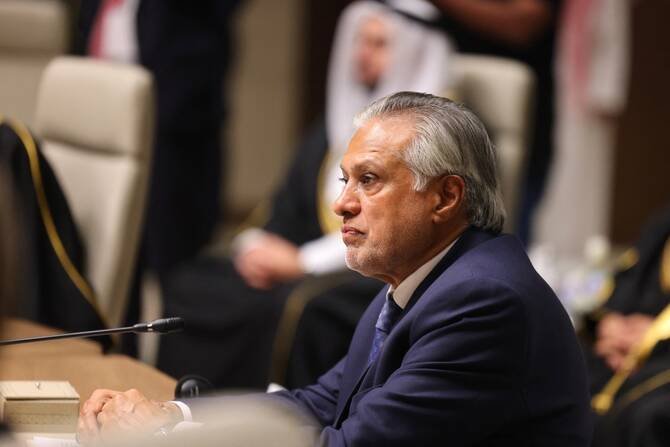
Amid rapidly evolving regional dynamics, Pakistan is once again emerging as a key diplomatic player, actively working to strengthen ties among countries and facilitate dialogue to ease tensions. In this context, a significant development has taken place as Deputy Prime Minister and Foreign Minister Ishaq Dar confirmed that Pakistan will host an important high-level meeting involving the foreign ministers of three influential nations.
According to details, the foreign ministers of Saudi Arabia, Turkey, and Egypt are expected to gather in Islamabad for a joint اجلاس aimed at discussing regional and international matters. This meeting is being viewed as a crucial step toward enhancing both bilateral and multilateral cooperation among these countries. It has also been reported that the visiting ministers will meet Prime Minister Shehbaz Sharif the following day to further deliberate on key issues.
Speaking during a special conversation, Ishaq Dar explained that the initial plan was to hold this meeting in Turkey. However, due to scheduling constraints, he invited his counterparts to Islamabad instead, an invitation that was accepted. He emphasized that Pakistan is making sincere and determined efforts to reduce regional tensions and promote peaceful resolutions to ongoing disputes.
He further highlighted that friendly countries are fully supporting Pakistan’s diplomatic initiatives, reflecting a shared commitment to stability and cooperation. According to him, continuous engagement and dialogue remain essential tools for addressing complex geopolitical challenges and preventing further escalation.
At the same time, Ishaq Dar revealed that communication with Iran is ongoing. However, he noted that due to the sensitive nature of these discussions, details are being kept confidential and are not being publicly disclosed at this stage. He stressed that discretion and careful handling of such matters are crucial for achieving meaningful progress.
This development gains further importance in light of earlier reports suggesting that the United States had conveyed a proposed 15-point ceasefire framework to Iran through Pakistan. According to those reports, Iran acknowledged receiving the proposal and subsequently sent its response back to the United States via the same channel. This highlights Pakistan’s growing role as a diplomatic intermediary, facilitating communication between key global players.
Analysts believe that the upcoming meeting in Islamabad could play a vital role in strengthening cooperation among participating countries while also contributing to broader efforts aimed at ensuring peace and stability in the region. Given the current climate of heightened tensions at both regional and global levels, such diplomatic engagements are considered highly significant.
Overall, Pakistan appears to be taking an increasingly proactive diplomatic approach, not only reinforcing its own bilateral relations but also acting as a bridge between nations seeking dialogue and resolution. While the full outcomes of these engagements will become clearer in the coming days, this development already underscores Pakistan’s growing importance in regional diplomacy and its commitment to promoting peace through constructive engagement.