

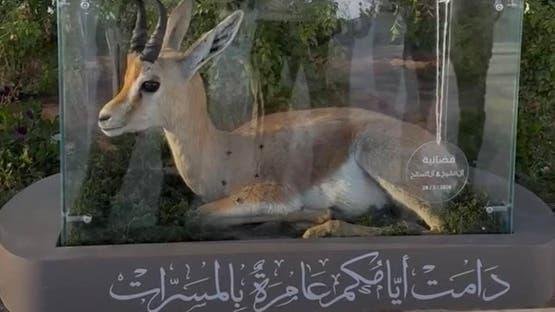
A recent video that went viral on social media has ignited widespread outrage and condemnation, showing a rare and endangered gazelle being presented as a gift at a wedding ceremony—an act many have called shocking and inhumane. The incident has sparked a vigorous debate about wildlife exploitation, ethical responsibility, and the treatment of endangered species.
The footage depicts a Dorcas gazelle carefully placed inside a transparent glass case, which was lavishly decorated and surrounded by red flowers. At first glance, the display appeared to be part of the celebratory decor, yet the context behind it revealed a deeply troubling reality: a living, wild creature removed from its natural habitat and used for display or spectacle. While visually striking, the scene drew criticism for turning an endangered animal into a decorative object rather than respecting its inherent value as a living being.
As soon as the video circulated online, social media users responded with strong criticism. Many labeled the act as clear animal exploitation, arguing that using a wild animal merely for show or entertainment is ethically wrong and disregards the welfare and dignity of the creature. Observers emphasized that such displays violate basic principles of compassion and responsibility toward animals.
Critics highlighted that including wildlife in celebratory events for decorative purposes sets a dangerous precedent. They argued that these actions normalize harmful behavior, potentially influencing others to repeat similar acts without consideration for animal rights. Presenting an endangered species in a ceremonial context not only undermines its natural well-being but also conflicts with global conservation principles.
Several experts and public figures spoke out, emphasizing the broader implications of the incident. One commentator noted that it reflected a mindset in which wild animals are perceived as objects rather than sentient beings with their own rights and needs. They stressed that raising awareness and opposing such acts is essential to prevent repetition and to safeguard endangered species in the future.
Other critics pointed out that confining a wild animal in a small, artificial environment can create severe stress, endanger its health, and compromise its natural behaviors. This is especially concerning when dealing with species that are already vulnerable or protected under international conservation frameworks.
In response, a wildlife conservation organization in Libya issued a statement condemning the incident. The organization stressed that using living creatures for display or amusement is inherently inhumane and violates international laws and ethical standards. They called for stronger enforcement measures and legal accountability to prevent similar events from occurring in the future.
The statement further clarified that the Dorcas gazelle is classified as endangered on the International Union for Conservation of Nature (IUCN) Red List. This species is uniquely adapted to desert environments, capable of surviving long periods without water, which makes it particularly resilient but also highlights its vulnerability if removed from its natural habitat. Conservationists emphasized that these exceptional adaptations make the species a priority for protection, not exploitation.
Experts noted that preserving such species requires thoughtful protection efforts, ensuring their survival in natural ecosystems. When animals like the Dorcas gazelle are used in ceremonies or for decorative purposes, these efforts are undermined, and the animals’ welfare is jeopardized. The act sends a message contrary to conservation goals, emphasizing spectacle over ethical stewardship.
Following the video’s release, numerous social media users called for stricter enforcement of animal rights and conservation laws. Many stressed that silence or inaction in response to such incidents encourages repetition, potentially normalizing the mistreatment of endangered species. They argued that public awareness and accountability are essential to changing cultural practices that endanger wildlife.
Overall, the incident serves as a stark reminder that humans have a moral and ethical obligation to respect other living beings. Animals should never be treated as objects or decorative props but as sentient creatures deserving of dignity, care, and protection. In a world where many species already face extinction threats, acts of exploitation—regardless of context—pose a significant danger to both biodiversity and ethical responsibility.
This episode underscores the urgent need for education, enforcement of conservation laws, and a cultural shift toward valuing wildlife for its intrinsic worth rather than as a tool for entertainment or display. It highlights that respecting the natural environment and the creatures within it is not only a matter of legality but also of humanity and moral duty.