

The ongoing conflict in the Middle East has entered a more dangerous and complex phase, with rising tensions extending beyond the primary parties involved. As the confrontation between Iran, the United States, and Israel moves into its second month, the risk of a broader regional escalation has become increasingly apparent. Countries in the surrounding particularly Turkey, are now facing direct and indirect consequences of the prompting urgent diplomatic and security responses.
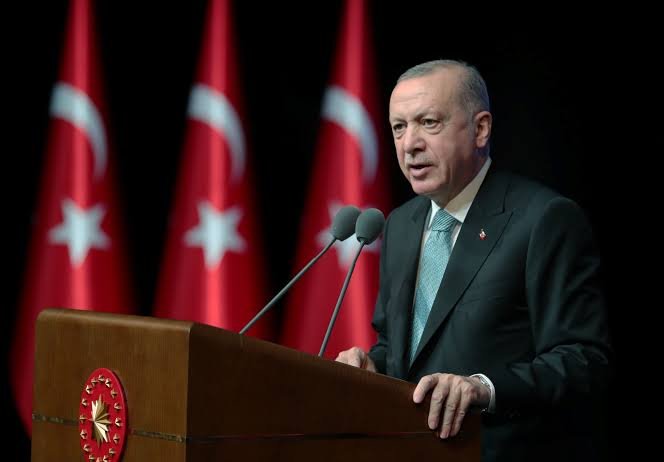
Amid this volatile situation, Turkish President Recep Tayyip Erdoğan addressed parliament in Ankara, emphasizing the seriousness of the current developments. He warned that the expansion of the conflict is no longer a distant possibility but a real and pressing threat. According to him, the region stands at a critical juncture where further escalation could draw additional states into the confrontation, significantly worsening the situation.
Erdoğan made it clear that Turkey’s primary concern is safeguarding its national security and stability. He stressed that the government is fully committed to ensuring that the country navigates this turbulent period without suffering harm. In his remarks, he underscored that Turkey has no intention of becoming part of the conflict and is determined to remain outside the دائرة of war. This position reflects Ankara’s broader strategy of balancing defensive preparedness with active diplomatic engagement.
A significant development that heightened concerns occurred when Turkey’s Ministry of Defense revealed that a ballistic missile, reportedly launched from Iran, had entered Turkish airspace. The missile was successfully intercepted and destroyed by NATO’s air and missile defense system in the eastern Mediterranean. This incident highlighted the that the ongoing conflict poses to neighboring countries, demonstrating how quickly it can spill over into unintended territories.
Notably, this was not an isolated event. Since the beginning of hostilities involving Iran, similar incidents have been recorded multiple times. In fact, this marked the fourth such occurrence in recent weeks. Earlier in the month, three separate missile interception operations were carried out, prompting Ankara to lodge formal and issue warnings to Tehran. Turkey viewed these incidents as serious threats to its sovereignty and regional stability.
In response, Iran denied responsibility for the previous missile launches, stating that it had not authorized such actions. Tehran also proposed conducting joint investigations with Turkey to determine the origin and circumstances surrounding the incidents. Despite this offer, mutual distrust and regional tensions continue to complicate the situation, leaving many questions unresolved.
Following these repeated security breaches, NATO has taken steps to reinforce Turkey’s air defense capabilities. Additional defensive measures, including advanced monitoring systems and rapid-response mechanisms, are being deployed to strengthen the country’s ability to counter potential threats. This move reflects the alliance’s recognition of the growing risks posed by the conflict and its commitment to protecting member states.
Beyond military preparedness, Turkey has also intensified its diplomatic efforts to prevent further escalation. President Erdoğan highlighted that Ankara is actively working to de-escalate tensions and promote dialogue among the conflicting parties. He reiterated that Turkey believes in a political and diplomatic resolution and is striving to create conditions conducive to negotiations.
According to Erdoğan, Turkey remains in continuous communication with Iran, the United States, and other relevant actors. The objective of these engagements is to prevent the current tensions from evolving into a full-scale regional war. He expressed cautious optimism that, despite the current hostilities, there is still room for diplomacy and that a return to negotiations is achievable if all sides demonstrate willingness.
The broader regional context underscores the gravity of the situation. The Middle East is currently experiencing a period of heightened instability, where localized conflicts can quickly escalate into wider confrontations. Turkey’s position, given its geographic and strategic importance, places it at the center of these dynamics. As a result, Ankara must carefully navigate between ensuring its own security and contributing to regional stability.
This evolving crisis also illustrates how modern conflicts are no longer confined to defined battlefields. Instead, their impact extends across borders, affecting neighboring states through security threats, political pressures, and economic disruptions. In such an environment, a combination of strong defense systems, proactive diplomacy, and international cooperation becomes essential in managing risks.
Looking ahead, the direction this conflict takes will largely depend on the actions of the involved powers and the effectiveness of diplomatic interventions. For now, Turkey’s approach appears focused on three key priorities: avoiding direct involvement in the strengthening its defensive infrastructure, and actively pursuing diplomatic channels to contain the crisis.
As tensions continue to rise, Turkey’s role as both a regional stakeholder and a mediator will be closely observed. Whether these efforts succeed in preventing a broader conflict remains uncertain, but the urgency of the situation underscores the need for immediate and coordinated international action.