

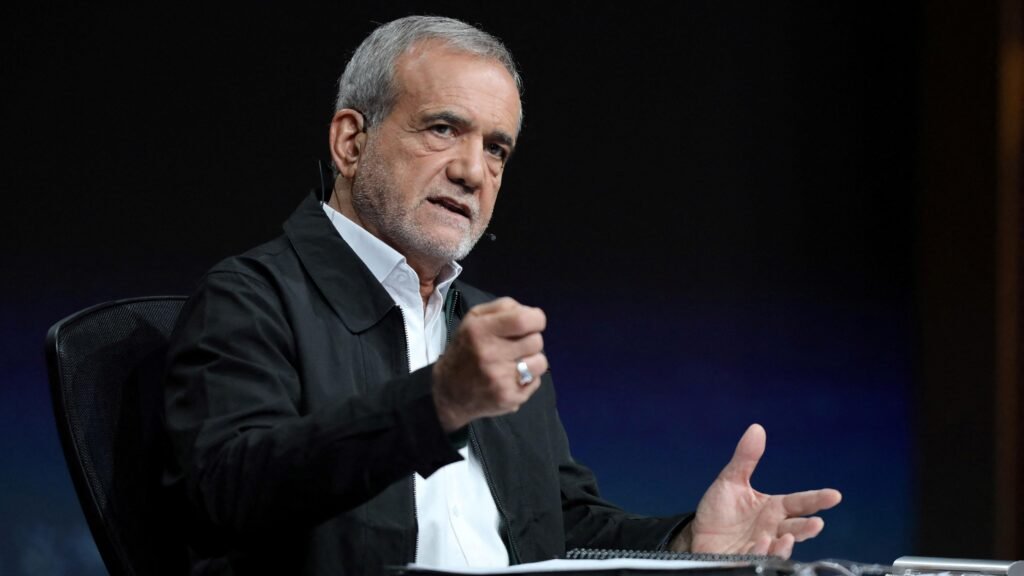
Ahead of a potential new round of direct talks between Iran and the United States, the diplomatic atmosphere has once again intensified, with both sides clarifying their positions through strong public statements. In this context, Iranian President Masoud Pezeshkian, in a statement issued on Wednesday, firmly reiterated that Iran has no desire for war and has consistently preferred dialogue, mutual understanding, and constructive engagement as the primary means of resolving disputes.
He emphasized that Iran seeks cooperation rather than confrontation in its relations with the international community. However, he made it equally clear that any attempt to pressure Iran, impose conditions by force, or compel it to surrender would ultimately fail. According to him, Iran will not compromise on its sovereignty or national dignity under any circumstances.
The Iranian president also delivered sharp criticism of what he described as double standards within the international system. He argued that certain global powers selectively apply international laws to serve their own interests, which he called unacceptable. Raising critical questions, he asked under what legal authority Iran could be targeted and what justification exists for such actions. He expressed deep concern over attacks on civilians, professionals, children, and vital infrastructure, stressing that the destruction of schools, hospitals, and other essential facilities cannot be justified in any way.
These remarks come at a time when discussions are ongoing regarding a possible second round of direct negotiations between Washington and Tehran. However, no final date has yet been confirmed. Diplomatic sources suggest that potential venues under consideration include Islamabad, Geneva, and Istanbul, though officials from both sides remain cautious and non-committal.
Meanwhile, US President Donald Trump has ruled out the possibility of extending the ceasefire that was announced on April 8 for a period of two weeks through Pakistan’s mediation. He indicated that the coming days would be highly significant and potentially eventful, signaling rapid developments on the horizon. Trump also suggested that Tehran is interested in reaching some form of agreement with Washington.
According to the US president, the prolonged tensions that began in late February and continued for around 40 days are now entering their final phase. Despite this, major disagreements between the two sides remain unresolved. Key contentious issues include uranium enrichment, Iran’s support for regional proxy groups, and its missile program.
It is also worth noting that the first round of direct talks held last week in Islamabad did not lead to any concrete agreement. As a result, the anticipated next round of negotiations is being viewed as particularly crucial. The current situation reflects a complex dynamic where both sides appear willing to engage diplomatically, yet deep-rooted mistrust and fundamental differences continue to hinder the path toward a comprehensive resolution.