

Pakistan’s recent diplomatic engagement has drawn significant international attention, as the country played a notable mediating role in easing tensions between the United States and Iran. The development has been widely discussed in political circles, with senior leadership highlighting the importance of coordinated efforts between civilian and military institutions in achieving this outcome.
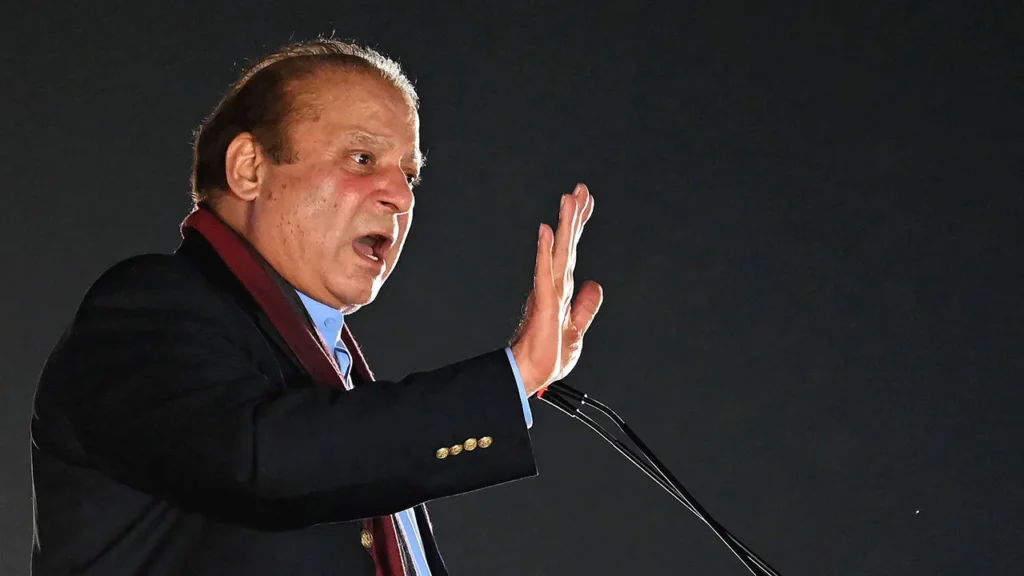
During a meeting of the parliamentary board of the Pakistan Muslim League-Nawaz for Gilgit-Baltistan, Nawaz Sharif commended the federal government and the country’s security leadership for their contribution to the diplomatic breakthrough. He was accompanied by Shehbaz Sharif and Ishaq Dar, reflecting a unified political front during discussions on national and regional developments.
A key part of Nawaz Sharif’s remarks focused on the role of Pakistan’s diplomatic and military leadership, particularly praising the efforts of Deputy Prime Minister Ishaq Dar and Chief of Defence Forces Asim Munir. He described their involvement in the mediation process as highly commendable, emphasizing that Pakistan’s international standing had improved as a result of these initiatives.
The mediation effort gained momentum at a time when tensions between Washington and Tehran were escalating, raising concerns about a potential military confrontation in the Middle East. In this sensitive environment, Pakistan engaged in behind-the-scenes diplomatic outreach aimed at encouraging dialogue between the two sides. These efforts eventually contributed to a temporary ceasefire arrangement, which helped avert an immediate escalation.
The situation became particularly critical when a deadline set by Donald Trump approached, accompanied by warnings of severe consequences if tensions continued to rise. In this context, Pakistan’s leadership reportedly urged the extension of the timeline for diplomatic engagement, allowing space for negotiations to take place. This request was ultimately accepted, creating an opportunity for de-escalation.
Following this development, a ceasefire agreement between the United States and Iran was announced after discussions involving senior officials and diplomatic backchannels. The international community largely welcomed the move, viewing it as a necessary step toward preventing further instability in the region. Pakistan’s role in facilitating communication between the two sides was widely acknowledged as a contributing factor.
In the aftermath of the ceasefire, Islamabad emerged as a neutral venue for rare direct talks between American and Iranian representatives. These discussions marked the first formal engagement between the two countries in over a decade. Although the talks did not result in a final agreement to resolve the broader conflict, they helped maintain a pause in hostilities and opened the door for continued dialogue.
Reports indicate that another round of discussions is expected to take place in Islamabad in the near future, signaling that diplomatic engagement remains ongoing. This continued involvement has positioned Pakistan as an active intermediary in efforts to reduce regional tensions and promote dialogue between conflicting parties.
During his address, Nawaz Sharif also extended praise to the provincial administration of Punjab, noting improvements in governance and development initiatives. He urged other provinces to adopt similar administrative approaches in order to enhance public service delivery and accelerate development projects.
At the same time, he raised concerns regarding the governance situation in Khyber Pakhtunkhwa under the PTI-led administration. He criticized what he described as deteriorating law and order conditions and questioned the effectiveness of governance mechanisms in the province, suggesting that citizens were not experiencing adequate relief or stability.
In relation to Gilgit-Baltistan, Nawaz Sharif highlighted the development work carried out by his party, stating that the Pakistan Muslim League-Nawaz had contributed across multiple sectors, including infrastructure, public services, and regional development initiatives. He emphasized that the party’s role had been consistent in promoting progress across different regions of the country.
Overall, the meeting reflected both domestic political messaging and broader foreign policy achievements. The leadership underscored Pakistan’s emerging role in international diplomacy while also addressing internal governance challenges and development priorities.