

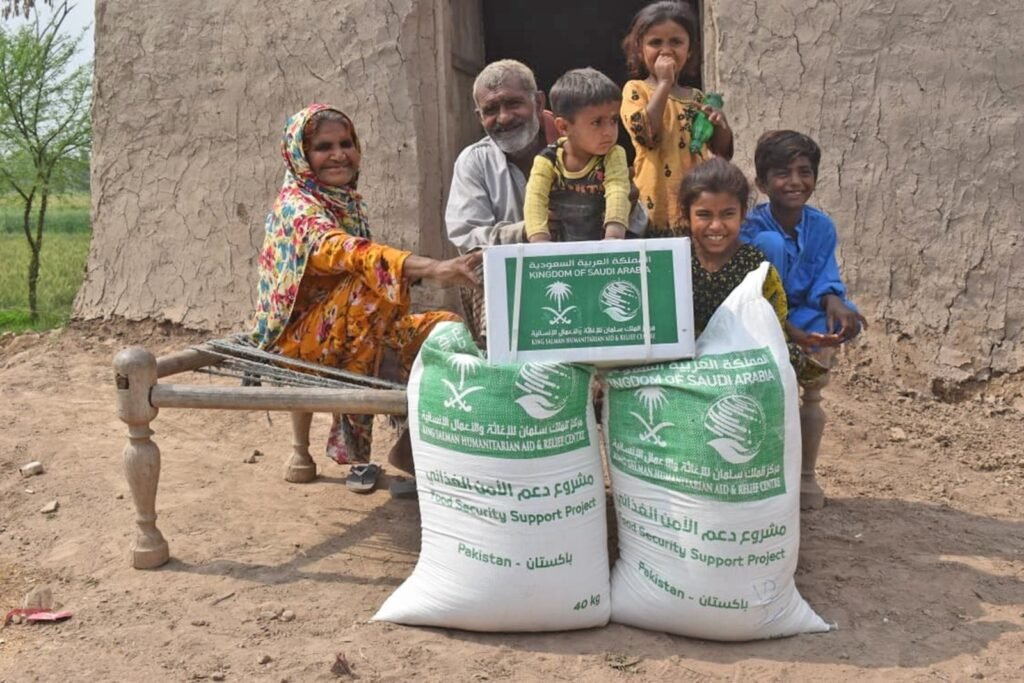
A significant humanitarian initiative has recently taken place across multiple districts of Punjab, Pakistan, where Saudi Arabia’s well-known aid organization, the King Salman Humanitarian Aid and Relief Center, distributed food assistance to thousands of underprivileged families. This effort highlights an important reality: even in a province often perceived as one of the most prosperous regions of the country, there are still large pockets of severe poverty where people struggle to meet basic daily needs.
As part of this campaign, approximately 8,500 families received food packages designed to provide essential nutritional support. The distribution was carried out in a structured and coordinated manner, forming the final phase of a broader Food Security Support Project aimed at assisting vulnerable populations across Pakistan. The initiative reflects an ongoing commitment to addressing food insecurity in areas where economic hardship remains deeply entrenched.
The selected districts for this program included Multan, Bahawalpur, Muzaffargarh, Rajanpur, Khanewal, Rahim Yar Khan, Nankana Sahib, Toba Tek Singh, and Chiniot. A large number of these regions fall within southern Punjab, often referred to as the Saraiki belt. Despite their historical and political significance, many of these districts have long faced developmental disparities, limited access to resources, and persistent socio-economic challenges.
What makes this situation particularly striking is the contrast within these regions. On one hand, these areas have produced influential political leaders and are home to powerful landowners and wealthy elites. On the other hand, a substantial portion of the population continues to live below the poverty line. This imbalance underscores the uneven distribution of wealth and opportunities, making targeted humanitarian interventions all the more necessary.
Each food package distributed under the program was carefully assembled to meet the basic dietary needs of a family for a certain period. The packages included approximately 80 kilograms of flour, a staple in Pakistani households, along with five liters of cooking oil, five kilograms of sugar, five kilograms of chickpea lentils, and two kilograms of dates. These items were selected to ensure that recipient families would have access to both essential calories and basic nutrition.
The successful implementation of this initiative was made possible through collaboration between multiple organizations. In Pakistan, the National Disaster Management Authority played a key role in coordinating efforts, ensuring that the aid reached the intended beneficiaries efficiently. At the provincial level, the Punjab Disaster Management Authority has been tasked with overseeing the organized distribution of international aid, helping maintain transparency and accountability in the process.
In addition to government bodies, several non-governmental organizations also contributed to the effort. Groups such as Hayat Foundation and Peace and Development Organization partnered in identifying deserving families and facilitating the distribution process at the grassroots level. Such partnerships are crucial, as they enhance both the reach and effectiveness of humanitarian programs by leveraging local knowledge and networks.
Saudi Arabia has consistently been one of the most prominent humanitarian partners for Pakistan, particularly in supporting low-income communities. Beyond food assistance, Saudi-backed initiatives extend into sectors such as healthcare and education, aiming to improve overall living conditions for disadvantaged populations. These efforts not only provide immediate relief but also strengthen bilateral ties between the two countries at a people-to-people level.
At the same time, broader policy changes within Punjab have also shaped the context in which such humanitarian efforts are taking place. The provincial government has transferred a large number of public schools to private entities and non-governmental organizations, citing the need to reduce financial burdens and improve administrative efficiency. As a result, the responsibility for educating millions of children has increasingly shifted toward the private sector and charitable organizations.
This transition has inevitably increased the workload and responsibilities of NGOs, which are now involved not only in relief operations but also in long-term social development initiatives like education. Organizations such as the King Salman Relief Center, which already have an established presence in Pakistan, are now operating within an expanded scope of activity.
All of these developments point to a complex socio-economic landscape. While certain parts of Punjab may appear economically stable on the surface, underlying realities reveal deep-rooted challenges related to poverty, inequality, and access to essential services. In such a context, international humanitarian efforts play a vital role in bridging critical gaps, offering support where it is most urgently needed and contributing to the well-being of vulnerable communities.