

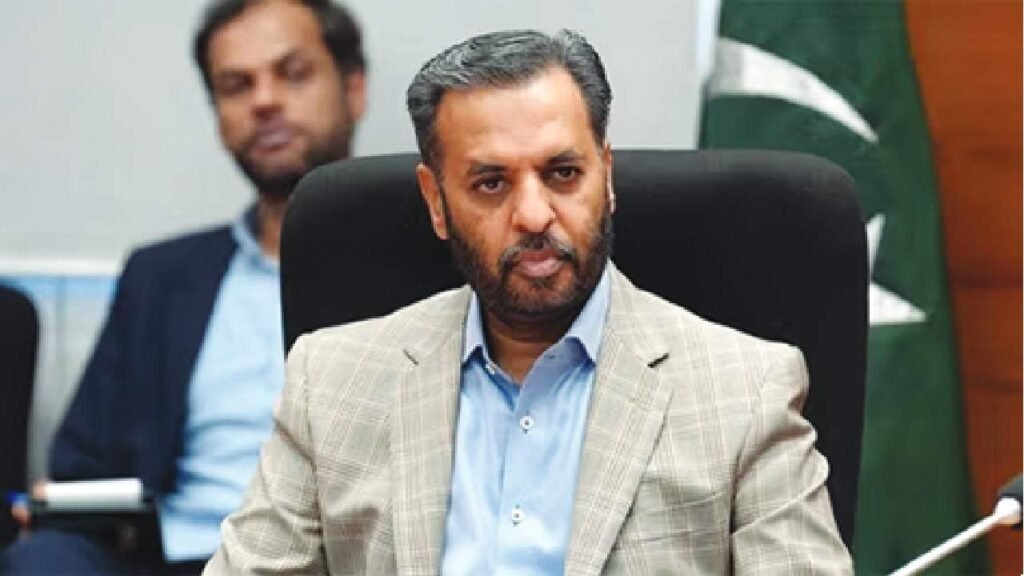
Federal Health Minister Mustafa Kamal has outlined a comprehensive overview of Pakistan’s HIV situation, highlighting both progress and ongoing challenges in diagnosis, treatment, funding transparency, and public awareness. Speaking at a press conference in Islamabad, he emphasized that while significant efforts are underway to manage the disease, gaps in treatment access and social stigma remain critical concerns.
According to the minister, approximately 84,000 HIV cases have been officially registered in the country. Of these, around 61,000 individuals are currently receiving treatment through public health facilities, where medications are provided free of cost. However, nearly 23,000 registered patients are not in the treatment system and remain untraceable, raising serious concerns about continuity of care and potential transmission risks.
Kamal stressed that HIV should not be viewed as an untreatable condition. He clarified that with consistent, lifelong medication, individuals living with HIV can lead stable and productive lives. Despite this, he pointed out that societal stigma, fear, and lack of awareness often discourage people from getting tested or seeking timely medical care, which contributes to the continued spread of the virus.
Discussing broader estimates, the minister noted that based on population trends, Pakistan could potentially have around 369,000 HIV cases. However, the currently registered prevalence rate stands at approximately 0.1%, which is significantly lower than the global average of 0.5%. This gap suggests that a large number of cases may still remain undiagnosed.
He also shared comparative data on testing and screening efforts over recent years. In 2020, around 37,944 individuals were screened at 49 centers, with 6,910 testing positive. By 2025, the number of testing facilities had increased to 97, and total screenings rose sharply to 374,126, with 14,182 positive cases identified. Despite the expansion in testing, Kamal stated that the overall trend of HIV cases in Pakistan has remained relatively stable, with no sudden spikes observed.
The minister raised concerns regarding the allocation and utilization of international funding for HIV-related programs. He revealed that out of a $65 million program, $61.1 million had been directed to international organizations, including the United Nations Development Programme and a non-governmental organization named Nai Zindagi, which he claimed was not registered with the Ministry of Economic Affairs.
In contrast, only $3.9 million was directly allocated to the Ministry of Health between 2024 and 2026. He expressed concern over the lack of transparency, stating that detailed reports on fund utilization were not being shared with the ministry.
Providing regional insights, Kamal said that Islamabad currently has 618 registered HIV cases. Of these, 208 are local patients, while 408 have been referred from nearby regions such as Rawalpindi, Khyber Pakhtunkhwa, Gilgit-Baltistan, and Azad Kashmir. He also noted a positive development in Taunsa, where no new cases were reported between January and April 2026, despite earlier reports of infections in 2024.
On the policy front, the minister announced that the government is considering a ban on 10cc syringes to curb their reuse, which has been identified as a major contributor to past HIV outbreaks. He emphasized that unsafe injection practices have historically played a significant role in the spread of the virus and must be addressed through strict regulation.
Kamal further highlighted that public health is closely linked to national security, warning that neglecting healthcare challenges could have serious economic and social consequences. He stressed the need for stronger governance, better monitoring systems, and improved coordination among institutions to effectively tackle health-related issues.
He also referred to past irregularities flagged by global health partners, particularly in programs funded by international organizations. These included concerns over procurement processes, such as the purchase of mosquito nets worth millions of dollars. The minister confirmed that investigations have been initiated and that accountability measures will be taken against those found responsible.
In his concluding remarks, Kamal acknowledged the resilience demonstrated by Pakistan’s leadership and institutions during recent regional tensions. However, he emphasized that equal attention must now be directed toward strengthening the country’s healthcare system, ensuring that it is capable of addressing both current and future challenges effectively.