

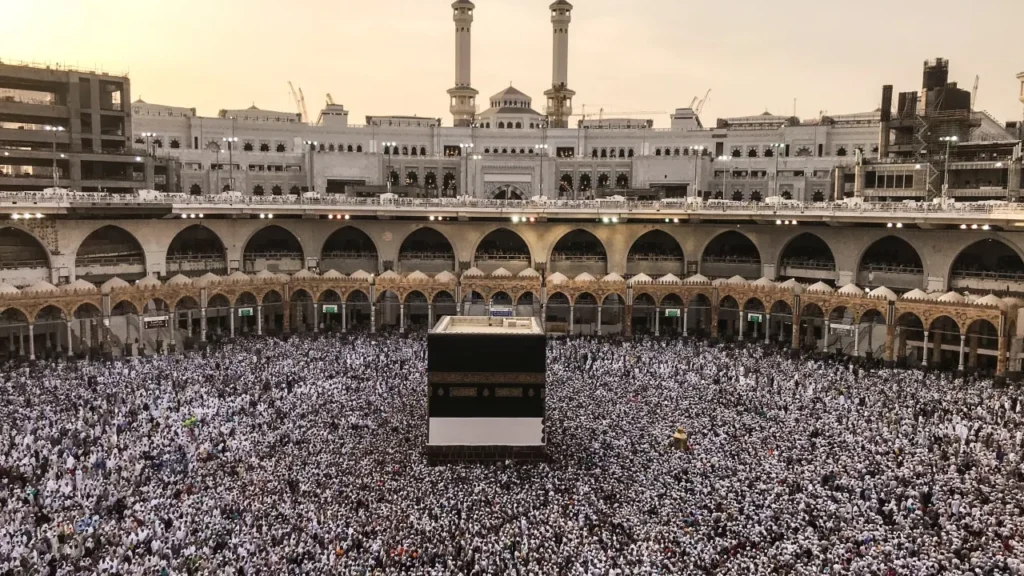
A major operational upgrade has been introduced in Makkah as the Bus Guidance Center for overseas pilgrims officially commenced its Hajj operations for 1447 AH. The system has been designed to manage the large influx of pilgrims arriving in the holy city by streamlining transportation and ensuring smooth movement from entry points to designated accommodations.
Under this arrangement, more than 250 bus trips are being operated daily across various entry routes of Makkah. These services are responsible for transporting pilgrims efficiently to their assigned residences, with a focus on reducing delays and improving coordination during peak arrival periods. The entire process has been structured to handle the high volume of passengers expected during the Hajj season.
A key feature of this upgraded system is its reliance on advanced digital technology. The center has implemented real-time tracking tools and precise geographic mapping systems to monitor every stage of the pilgrims’ journey. This allows officials to oversee bus movements continuously and ensure that all groups reach their destinations without confusion or unnecessary waiting.
Trained field guides play an essential role in this process. Each guide is equipped with smart tablets that are directly synchronized with a central operations room. Through this live connection, they can access updated route information, passenger details, and navigation instructions. This integration has significantly improved coordination between on-ground teams and central planners.
The central control room serves as the operational hub of the entire system. It processes real-time data received from all moving vehicles and guides, allowing authorities to manage traffic flow, adjust routes when needed, and respond quickly to any operational challenges. This level of digital coordination has enhanced both safety and efficiency across the transportation network.
The system is being supervised jointly by the Ministry of Hajj and Umrah along with the General Syndicate of Cars. Their combined oversight ensures that all transport operations follow strict standards of organization, safety, and service quality. The primary objective is to provide pilgrims with a seamless travel experience from the moment they arrive in Makkah.
One of the major advantages of this technology-driven approach is the reduction of delays that traditionally occur during large-scale pilgrim movement. By using real-time location tracking and automated coordination tools, authorities can manage crowds more effectively and ensure timely arrivals at all designated locations.
In addition, the use of advanced geographic information systems allows for accurate mapping of routes and accommodations. This helps in minimizing confusion, especially for first-time visitors, and ensures that pilgrims are guided correctly throughout their journey within the city.
According to officials, the introduction of this high-tech transportation framework represents a significant step toward modernizing Hajj logistics. Managing millions of pilgrims requires precision and coordination, and this system has been designed specifically to meet those demands through digital integration and structured planning.
Overall, the upgraded bus guidance operations in Makkah reflect a broader effort to enhance pilgrim services through innovation. By combining trained human support with smart technology, the system aims to deliver a safer, faster, and more organized travel experience for all visitors performing Hajj rituals in the holy city.