

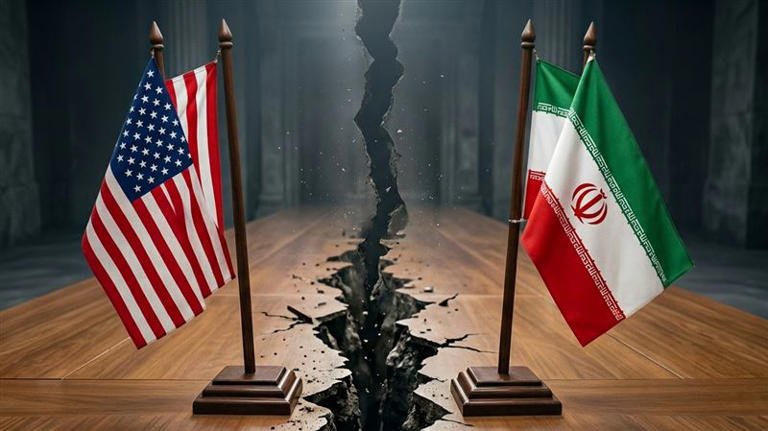
On Monday, U.S. military officials firmly stated that none of the United States Navy vessels operating in the region had come under attack. This clarification came in response to earlier claims made by Iran, which suggested that its naval forces had forced an American warship to retreat from the area. According to the U.S. position, there is no evidence to support such claims, and no American vessel has sustained any damage.
Meanwhile, Iran’s navy presented a very different narrative. In an official statement, Iranian authorities asserted that they had issued a strong and immediate warning to a foreign warship near the Strait of Hormuz. They described their response as “swift and decisive,” claiming that their actions prevented the vessel from entering the strategically sensitive waters.
Iranian officials emphasized that maintaining security in this critical maritime corridor falls under their responsibility, and they would not permit external forces to operate freely without coordination.
Adding to the tension, Iran’s semi-official Fars News Agency reported that two missiles had been launched at a warship near the southern entrance of the Strait, close to the port of Jask—an area where Iran maintains a significant naval base.
However, a senior U.S. official quickly rejected this report, dismissing it as inaccurate. Efforts by international media outlets to independently verify the claim were unsuccessful, leaving the situation clouded in conflicting accounts.
This exchange of claims and denials is unfolding against the backdrop of rising tensions in the Gulf region. The strained relationship between the United States and Iran has intensified in recent weeks, particularly due to broader geopolitical developments involving regional alliances and ongoing conflicts. The situation has placed increased pressure on vital maritime routes, especially those crucial for global trade and energy supply.
In a recent statement, the U.S. president announced that American forces would assist vessels currently stranded in Gulf waters due to the ongoing instability. Many of these ships have reportedly been facing shortages of food, fuel, and other essential supplies as their movement has been restricted by the volatile environment.
The U.S. administration framed this initiative as a humanitarian and logistical effort aimed at ensuring the safe passage of commercial shipping.
According to the president, the United States has informed relevant nations that it is prepared to guide their vessels through these narrow and potentially dangerous waterways. The objective, he explained, is to allow ships to continue their journeys safely and maintain the uninterrupted flow of international trade.
This move underscores Washington’s broader commitment to safeguarding maritime navigation in one of the world’s most critical shipping lanes.
Iran, however, reacted strongly to this announcement. Iranian military leadership warned that any unilateral action by foreign forces in the Strait of Hormuz would not be tolerated. In an official statement, the head of Iran’s joint armed forces command stressed that the security of the waterway is firmly under Iranian control.
He urged all commercial vessels, including oil tankers, to coordinate closely with Iranian authorities to avoid misunderstandings or potential confrontations.
The statement further included a stern warning: any foreign military presence, particularly that of the United States, attempting to enter the Strait without authorization could face direct military action. Iranian officials reiterated their stance on protecting national sovereignty and maintaining control over their territorial and strategic waters, signaling their readiness to respond forcefully if necessary.
On the other side, the U.S. Central Command outlined the scale of its operations in the region. Officials indicated that a substantial military presence has been deployed, including approximately 15,000 personnel, over 100 aircraft, naval warships, and unmanned aerial systems. These assets are being utilized not only to support escort and assistance missions but also to reinforce regional stability amid escalating tensions.
American military leadership emphasized the broader implications of their mission. They highlighted that the Strait of Hormuz is a vital artery for global commerce, particularly for the transportation of oil and energy resources. Any disruption in this passage could have immediate and far-reaching consequences for international markets and economic stability. As a result, maintaining security in this area is seen as a critical priority.
Additionally, U.S. officials noted that certain measures have been taken to increase pressure on Iran, including restricting activity at specific ports. Some analysts interpret these actions as a form of indirect blockade aimed at influencing Iran’s regional behavior and encouraging diplomatic engagement. This strategy reflects a combination of military presence and economic pressure designed to achieve strategic objectives without direct confrontation.
The ongoing exchange of warnings and counter-statements illustrates the fragile nature of the current situation in the Gulf. While the United States frames its actions as necessary for protecting global trade and ensuring maritime safety, Iran views foreign military involvement as a violation of its sovereignty. This fundamental difference in perspective continues to drive tensions higher.
At the center of this standoff lies the Strait of Hormuz, one of the most strategically important waterways in the world. A significant portion of global energy supplies passes through this narrow channel, making it a focal point of international concern. Any escalation in this region carries the risk of not only regional conflict but also widespread economic disruption.
As the situation evolves, the international community remains watchful. Diplomatic efforts are ongoing, but the presence of military forces and the exchange of strong rhetoric on both sides highlight the potential for further escalation. The coming days will be crucial in determining whether tensions can be de-escalated or if the region moves closer to a broader confrontation.