

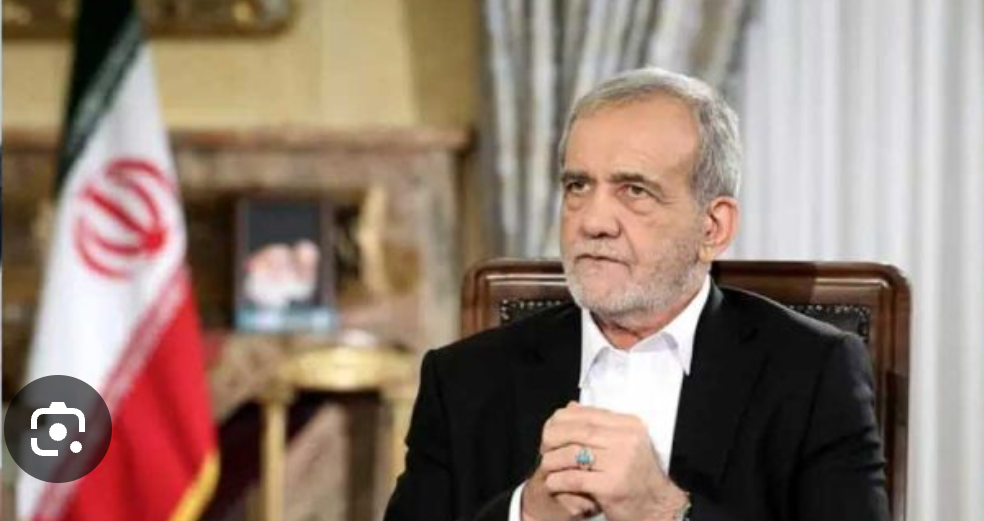
New York/Tehran: Iranian President Masoud Pezeshkian on Saturday fiercely rejected U.S. demands that Tehran surrender its enriched uranium stockpiles in exchange for temporary sanctions relief, calling the proposal unacceptable and a political trap.
The remarks came as the specter of sweeping UN sanctions looms large after the collapse of high-stakes nuclear negotiations on the sidelines of the UN General Assembly.
According to the International Atomic Energy Agency (IAEA), Iran’s uranium stockpile enriched up to 60 percent has now reached 440.9 kilograms as of June 13 a significant increase of 32.3 kilograms since May. While Iran recently readmitted international inspectors, Western powers say progress has been insufficient to justify halting the re-imposition of sanctions.
Last month, Britain, France, and Germany triggered the “snapback” mechanism, accusing Tehran of breaching nuclear obligations and citing its countermeasures following Israeli and U.S. strikes in June.
Pezeshkian revealed that Washington offered Iran a three-month reprieve from sanctions in exchange for handing over all enriched uranium, while France proposed a mere one-month delay.
“Why would we put ourselves in such a trap and have a noose around our neck each month?” Pezeshkian told reporters in New York before returning to Tehran. This is by no means acceptable.
The Iranian president accused Washington of pressuring its European allies to avoid compromise and reiterated that Iran does not seek nuclear weapons, instead charging the U.S. and Israel with weaponizing pressure tactics to destabilize the Islamic Republic.
In a sharp diplomatic move, Iran recalled its ambassadors from Britain, France, and Germany for consultations after the sanctions trigger, state television confirmed.
Meanwhile, U.S. Special Envoy Steve Witkoff insisted Washington did not want to harm Iran and was open to dialogue, but Pezeshkian dismissed him as unserious, claiming earlier understandings collapsed following Israel’s latest military campaign against Iran in June.
As tensions escalate, Pezeshkian’s defiance signals a hardened Iranian stance ahead of potential UN measures, leaving diplomacy at its most fragile point since the nuclear crisis reignited.