

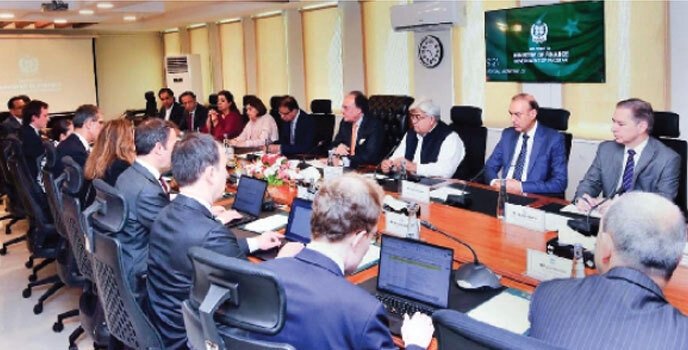
ISLAMABAD: An International Monetary Fund (IMF) mission led by Iva Petrova held its opening session with Pakistan’s economic team, headed by Finance Minister Muhammad Aurangzeb, to kick off the latest review of the $7 billion Extended Fund Facility (EFF) and the $1.1bn Resilience and Sustainability Facility (RSF).
The meeting, attended by the State Bank governor, finance secretary and chairman of the Federal Board of Revenue (FBR), reviewed performance up to end-June 2025. Officials conceded that while power sector benchmarks were comfortably met, revenue collection fell short by nearly Rs1.2 trillion about 1pc of GDP in the last fiscal year, with the first two months of FY26 showing a similar trend.
Sources said the programme’s overall progress has been “mixed”, leaving Islamabad and the Fund to agree on corrective measures in the coming days to meet the December-end targets. The mission will remain in Pakistan for two weeks, holding a series of technical and policy discussions.
A major sticking point is the long-delayed brownfield petroleum refinery policy, which has stalled about $6bn in foreign investment. Officials argue the policy aligns with the RSF’s climate goals by enabling production of fuels meeting European standards. However, IMF conditions preventing tax exemptions have left refiners struggling with steep duties on essential equipment, creating severe cash flow problems. The Petroleum Division has warned that outdated refineries are producing environmentally harmful by-products, worsening pollution and climate stress.
Authorities are also seeking IMF leniency on fiscal targets to account for heavy flood losses this year. But the Fund has so far based its review on pre-flood commitments, holding the government accountable for missed revenue targets, uncollected provincial surpluses, and delays in reforms. These include the stalled publication of the governance and corruption diagnostic report and slow progress on the state-owned enterprises law.
While agricultural income tax laws were enacted across all provinces, their implementation remains uncertain given the devastating floods in Punjab and Sindh. At the same time, the government controversially used Rs130bn one-third of its disaster and emergency allocation for FY26 to clear past dues to commercial banks for remittance-related incentives. Officials will now have to defend this decision as they seek additional fiscal space for flood-related spending.
Despite the slippages, Pakistan has met most of the quantitative performance criteria for end-June 2025. However, gaps in indicative targets and structural benchmarks remain a concern for future programme implementation.
If the ongoing review is successfully concluded, Pakistan will qualify for a disbursement of about $1bn (760 million SDRs) by the end of next month a critical injection as Islamabad struggles to shore up its finances amid mounting domestic and external pressures.