

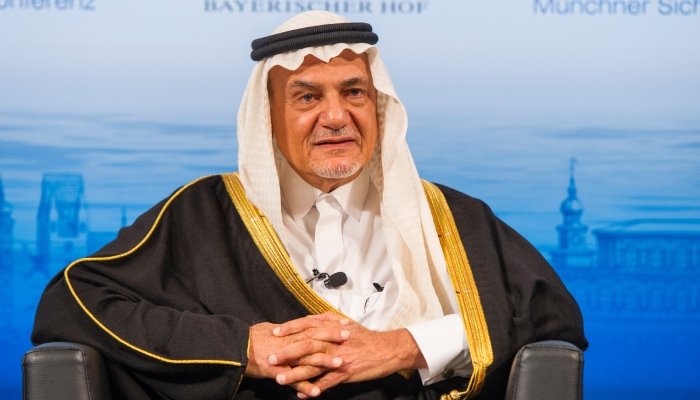
Riyadh: Former Saudi intelligence chief and ambassador, Prince Turki Al-Faisal, has sounded the alarm over the security of Gulf states in the wake of Israel’s recent strike on Qatar. Speaking at the Dean of Ambassadors Gala Dinner in Riyadh, Prince Turki denounced Israel as a “rejected state” and branded the attack on Hamas leaders in Doha as both aggression and treachery.
Prince Turki cautioned that the incident underscored a growing vulnerability for Gulf nations and urged regional states to review their security policies in light of shifting threats. “The attack on Qatar poses a direct threat to the collective security of the Gulf,” he said, warning that unity and vigilance were now paramount for the region.
Addressing the broader issue of the Palestinian struggle, Prince Turki reiterated that resistance was an inevitable response to occupation. If there is no occupation, there will be no resistance, he declared, tying the future of regional stability to the resolution of the Palestinian cause.
The remarks came after Israel targeted Hamas leaders in Doha on September 9. While Hamas’s senior leadership escaped unharmed, the attack heightened tensions across the Gulf. In a rare move, Israeli Prime Minister Benjamin Netanyahu later issued an apology to Qatar, acknowledging the political fallout of the strike.
Diplomatic observers note that Prince Turki’s comments reflect mounting concern in Riyadh and across the Gulf that Israel’s military actions are not confined to occupied Palestinian territories but now risk destabilizing neighboring states.
The former intelligence chief’s stance also aligns with Saudi Arabia’s longstanding position that regional peace and security cannot be achieved without addressing Palestinian rights and ending Israeli occupation.
Analysts suggest that this episode could galvanize Gulf states to adopt a more unified stance on collective defense while reasserting their opposition to unilateral Israeli actions in the region.
Prince Turki’s intervention is being viewed as both a stern warning and a call for Gulf states to recalibrate their strategies at a time when shifting alliances and unresolved conflicts continue to reshape the Middle East.