

A new wave of tension has erupted between Washington and Beijing after US President Donald Trump announced a 100% tariff on all Chinese imports, set to take effect next month. In a strongly worded social media post, Trump accused China of becoming very hostile following Beijing’s decision to tighten export rules on rare earth minerals key materials used in smartphones, electric vehicles, and defense equipment.
The president further revealed plans to impose export controls on critical US software, escalating what many analysts are calling the most significant trade flare-up in years.
Trump’s announcement sent shockwaves through global financial markets. The S&P 500 index plunged by 2.7%, marking its steepest fall since April, as investors feared a return to the kind of trade war that had previously shaken global supply chains.
The tension deepened as Beijing responded with a series of retaliatory measures, including new port fees on ships linked to US firms, tighter rules for rare earth exports, and a monopoly investigation into the US tech giant Qualcomm a move that could stall its pending acquisition of another chipmaker.
China’s dominance in the production of rare earth elements gives it significant leverage. Experts say Beijing’s latest restrictions appear to target foreign defense manufacturers, potentially pressuring Washington’s strategic industries. Nothing makes America move like targeting our defense industry, said Gracelin Baskaran, director of the Critical Minerals Security Program at the Center for Strategic and International Studies. The US will have to negotiate because our options are limited, especially in a time of rising geopolitical tension.
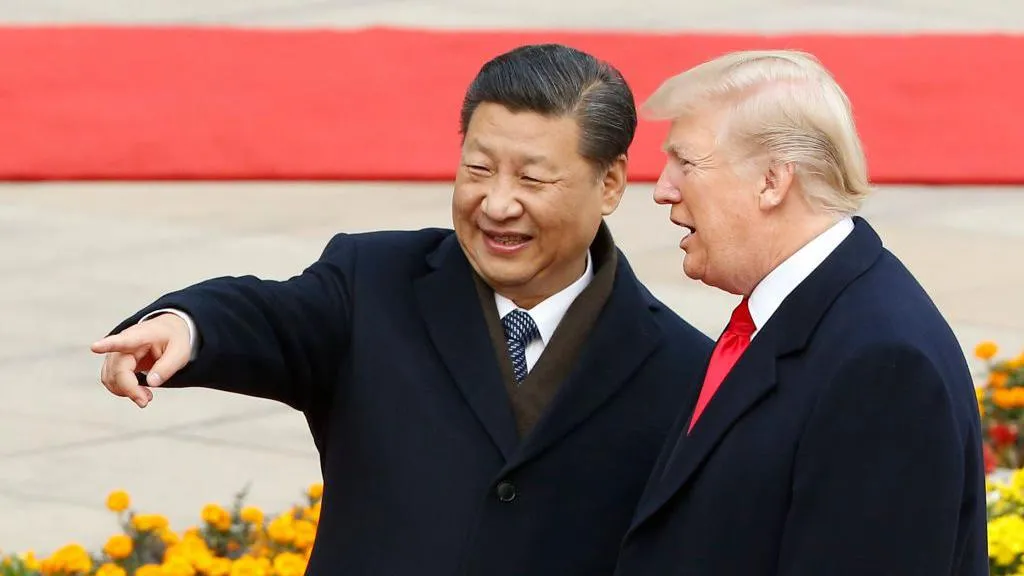
Trump also hinted at uncertainty surrounding a planned meeting with Chinese President Xi Jinping, saying he “might not attend,” before later adding that he would “be there regardless.” The meeting, expected to take place later this month in South Korea, now hangs in the balance. Analysts see this as a critical juncture in an already fragile détente between the two powers.
China observers believe that President Xi’s latest actions are a calculated attempt to gain leverage ahead of potential talks. Jonathan Czin, a fellow at the Brookings Institution, said, “Xi is looking for ways to seize the initiative. The Trump administration is being forced to react issue by issue. He added that China has learned from previous escalations that its pain threshold is higher than Washington’s.
Both sides have held several rounds of negotiations this year over issues such as semiconductors, agricultural trade, and technology transfers, but progress has been slow. China has long pushed for looser US restrictions on chip exports and more stable tariff policies that would make it easier for Chinese firms to trade in the American market.
While the latest developments have cast a shadow over US–China relations, analysts suggest that the door to diplomacy is still open. Baskaran noted that China’s new rare earth rules will not take effect until December, giving both governments time to return to the table. Negotiations are likely imminent, she said. The real question is who leads them and where.
This new round of trade escalation, driven by rare earth politics and tech rivalry, signals a broader strategic confrontation between two global superpowers one that could reshape the world’s economic landscape in the months ahead.