

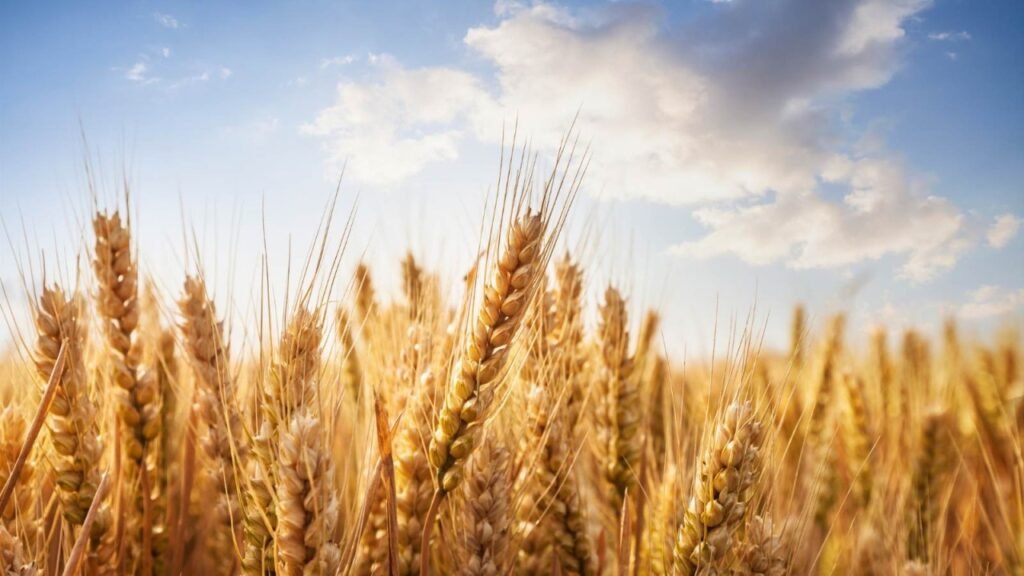
As Punjab prepares for the upcoming wheat sowing season, the administration of Faisalabad Division has unveiled an extensive cultivation plan aimed at achieving self-sufficiency and maximizing productivity. A comprehensive target of cultivating 1.834 million acres of land has been finalized for this year, which includes 57,318 acres of government-owned land exclusively earmarked for wheat production. This large-scale initiative, part of Punjab’s broader agricultural reform strategy, seeks to ensure food security and economic stability through enhanced support for farmers and improved resource management.
The final decision came during a high-level meeting chaired by Commissioner Raja Jehangir Anwar, bringing together representatives from all four districts under the Faisalabad Division, including officials from the agriculture department, fertilizer dealers, and local administrative officers. The session primarily focused on evaluating the readiness of the division ahead of the sowing period and addressing potential hurdles that could affect yield outcomes.
During the meeting, Director Agriculture Faisalabad, Chaudhry Khalid Mahmood, provided a detailed briefing on the preparations underway. He revealed that the availability of wheat seed in the division has already surpassed the projected demand, indicating smooth supply conditions for the upcoming season. He added that 275 agricultural interns have been deployed across the region to assist the department’s field operations, offering technical guidance and on-ground monitoring.
Mahmood also confirmed that nearly 64,000 farmers have received their official “Kisan Cards,” a government-backed digital facilitation program that allows cultivators to directly access agricultural subsidies, loans, and technical support.
This initiative, introduced to modernize Pakistan’s farming landscape, has significantly eased financial and procedural bottlenecks that previously limited small farmers’ participation in government schemes.
The Punjab government, in a policy decision earlier this month, set the wheat support price at Rs3,500 per 40 kilograms, aiming to protect farmers from market volatility and ensure fair compensation for their produce. Officials emphasized that this price mechanism will play a crucial role in stabilizing rural incomes and motivating farmers to expand cultivation.
Commissioner Raja Jehangir Anwar, addressing the meeting, stressed the importance of transparency and accountability in the upcoming sowing operations. He directed revenue department officials, including land record officers (Patwaris) and village heads (Numberdars), to collect accurate data from farmers through the “Pulse Report” survey before the sowing season begins. According to him, this report must authentically reflect the ground realities and challenges faced by cultivators, without manipulation or administrative delays.
He further instructed field officers to focus on practical problem-solving rather than symbolic public relations exercises. “Our goal is not to hold ceremonies but to provide real support,” Anwar was quoted as saying. He urged divisional and district officers to immediately resolve all issues arising at the local level and forward unresolved provincial matters to higher authorities without bureaucratic delays.
Parallel to these administrative efforts, research-based initiatives are also being advanced to strengthen agricultural resilience in Punjab. Dr. Sajidur Rehman, the Director General of Punjab Agricultural Research and Chief Scientist at the Ayub Agricultural Research Institute (AARI), chaired a separate meeting of the Technical Sub-Committee to review new advancements in crop protection and pesticide development. The meeting, held at the AARI headquarters in Faisalabad, reviewed 44 pesticide cases, including both new formulations and label expansion proposals, for possible registration and market approval.
Dr. Rehman emphasized that maintaining a balance between agricultural innovation and environmental responsibility is vital for long-term sustainability. He pointed out that the timely management of harmful pests, diseases, and climate-related risks remains one of the biggest challenges to food security in Pakistan.
To tackle this, he called upon private-sector companies to expedite the introduction of new-chemistry pesticides, which are more effective and environmentally compatible. These modern solutions, he noted, would not only protect standing crops but also significantly enhance per-acre yield, ensuring a stable national grain supply.
He further elaborated that AARI’s ongoing collaboration with private firms and agricultural universities aims to bring innovation to the fields faster. The institute’s scientific teams are continuously testing new crop protection technologies that could potentially transform yield efficiency and reduce production costs for farmers.
The emphasis on research and field coordination reflects the government’s integrated approach—combining policy support, administrative oversight, and scientific innovation to ensure that wheat production targets are not only met but exceeded. The district administrations have been instructed to monitor the entire process, from seed distribution and fertilizer supply to pest management and procurement, under a transparent mechanism to minimize exploitation and inefficiency.
Additionally, efforts are being made to engage farmers directly in decision-making processes through surveys, village-level committees, and digital reporting platforms. The “Pulse Report,” for instance, will serve as a real-time data collection tool to identify bottlenecks in land preparation, water availability, and pest control measures. This data-driven strategy aims to create an accurate feedback loop between farmers and policymakers, allowing for swift responses to emerging agricultural challenges.
In the broader context, officials see this wheat sowing season as a test of Punjab’s commitment to agricultural modernization. With Faisalabad Division playing a pivotal role due to its fertile soil and vast farmland, the successful execution of this plan could set a benchmark for other regions.
Stakeholders believe that timely sowing, combined with improved seed quality and better pest control, will substantially increase output and contribute to the province’s food security objectives.
Experts also underscore that wheat remains the backbone of Pakistan’s agricultural economy, accounting for a major share of rural employment and household income. Ensuring its optimal production not only supports farmers but also stabilizes national food prices and reduces dependency on costly imports.
As the sowing season draws near, administrative and research institutions appear synchronized in their efforts—one focusing on governance and facilitation, the other on scientific and technological progress. Together, these initiatives reflect a coordinated vision aimed at transforming Pakistan’s agricultural landscape through efficiency, innovation, and accountability.
If the set targets are achieved, Faisalabad’s wheat cultivation drive could become a model of effective collaboration between the government, scientists, and farmers—demonstrating how strategic planning and modern techniques can secure the country’s most essential crop for the year ahead.