

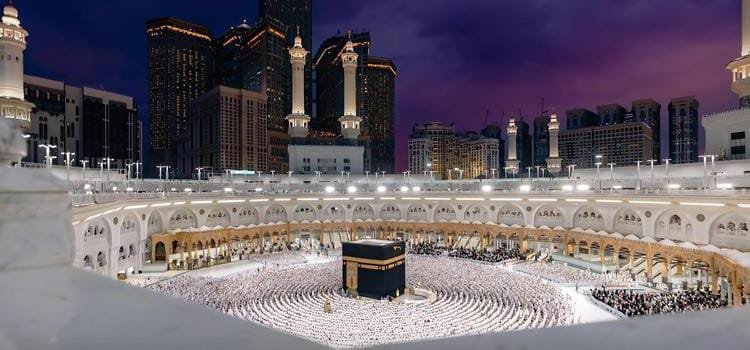
In the sacred city of Makkah, the General Authority for the Care of the Affairs of the Grand Mosque and the Prophet’s Mosque has shared comprehensive insights into the time efficiency and flow management of pilgrims performing Umrah during the month of Rabi Al-Thani 1447 AH. The findings highlight the remarkable precision and organization implemented within the Grand Mosque to ensure the comfort, safety, and smooth movement of millions of worshippers who arrive from around the world to fulfill their religious duties.
According to the authority’s detailed analysis, the average duration for completing the entire Umrah journey, from entering the mosque to the final rituals, stood at approximately 116 minutes. This efficiency reflects the tremendous advancements in crowd management and logistical coordination made possible through modern technologies and real-time monitoring systems that track movement across various sections of the mosque complex.
One of the most significant observations was related to the Tawaf, the ritual circumambulation around the Holy Kaaba. The data revealed that nearly 92 percent of pilgrims preferred performing Tawaf in the main Mataf area — the central zone closest to the Kaaba — where spiritual intensity is highest. On average, each pilgrim completed this sacred ritual within 42 minutes, a time frame made possible by the continuous monitoring of crowd density and the deployment of smart traffic systems to control the flow.
Equally noteworthy were the statistics concerning the Sa’i ritual, which symbolizes the journey of Hagar between the hills of Safa and Marwah. Approximately 83 percent of pilgrims chose to perform Sa’i on the ground floor, where accessibility and guidance are facilitated by clear signboards and the presence of trained volunteers. The average time taken for Sa’i was around 46 minutes. This reflects the improved route design, effective guidance systems, and additional cooling arrangements implemented to enhance pilgrims’ comfort amid fluctuating weather conditions.
Moreover, the report shed light on the transitional movements between different parts of the Grand Mosque. Pilgrims took an average of 15 minutes to move from the outer courtyards into the Mataf area, a process that has been optimized through the introduction of designated entry and exit pathways, electronic guidance systems, and the use of smart navigation tools. Meanwhile, moving from the Mataf to the Sa’i area required approximately 13 minutes, demonstrating how effectively the internal layout of the mosque has been adapted to handle massive pilgrim traffic without overcrowding.
The General Authority emphasized that these achievements are not coincidental but the result of years of strategic planning and continuous improvement initiatives aimed at elevating the pilgrim experience. The authority employs artificial intelligence and digital sensors to monitor movement in real time, predicting congestion zones and dynamically rerouting pilgrims when needed. These technologies work in coordination with human teams, including security personnel, guidance staff, and multilingual volunteers, who ensure that worshippers are supported throughout their spiritual journey.
In addition to logistics, the authority’s approach incorporates environmental and spiritual well-being. The Grand Mosque is maintained with the highest hygiene and air-quality standards, while the cooling systems and shaded walkways allow pilgrims to perform rituals comfortably, even during peak hours. Accessibility features for the elderly and people with disabilities have also been enhanced through automated wheelchairs, designated assistance counters, and improved elevator systems connecting different floors.
The Grand Mosque’s administration has also invested heavily in awareness and education programs, encouraging pilgrims to adhere to safety protocols and respect crowd control measures. Information screens, audio announcements in multiple languages, and mobile applications guide visitors step by step through the process of performing Umrah correctly and safely.
These coordinated efforts are part of a broader vision aligned with Saudi Arabia’s Vision 2030 initiative, which seeks to enrich the spiritual and cultural experience of pilgrims while increasing the capacity of Makkah and Madinah to host millions more worshippers each year. The ultimate goal is to ensure that every pilgrim can perform their rituals with serenity, devotion, and without difficulty, no matter how large the crowd.
Through meticulous organization, continuous digital innovation, and dedicated human effort, the General Authority continues to enhance the sacred experience within the Grand Mosque. Each year, the management refines its operations to better serve pilgrims, reflecting Saudi Arabia’s ongoing commitment to its role as the custodian of Islam’s two holiest sites. The statistics from Rabi Al-Thani 1447 AH thus not only represent efficiency in numbers but also serve as a testament to the nation’s devotion, hospitality, and forward-looking approach to serving the guests of Allah.