

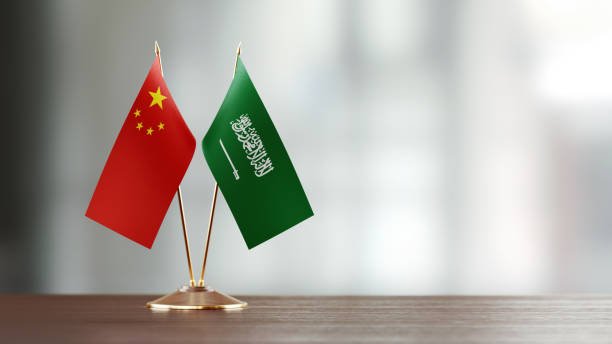
In recent days, the Jazan Chamber of Commerce and Industry organized a major international investment conference in Guangzhou, one of China’s leading industrial and commercial hubs. The high-level event brought together Saudi and Chinese investors, business leaders, and government officials with the aim of strengthening bilateral trade ties and exploring fresh economic and industrial cooperation. The conference marked a new milestone in Saudi–Chinese relations, particularly in the fields of industrial development, technology exchange, and strategic partnerships.
During the event, both sides signed a total of forty-four memoranda of understanding (MoUs), including fourteen between Saudi companies and thirty from Chinese enterprises. In addition, three large-scale industrial agreements were concluded, which are being hailed as a major step toward deepening joint industrial collaboration. These agreements are seen as laying the groundwork for a new phase of sustainable cooperation between the two nations.
Dr. Majid Al-Jawhari, Secretary-General of the Jazan Chamber, stated that this initiative reflects the growing partnership between Saudi Arabia and China and aligns closely with the Kingdom’s Vision 2030 goals of economic diversification and innovation. He emphasized that these agreements are not merely commercial documents, but part of a broader strategy to foster industrial localization, facilitate technology transfer, and promote long-term sustainable growth in the Jazan region and across the Kingdom.
The discussions at the conference covered a wide range of potential areas for cooperation, including renewable energy, infrastructure development, artificial intelligence, logistics, water desalination, agriculture, medical manufacturing, information technology, and autonomous vehicle production. Chinese delegations expressed a strong interest in exploring investment opportunities within Jazan’s Special Economic Zones, which have gained significant attention in recent years for their advanced infrastructure and favorable investment environment.
Dr. Al-Jawhari highlighted Jazan’s strategic geographical position as a key factor behind its growing global appeal. Situated on the Red Sea coast near Yemen and close to major African trade routes, Jazan serves as a vital gateway for international commerce between Asia, the Middle East, and Africa. He explained that the conference provided a valuable opportunity to showcase Jazan’s vast potential as an emerging industrial hub that offers stability, modern facilities, and an ambitious local workforce ready to meet global standards.
The three major agreements signed during the event were described as a landmark in Saudi–Chinese industrial relations. These deals primarily focus on creating joint ventures, establishing new manufacturing units, and exchanging advanced industrial technologies. They are expected to support the Kingdom’s ongoing efforts to localize industries, strengthen production capacity, and generate new employment opportunities for Saudi citizens. In the long term, these initiatives are likely to enhance national competitiveness in sectors such as renewable energy, logistics, and digital manufacturing.
Chinese companies, on their part, voiced their commitment to establishing long-term partnerships with Saudi counterparts, combining China’s technological expertise with Saudi Arabia’s growing industrial base. Several Chinese experts proposed the creation of a joint digital business center in Jazan to monitor investment trends, share economic data, and facilitate communication between enterprises in both countries. Such an initiative would serve as a permanent bridge connecting investors, innovators, and policymakers across the two economies.
The Saudi delegation reiterated its strong interest in expanding cooperation with China, noting that such partnerships will not only benefit the two nations but also contribute to regional economic stability and innovation. Plans are reportedly underway to organize regular business delegations, collaborative workshops, and joint investment forums in order to deepen engagement between private sector representatives and public institutions from both sides.
A significant outcome of the conference was the development of a comprehensive framework for establishing a Saudi–Chinese Joint Economic Council. The council will oversee the progress of investment projects, harmonize trade policies, and create an integrated mechanism for evaluating industrial ventures. This step is expected to increase transparency, speed up decision-making processes, and further strengthen the institutional relationship between the two countries.
In alignment with Vision 2030, Saudi Arabia continues to transform Jazan into a dynamic economic and industrial powerhouse. The region is being developed to attract both domestic and foreign investment, reduce reliance on oil revenues, and create a diverse, innovation-driven economy. The partnerships established with Chinese companies will accelerate this transformation, bringing advanced technology, skilled expertise, and financial strength to support Saudi Arabia’s long-term development goals.
Dr. Al-Jawhari also noted that these newly signed agreements form part of a broader framework designed to create a sustainable and globally competitive industrial ecosystem in Jazan. By facilitating cross-border collaboration, promoting joint ventures, and encouraging the localization of advanced manufacturing, the chamber aims to ensure that Jazan becomes a symbol of Saudi Arabia’s commitment to international cooperation and modern economic development.
He further stated that the Jazan Chamber is determined to continue building international partnerships that will support innovation, generate employment, and empower local industries to compete in global markets. The chamber also intends to strengthen its relationships with foreign chambers of commerce and investment institutions, thus creating a permanent platform for dialogue and business development.
In the wider context, this conference represented far more than just a business gathering. It symbolized a growing alliance between two rapidly evolving economies — Saudi Arabia and China — who share a common vision of progress, modernization, and mutual prosperity. Through these agreements, both nations reaffirmed their dedication to building an interconnected future, one that prioritizes innovation, sustainability, and shared economic growth.
Ultimately, the Guangzhou conference stands as a reflection of Saudi Arabia’s broader diplomatic and economic outreach. It showcased the Kingdom’s readiness to engage with global partners, its willingness to adopt advanced technologies, and its ambition to position regions like Jazan as gateways for international trade and industrial excellence. This initiative not only strengthens bilateral ties but also sets a precedent for regional collaboration that could reshape the landscape of investment across the Middle East and Asia in the years to come.