

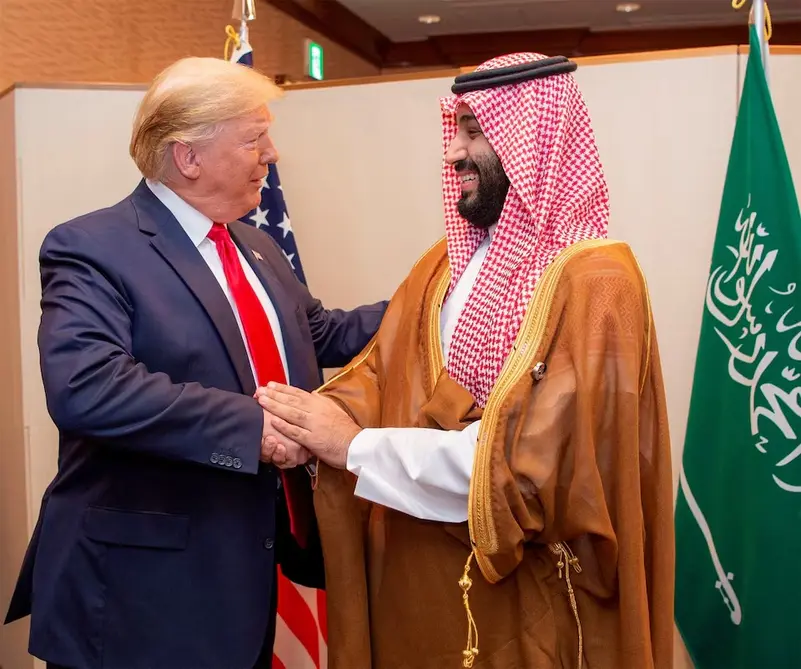
Washington, D.C.: In a landmark announcement on Tuesday, US President Donald Trump declared Saudi Arabia a “major, non-NATO ally,” a status previously granted to only 19 countries, including Israel, Jordan, Kuwait, and Qatar. The announcement came during a formal black-tie dinner at the White House, underscoring a new chapter in US-Saudi relations focused on deepening military and economic ties.
Tonight, I’m pleased to announce that we’re taking our military cooperation to even greater heights by formally designating Saudi Arabia as a major non-NATO ally, which is something that is very important to them, Trump said. He emphasized that while this designation offers military and economic privileges, it does not entail a formal US security commitment. The move follows US strikes on Iranian nuclear facilities in June, which, according to Trump, enhanced Saudi Arabia’s security.
Saudi Crown Prince Mohammed bin Salman, attending the dinner, expressed appreciation for the warm welcome and highlighted nearly nine decades of bilateral cooperation. “Today is a special day. We think the horizon of economic cooperation between the US and Saudi Arabia is bigger and wider,” he said, pledging to expand Saudi investment in the US to $1 trillion, building on a previous $600 billion commitment announced in May.
Alongside the announcement, the White House revealed that the two nations had signed a Strategic Defence Agreement to fortify deterrence across the Middle East, facilitate US defence firms’ operations in Saudi Arabia, and secure new burden-sharing funds from the kingdom. The agreement, however, falls short of a NATO-style treaty originally sought by Riyadh.
Significantly, Trump approved future deliveries of F-35 stealth fighter jets to Saudi Arabia, which has requested 48 aircraft, alongside the purchase of 300 US tanks. If completed, this would mark the first sale of F-35s to Saudi Arabia, potentially shifting the regional military balance and raising questions about maintaining Israel’s qualitative military edge, a cornerstone of US Middle East policy.
The two nations also signed a joint declaration on civil nuclear energy cooperation, aiming to establish a long-term legal framework for nuclear energy partnership. Crown Prince Mohammed has long sought access to US nuclear technology to match the capabilities of the UAE and counterbalance regional rival Iran. However, progress on a nuclear pact remains complicated, as the Saudis have resisted US conditions barring uranium enrichment or reprocessing of spent fuel.
The US-Saudi announcements mark a historic strengthening of defence and economic ties, reflecting broader regional strategic priorities and the Trump administration’s emphasis on closer cooperation with Riyadh.