

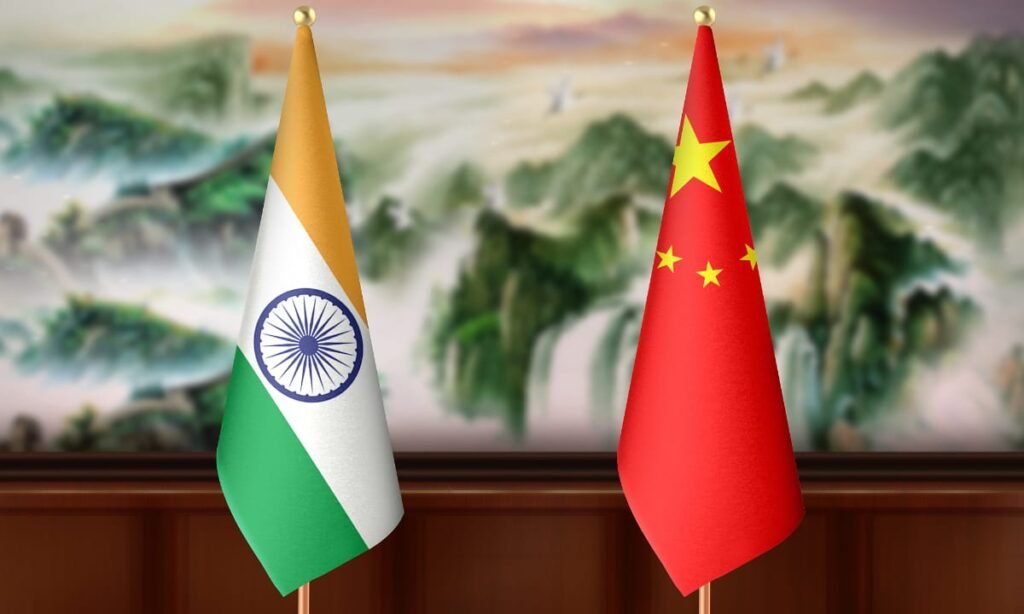
Tensions between India and China have escalated once again after an incident at Shanghai Pudong International Airport involving a UK-based Indian woman originally from Arunachal Pradesh. What began as a routine transit stop during her journey from London to Japan turned into a prolonged and distressing episode that has now triggered a diplomatic protest from New Delhi and reignited the long-standing territorial dispute between the two Asian powers.
The woman, Prema Wangjom Thongdok, said that Chinese immigration authorities refused to acknowledge her Indian citizenship simply because her passport listed Arunachal Pradesh as her place of birth. According to her, officials repeatedly insisted that the region belonged to China and therefore her passport was “invalid.” What was supposed to be an ordinary few-hour layover extended into an 18-hour ordeal in which she felt helpless, confused, and humiliated.
She described being mocked by officials who allegedly told her that she was “Chinese, not Indian,” and that she had no right to travel on an Indian passport. Her account suggested that she was denied proper explanations, kept in a holding area, and treated in a manner that made her feel her identity itself was under suspicion.
After facing difficulties in communicating with airport authorities, she managed to reach out to Indian diplomatic missions in both Beijing and Shanghai. Indian officials eventually intervened, enabling her to leave China and resume her journey, but the incident left behind a trail of unanswered questions and growing anger on social media as her account went viral.
Once the details of the incident reached New Delhi, the Indian government responded with swift and strong diplomatic action. A formal protest note was issued to China, categorically rejecting Beijing’s claim over Arunachal Pradesh and demanding explanations for what India considers an unjustifiable detention of one of its citizens. Indian officials underscored that Arunachal Pradesh has been, and continues to be, an integral and inseparable part of India and that China’s assertions cannot override internationally recognized facts. They pointed out that the behavior described by the traveler contradicts established conventions governing international air travel and violates even China’s own policies, which allow travelers of all nationalities a 24-hour visa-free transit window when passing through major airports.
China, however, has taken a completely different position on the matter. Officials in Beijing have denied that the woman was detained or harassed and stated that immigration authorities handled her case strictly according to Chinese law. According to China’s foreign ministry, officials provided food, rest, and necessary assistance during the transit checks.
More importantly, China once again reiterated its long-held position that Arunachal Pradesh—referred to by Beijing as Zangnan or South Tibet—is its own territory. Chinese spokespersons emphasized that they do not acknowledge the Indian-administered state and therefore do not recognize related place-of-birth entries on Indian passports. This recurring stance has been a major source of friction between the two countries for decades.
The leadership in Arunachal Pradesh strongly condemned the incident. State authorities characterized the treatment of the woman as unacceptable and deeply disrespectful, pointing out that residents of Arunachal Pradesh have consistently been targets of Chinese territorial rhetoric, including periodic renaming of places within the state by Beijing.
These efforts, India argues, are aimed at reinforcing China’s claim but have no legal standing. According to Indian political representatives, the Shanghai episode is another example of how such political disputes can spill over into personal experiences of ordinary individuals, turning travel into a geopolitical confrontation.
The situation is especially sensitive because India and China have only recently begun cautiously rebuilding diplomatic momentum after years of strained relations. Both sides have held high-level discussions, including meetings between Prime Minister Narendra Modi and President Xi Jinping, to stabilize their ties and lower tensions along the Line of Actual Control — the 3,800-kilometre boundary that has never been formally demarcated and has been disputed since the 1950s.
Despite these efforts, distrust between the two sides remains deep, especially after the deadly 2020 clash in the Galwan Valley, where soldiers from both countries were killed in hand-to-hand combat.
Incidents involving Arunachal Pradesh almost always spark strong reactions because the state lies at the heart of the India-China boundary dispute. India administers the region as one of its northeastern states, while China claims it as part of its historical Tibetan territory. These conflicting positions have often found expression in diplomatic exchanges, international maps, and even border standoffs. The Shanghai airport episode appears to be the latest instance where China’s territorial claims have taken on a direct human dimension, affecting an individual traveler caught in the middle of a geopolitical rivalry.
Analysts warn that such incidents, if left unaddressed, risk undermining even the modest progress achieved in India-China relations over the past year. The treatment of citizens from disputed regions can easily inflame public sentiment and place additional pressure on governments to take tougher positions. Experts also emphasize that incidents like these raise concerns about the vulnerability of travelers whose identities intersect with territorial disputes, especially in transit zones where protection mechanisms are often unclear.
For now, New Delhi maintains that the matter is not merely about territorial claims but about basic rights, international norms, and the dignity of its citizens. India insists that its people must not face discrimination or intimidation based on politically motivated geographical disagreements. Despite China’s denial of any wrongdoing, India has demanded a clear and satisfactory explanation, arguing that the behavior described by the traveler cannot be justified under any interpretation of international or domestic law.
As diplomatic channels continue to process the fallout, the incident has reminded both nations — and the world — that unresolved border disputes can manifest far beyond mountain frontiers, shaping interactions in airports, affecting civilians, and threatening to destabilize fragile diplomatic progress. In the midst of these tensions, the core disagreement over the status of Arunachal Pradesh remains as contentious as ever, casting a long shadow over bilateral ties and leaving travelers from the region particularly vulnerable to political sensitivities they did not create but must nonetheless endure.